By Robert McLachlan
As I was saying, there is a bit of delay in the reporting of greenhouse gas emissions – the 2021 figures for most countries are only just out. But in a recent innovation from New Zealand’s Ministry of Business, Innovation, and Employment, partial data is now reported much more promptly. Emissions from the burning of fossil fuels for the first quarter of 2023 have just been published.
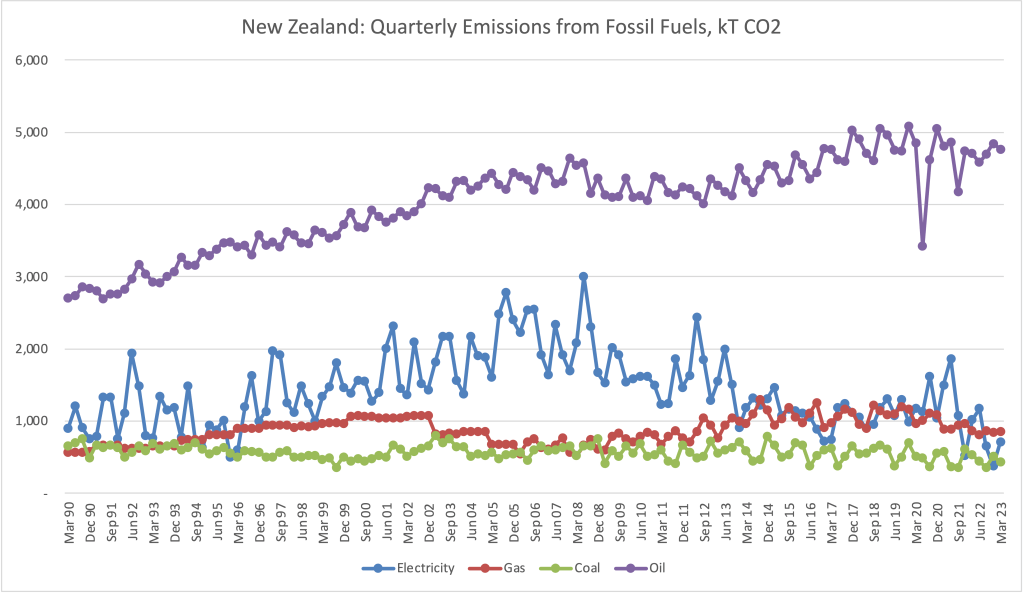
On an annual basis, electricity emissions remain at multi-decade lows, while oil, gas, and coal are down 3%, 26%, and 29% respectively from 2019 highs:
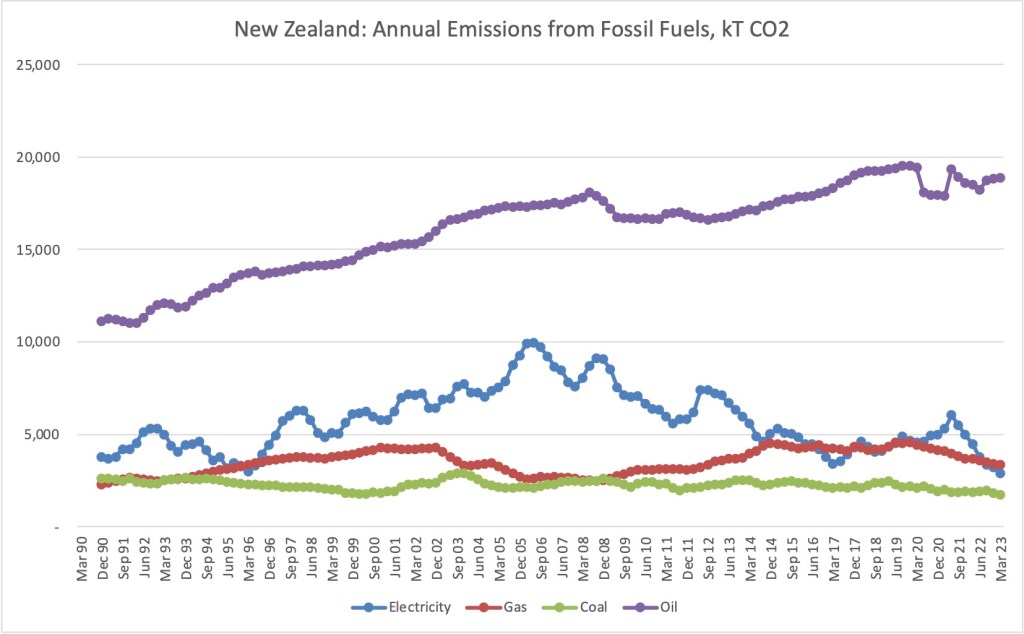
The electricity picture is the easiest to understand – the lakes are full, new wind farms are opening, and there has been some demand reduction, for example by the closure of the Marsden Point oil refinery. In some recent weeks, the renewable percentage has reached the high 90s. Over the next few years, the first large solar farms will start operating, further lowering emissions from this sector.
The falls in gas and coal are harder to read. Is our climate policy starting to have an effect? Gas use is partly driven by the availability of supply, which has been declining, and is projected to fall precipitously over 2024-2030. The fall in coal use (CO2 down 700,000 tonnes a year from 2019 peaks) is quite large compared to the individual coal replacement projects. Fonterra’s largest project cut 84,000 tonnes, with a second project of 48,000 tonnes due for completion this year. When the detailed breakdown by industry is available this can be unpicked further.
One thing this chart shows clearly is the overwhelming importance of oil. The 16,000 battery electric vehicles sold in 2022 cut emissions by around 40,000 tonnes of CO2, just a tiny fraction of the fall of 700,000 tonnes between 2019 and 2022, which itself is a tiny fraction of the 19 million tonnes a year coming from this sector. Most of the drop is due to behaviour change – driving less (in part due to the price of petrol), and working from home.
The day I made this chart, I saw this ship entering Wellington harbour:
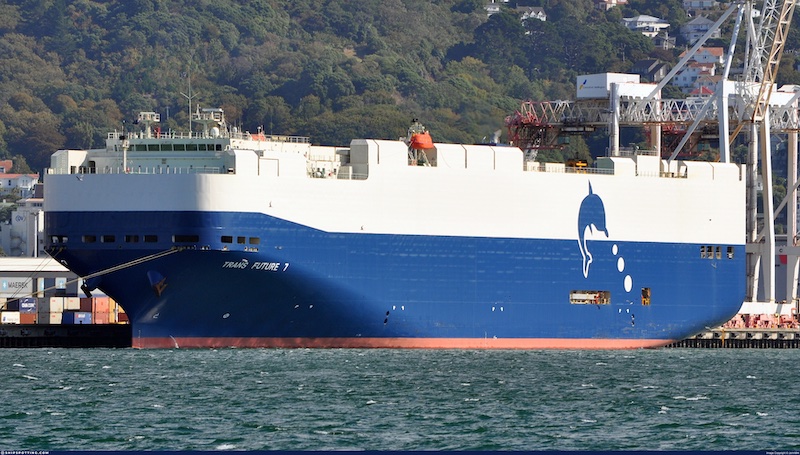
It’s the 60,000-tonne Trans Future 7, arriving from Yokohama via Guam and Auckland, carrying 6000 new cars and trucks, 80% of which are destined to burn fossil fuels for decades to come. In fact, New Zealand receives one of these every week just to keep the whole system going. It’s all too much like the classic 2010 article from The Onion, Millions Of Barrels Of Oil Safely Reach Port In Major Environmental Catastrophe.

 Planetary Ecology