By Robert McLachlan
The Energy Quarterly from the Ministry of Business, Innovation and Employment reports fossil fuel emissions from electricity generation, oil, and (industrial, i.e. non-electricity) coal and gas. The June 2024 issue shows that oil, coal, and gas are all down from the previous quarter.
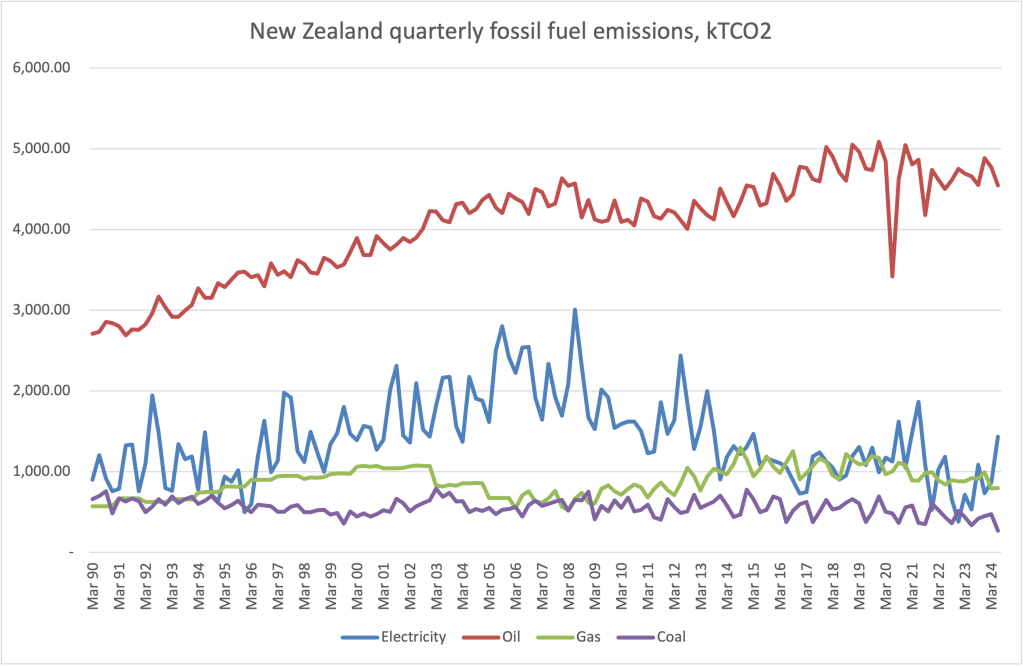
Electricity emissions increased, but even this is something of a good news story: despite inflows to the hydro lakes being at 90-year lows, new wind and geothermal plants completed in the last few years are avoiding 2 million tonnes of CO2 per year. As a result, we entered winter with lakes at average levels and they never fell anywhere near the warning line.

The lowest level of storage, around 1500 GWh, was not unusually low – similar or lower levels were reached in 4 of the previous 14 years.
Thus the investments triggered by the pro-climate Zero Carbon Act of 2019 meant that an electricity shortage was avoided. And annual electricity emissions, though off their lows, are still 59% below peak.
Oil accounts for two-thirds of emissions from the burning of fossil fuels. However, even oil consumption has been fairly flat for 11 quarters in a row, and remains 4% below record highs. High prices and behaviour change (and to a lesser extent EVs) are responsible. The cost of oil in real terms per capita has tripled since the 1990s.

Industrial coal use is at record lows, and now 41% below peak. Gas use is 23% below peak. Overall, annual emissions are 9% below their peak.


 Planetary Ecology