As I was saying, there is a bit of delay in the reporting of greenhouse gas emissions – the 2021 figures for most countries are only just out. But in a recent innovation from New Zealand’s Ministry of Business, Innovation, and Employment, partial data is now reported much more promptly. Emissions from the burning of fossil fuels for the first quarter of 2023 have just been published.
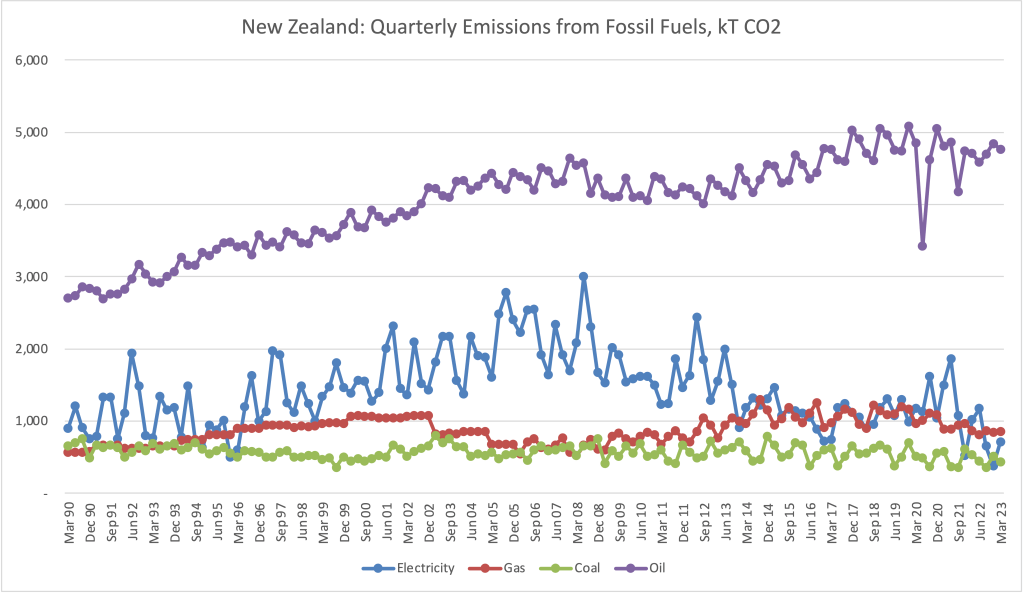
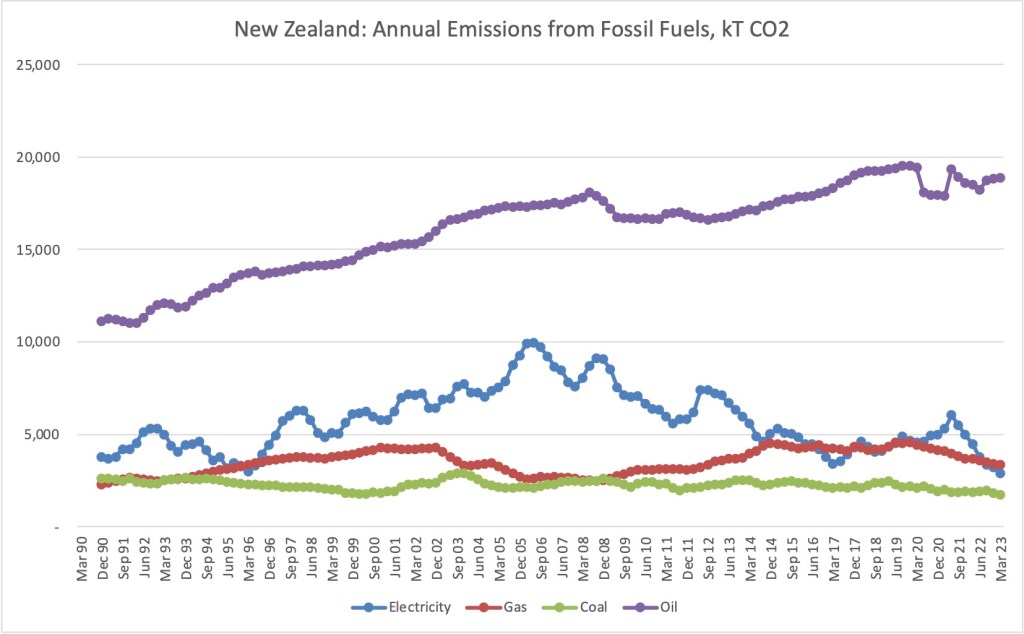
On an annual basis, electricity emissions remain at multi-decade lows, while oil, gas, and coal are down 3%, 26%, and 29% respectively from 2019 highs:
The electricity picture is the easiest to understand – the lakes are full, new wind farms are opening, and there has been some demand reduction, for example by the closure of the Marsden Point oil refinery. In some recent weeks, the renewable percentage has reached the high 90s. Over the next few years, the first large solar farms will start operating, further lowering emissions from this sector.
The falls in gas and coal are harder to read. Is our climate policy starting to have an effect? Gas use is partly driven by the availability of supply, which has been declining, and is projected to fall precipitously over 2024-2030. The fall in coal use (CO2 down 700,000 tonnes a year from 2019 peaks) is quite large compared to the individual coal replacement projects. Fonterra’s largest project cut 84,000 tonnes, with a second project of 48,000 tonnes due for completion this year. When the detailed breakdown by industry is available this can be unpicked further.
One thing this chart shows clearly is the overwhelming importance of oil. The 16,000 battery electric vehicles sold in 2022 cut emissions by around 40,000 tonnes of CO2, just a tiny fraction of the fall of 700,000 tonnes between 2019 and 2022, which itself is a tiny fraction of the 19 million tonnes a year coming from this sector. Most of the drop is due to behaviour change – driving less (in part due to the price of petrol), and working from home.
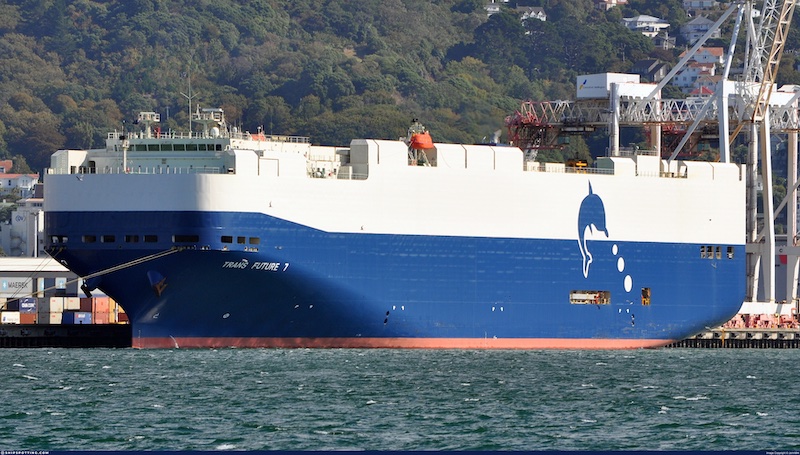
The day I made this chart, I saw this ship entering Wellington harbour:
It’s the 60,000-tonne Trans Future 7, arriving from Yokohama via Guam and Auckland, carrying 6000 new cars and trucks, 80% of which are destined to burn fossil fuels for decades to come. In fact, New Zealand receives one of these every week just to keep the whole system going. It’s all too much like the classic 2010 article from The Onion, Millions Of Barrels Of Oil Safely Reach Port In Major Environmental Catastrophe.
Two years ago I wrote a post called “Why did New Zealand’s CO2 emissions blow out so spectacularly in 2019?” I ran the numbers and found that fossil CO2 emissions had risen 10% in just three years, to reach a record high. I had to look very hard to find any green shoots – such as the carbon price reaching a then record of $40/tonne, and plans for new wind farms. But overall, I concluded that
Throughout the country people were deciding to buy new fossil-fueled cars, boilers, and machinery far more than they were deciding to get rid of them. Away from the world of elections, policy reviews, school strikes, and opinion pieces, it was business as usual for three years… the big four, road transport, aviation, electricity, and food processing, that are so large, that have performed so poorly, and that have so much scope for transformation, are where we need to look for change.
Now the official data for 2021 is available and we can update the picture. Of course, Covid complicates things enormously. And each year the data for earlier years is recalculated; it turns out that 2019 was not quite so bad as it looked initially.
I’ve kept the two years examined previously (2016 and 2019) and added the new data for 2021, together with the base year adopted by the UN, 1990.
Fossil CO2 emissions (kilotonnes)
1990
2016
2019
2021
change ’19-’21
Road transport
6659
12394
13006
12555
-451
Electricity
3485
3056
4206
4403
197
Food processing (dairy)
1663
2721
3094
2787
-307
Metal industry (70% steel, 30% aluminium)
1758
2251
2236
2260
24
Residential buildings
1344
1658
1721
1740
19
Agricultural industry, forestry, and fishing
1212
1370
1620
1472
-148
Mining, construction & other industry
1324
1022
1300
1310
10
Chemicals (mostly methanol)
535
1990
1649
1278
-371
Commercial buildings
878
996
1242
1184
-58
International aviation
1322
3274
3861
916
-2945
Agriculture (50% lime, 50% urea)
336
998
1021
909
-112
Domestic aviation
940
919
1016
818
-198
Oil refining
779
847
882
729
-153
Fugitive fossil fuel emissions
459
1151
912
705
-207
Non-metallic minerals: industrial processes
562
727
618
529
-89
Non-metallic minerals: energy (cement, lime, glass)
439
437
569
392
-177
International shipping
1027
943
1008
335
-673
Pulp, paper, and print
507
406
441
300
-141
Manufacture of solid fuel
1715
290
350
253
-97
Domestic shipping
253
267
329
201
-128
Iron and steel & non-ferrous industries
154
155
177
138
-39
Rail transport
78
129
127
118
-9
Chemical industry (hydrogen, ammonia)
175
191
183
61
-122
Total CO2
27604
38192
41568
35393
-6175
While we have a way to go to get back to 1990 levels, at least we’re heading in the right direction. A fall of 15% in two years (only half of which is due to the drop in international transport) is impressive. The big question is: how much of this is due to Covid, and how much is the beginning of a long-term trend?
The Delta outbreak took up much of the final third of 2021, with Auckland in particular undergoing a long lockdown.
Of the “big four”, road transport emissions have eased off a little, and there are signs that working from home continues to the present. The clean car standard gets a lot of attention, and hybrid and electric car sales have skyrocketed, but this remains a tiny effect for now. As I wrote two years ago, “Despite the phrase “mode shift” being seen more and more frequently, there is not a lot of it about yet… there are still major forces pushing emissions higher, while big battles over mode shift lie ahead.”
In 2021, the electricity sector was still in the throes of the “Indonesian coal” crisis, which eased off in 2022 with record high renewable shares (95% in the 4th quarter). There was one dairy factory conversion from coal to wood late in 2020, at Te Awamutu (cutting emissions by 89 kilotonnes); I’m not aware of any more conversions in 2021. Aviation of course dropped enormously, but recovered steadily throughout 2022 with nothing in place yet to restrain it.
So, yes, it’s great to see a reduction in emissions – especially in fossil fuel emissions, which have to be eliminated entirely. But as for the longed-for tipping point, where all industries, planners, individuals, and voters know what they have to do and are out there doing it – I don’t think we’re quite there yet.
NEW YORK TIMES – Virtually unnoticed abroad except by aviation experts, a recent broadcast by Russian television showed an ordinary-looking airliner roaring aloft from a Moscow-area airport, trailing a stream of condensing steam instead of the usual kerosene smoke.
Despite the flight’s lack of public attention in the West, aerospace engineers in this country recognized it as a milestone in aviation, marking the first time a commercial airliner had flown powered by hydrogen rather than by petroleum-based jet fuel. The event has prompted renewed calls for a hydrogen fuel program in the United States.
Senator Spark M. Matsunaga, Democrat of Hawaii, has long advocated the exploitation of hydrogen, a gas that can be generated from water using solar energy, ocean thermal power and other renewable energy sources. In an interview, he compared the flight of the hydrogen-powered Russian airliner last month to the launching of Sputnik in 1957.
”Once again we’ve missed the boat,” he said, ”and we can only hope that the next administration will be more interested in hydrogen than this one has been.”
In fact, hydrogen will power the National Aerospace Plane, a hybrid airplane and spacecraft that is scheduled to make its first flight in 2029. The plane, described by President Biden in his 2021 State of the Union address, would be capable of flying within the atmosphere using hydrogen-fueled air-breathing jet engines, and in space using pure rocket engines. The President dubbed it the ”Orient Express,” since in theory, it could fly from Washington to Tokyo in two hours.
If you didn’t read that article when it first came out, I’m sure you’ve seen one just like it, because hydrogen is the next big thing in aircraft. It’s been the next big thing for quite a while: the article above is from 24 May 1988. (I changed “Soviet” to “Russian”, “Reagan” to “Biden”, and added 35 years to the dates.)
Fast forward to 10 February 2023:
Aircraft manufacturing giant Airbus has joined a consortium of companies including Air New Zealand and Christchurch Airport with the goal of pioneering the commercial deployment of green hydrogen-powered aircraft.
The six businesses in the Hydrogen Consortium include Airbus, Air New Zealand, green energy company Fortescue Future Industries, Taranaki’s Hiringa Energy, liquid hydrogen solution pioneers Fabrum and Christchurch Airport.
Fortescue Future Industries CEO Mark Hutchinson said the consortium, launched in Christchurch on Thursday, marked a significant moment in the pursuit of fossil fuel free air travel. “We are on a mission to eliminate fossil fuels, including from the aviation industry, and green hydrogen is the key to achieving this,” he said in a statement.
The Soviet effort did survive the fall of the Soviet Union, and even led to a research alliance with Airbus, and the ordering of 3 hydrogen-fueled 150-seat aircraft in 1994. After that, nothing.
In 2011, Airbus launched another collaboration, with Parker Aerospace, this time to develop hydrogen fuel cell (not combustion) technology, with test flights to come by 2015 and to “replace kerosene with hydrogen by 2020” (The Independent, 17/11/2011). Of course, that didn’t happen either.
Their September 2020 launch of “ZEROe”, a trio of speculative hydrogen aircraft designs to enter commercial service by 2035, received huge publicity, followed the next year by a joint project with Air New Zealand. But in private, to EU regulators, Airbus admitted that hydrogen would have little impact until 2050. That seems plausible, in light of developments like Air India placing a massive order for 470 fossil-fueled passenger jets.
There are skeptics from inside the tech zone, as well:
Overall, the vision of hydrogen-fueled aviation is inconsistent with the reality of the looming 2050 need. An aviation-size, worldwide hydrogen supply and airliners capable of using it are decades and trillions of dollars away.
Alan H. Epstein, Maclaurin professor emeritus at the Massachusetts Institute of Technology.
Apart from Airbus, there are several small startups which have adapted aircraft for test flights partially powered by hydrogen fuel cells. (In a fuel cell, the hydrogen is not burned to drive a turbine, but instead reacts chemically with oxygen to create electricity used to power the motors. The first fuel cell flight was conducted by Boeing in February 2008.) ZeroAvia, backed by the UK government, carried out a 10-minute test flight on 19 January 2023 of a retrofitted 19-seat aircraft with one of the two engines replaced by an electric motor powered by a fuel cell and a battery, prompting this statement from Grant Shapps, UK Secretary of State for Business:
“Today’s flight is a hugely exciting vision of the future – guilt-free flying and a big step forward for zero-emission air travel. It also demonstrates how government funding for projects like these is translating into net zero growth.”
“Guilt-free flying”! That phrase really makes non-flying travel journalist Helen Coffey’s blood boil. (Are flyers really feeling guilty, I wonder? Maybe they’re doing a good job of disguising it.) There are questions about what really went on in the test flights, and what precisely their technical innovations are. Despite what Christchurch company Fabrum says, the test flights were almost certainly run with gaseous, not liquid, hydrogen (ZeroAvia’s backstory is interesting too.) Their initial press releases from 2019, of “filling the skies with hydrogen planes by 2022”, are just a memory now, but they are still talking of 50-seat aircraft by 2026.
Anyway, Christchurch mayor Phil Mauger is convinced. He told the School Strike 4 Climate children, in response to their demand that he stop Tarras Airport, to check out Fabrum’s website: “The mayor, describing himself as a “hydrogen nut” [he has one of very few hydrogen cars in the country], said he thought hydrogen technology “could well be” far enough advanced by the time the Tarras airport happened to lessen the carbon impact of additional flights.”
Christchurch mayor Phil Mauger talks with protesters, who occupied the city council headquarters for several hours on 3 March 2023, specifically demanding the Tarras airport plan be abandoned. Photo: Kai Schwoerer/Stuff.
So, where are we?
On one hand, there does seem to be some technical progress, although it’s very hard to assess through the lens of corporate press releases. Hydrogen is, for now, a more realistic route towards lower emission flying than battery electric, although many engineering challenges remain – scaling up the fuel cells, cooling them in flight, and handling the huge tanks of liquid hydrogen at –253 ºC (which would take up a lot of the space normally occupied by seats), not to mention building all the hydrogen infrastructure on the ground and the renewable energy to make it. There are independent studies that think it could be done.
On the other hand, as I hinted above, there is by now a very long history of technological promises being overhyped and failing to deliver. We love laughing at absurd predictions from the distant past, but find it harder to deal with those made about the near future. Otago University’s James Higham asked in 2016, “Are technological myths stalling aviation policy?”:
The roadmap to mitigation is difficult to question, because continued emission growth is an anticipated development, while the effectiveness of the various strategies to contribute to absolute emission reductions cannot be presently judged and evaluated. Multiple technologies providing partial solutions make it difficult to monitor progress. Furthermore, this vision of sustainable aviation is embedded in notions of progress towards sustainability goals, i.e. presenting aviation as an energetically efficient transport mode and a marginal source of emissions in global comparison, which obscures continued absolute growth in greenhouse gas emissions with relative (annual) efficiency gains. Under these prevailing conditions an understanding of aviation as a sector soon-to-become-sustainable has been, and continues to be, successfully perpetuated. Ultimately, this would constitute a form of propaganda in which emotional responses to aviation, for instance framed as the sector’s social and economic benefits, are fuelled by pseudo-rational information – myths – to generate a widely held understanding of, and continuing faith in a looming future of sustainable aviation, and, ultimately, “zero emission flight”. This situation has implications for climate policy, because aviation as a transnational activity is difficult to govern politically. In this situation, politicians may embrace myths to justify non-action beyond efficiency improvements achieved through technology.
The mayor’s argument could be tested by asking the developers if the case for a hydrogen-only airport stacks up.
The larger point is that future technology is always uncertain, but decisions cannot wait. As technology develops, we need to assess it carefully and respond appropriately. Once environmental safeguards are in place for aviation, the industry will find the best way to meet them. But the pathway towards lower emissions must be followed, easy or hard. We know now that every year of delay makes the job harder and the damage worse.
A recent parliamentary inquiry into passenger rail drew 1700 submissions, suggesting growing support for the return of long-distance trains in Aotearoa.
The government has committed the country to decarbonisation targets that require significant cuts to transport-related emissions. But decarbonising long-distance travel is not part of the plan – the national rail operator KiwiRail remains focused on freight.
We argue the revival of long-distance passenger rail needs to be part Aotearoa’s strategy to bring emissions down.
The arguments for intercity passenger rail centre on connecting communities, equity in transport options, reduced emissions and lower energy use.
The end of the decline?
After a long decline – detailed in André Brett’s history of the New Zealand network Can’t Get There From Here – there were some gains in 2022.
Following initial plans to turn it into a tourist train, the Northern Explorer is back running between Auckland and Wellington. Passenger numbers on Te Huia, a rail service between Auckland and Hamilton, have doubled – helped by half-price fares – since its launch in April 2021.
The commuter train Capital Connection attracts good passenger numbers on its week-day only run between Wellington and Palmerston North, despite old and unreliable rolling stock. Work is underway on improving passenger rail near Wellington.
Campaigning for rail
Several new campaigns are pushing for further improvements to passenger rail.
Save Our Trains is seeking a “comprehensive national strategy for inter-regional passenger rail services built around concerns for climate action, accessibility, affordability and economic development”.
Making Rail Work has developed a proposal to reinstate the Kaimai Express linking Auckland and Tauranga. A report for local government supported the case for more frequent services linking North Island towns.
Arguing for the restoration of the Auckland–Wellington night train, public transport planner Nicolas Reid suggested such a service “would have the potential to replace up to 150,000 long-distance car trips or flights per year”.
Most controversially, the group Restore Passenger Rail staged a series of nonviolent direct actions to draw attention to the issue, closing motorways and attempting (unsuccessfully) to address the cross-party inquiry into passenger rail from the top of a motorway gantry.
Rail cuts transport emissions
Transport comprises 45% of Aotearoa’s domestic carbon dioxide emissions, but it is hard to decarbonise. It requires a combination of changes to technology, behaviour and infrastructure. But the significant emission and energy benefits of using intercity and regional rail, rather than driving or flying, are well established globally.
New Zealand’s emissions reduction plan aims for a 20% reduction (per capita) in driving by 2035, through improved urban planning and better travel options. But it does not mention intercity rail.
As half of all kilometres driven are on the state highway network, this is a major omission. Auckland Council’s transport emission reduction plan also aims to reduce domestic aviation emissions by half by 2030, before promised electric or hydrogen-powered planes can make any real impact.
Auckland, Wellington and Christchurch are important, but they only comprise half the population. Travel within and between the smaller cities must also be decarbonised, or the whole country will fail its targets.
Transport investments misplaced
To reinstate fast and efficient passenger rail across Aotearoa, large capital and carbon investments are required. But that is partly because the rail network has been run down for decades, while considerable investment has gone into roads.
Yet, these new roads create more traffic. Further road building, such as an expressway between Ōtaki and Levin, is being promoted, even though we know this project has an extremely poor economic return and will induce more driving.
When good services are on offer, people tend to use them. In Auckland, the then rundown suburban train service was used by only one million people each year in 1994. But a range of improvements saw passenger numbers top 20 million in 2017, with further growth expected once the City Rail link is completed.
Demographic changes support the return of passenger rail. Aotearoa has an aging population, especially in its smaller centres. Many lack airports and driving can become problematic for older age groups. Small towns have also lost many services and visits to bigger centres for medical appointments and other services have become more important.
Most towns still have railway lines connecting them to larger centres. The remaining private coach network suffers from infrequent service, poor quality and a lack of connectivity and integrated ticketing. If, in the UK, the rich take trains and the poor take buses, we suspect in Aotearoa the rich fly or drive and the poor take the bus or don’t travel at all.
Not everyone drives, particularly children and old people; and of those who do drive, some would prefer not to. Internationally, we’ve seen a long-term decline in the number of young people gaining drivers’ licences.
For those living in larger urban centres with good public transport and biking infrastructure or in 15-minute neighbourhoods, there is far less need to own a car. To make the necessary cuts to transport emissions in our larger cities, we need to re-imagine car ownership as an option rather than a necessity.
It might be a lot to lay on the humble train, but civilisation is in a tight spot. We need to collectively halve emissions by 2030, while also laying the groundwork for a truly sustainable future. This means wise use of resources – long-lasting, economical infrastructure based on proven technology, combined with renewable electricity. Trains do that.
Don’t Burn Our Future supporters dressed as “angry foods” to present a petition opposing the Sustainable Biofuels Obligation to the government in December last year.
Environmental groups, motoring and fossil fuel lobbyists, and opposition parties have all welcomed the government’s decision to drop the biofuels mandate.
But the Green Party is warning that the mandate was expected to deliver 50% of the transport-related emissions reduction target – about nine million tonnes of CO2-e by 2035. It is unclear where those savings are now going to come from.
When announcing the change last night, Prime Minister Chris Hipkins’ comments could be interpreted as putting the cost of living crisis ahead of the climate crisis. “The mandate would have increased the price of fuel, and given the pressure on households that’s not something I’m prepared to do,” he said.
Green Party transport spokesperson Julie Anne Genter said Select Committee submissions on the bill showed major concerns around the ability to source truly sustainable biofuel to meet the mandate.
“The decision to stop work on the biofuels mandate must be followed with urgent action to accelerate the shift to cleaner, more affordable transport alternatives.
“The onus is on Ministers now to come up with a plan that will rapidly accelerate investment in low carbon and affordable transport options that are good for communities and the climate.”
ACT leader David Seymour said the policy was “hare-brained” from the start. “We now ask Labour, where will that nine million tonnes of emission reduction come from, or has Jacinda’s generation’s ‘nuclear free moment’ truly passed?”
The National Party had also opposed the bill, preferring to rely solely on the Emissions Trading Scheme to combat emissions.
Environmentalists “thrilled and relieved”
Jake Roos, spokesperson for Don’t Burn Our Future, a group set up solely to oppose the bill, said the decision was an “enormous relief”.
“We campaigned hard for months, and we’re both thrilled and relieved to have won. As we told the Environment Select Committee last week, this bill would have been all pain – in the form of increased fuel and food prices and biodiversity loss – and no gain to helping the climate crisis at all. In fact, it would have made it worse.
“The evidence from overseas tells us that such obligations cause emissions to increase through tropical deforestation triggered by the extra demand for arable land, because biofuels are made from food crops like palm oil and soy.
“The policy would have forced New Zealanders to spend billions burning food, boosting fossil fuel companies’ profits, while delaying real climate action, like more public and active transport, electric vehicles and wind and solar energy to power them,” Roos said.
Greenpeace Aotearoa had also supported the campaign, hosting a 3000-strong petition on its community platform and signing on to the Don’t Burn Our Future submission.
Energy industry says biofuels still needed
Energy Resources Aotearoa welcomed the news as giving the industry certainty, but said there was still a role for biofuels in New Zealand’s energy mix.
John Carnegie, Energy Resources Aotearoa chief executive said that the mandate required firms to invest in processes to ensure a growing percentage of liquid fuels came from biofuels – and with the proposed mandate coming into force from April 2024, businesses were well-advanced in their plans for compliance.
“It’s likely there will be a role for biofuels in the future and the cost of biofuels is expected to come down through economies of scale when producers can increase production.
“However, until then, and given the current cost of living pressures, the Government’s focus should be on ensuring that no regulatory barriers exist to the uptake of biofuels, where they are commercially viable and meet changing consumer needs.”
MTA welcomes change
The Motor Trade Association (MTA) said the decision to scrap the biofuels mandate was a win for cash-strapped Kiwis.
In its submission on the bill last month, the MTA said the mandate was estimated to increase fuel prices by 5 to 10 cents per litre, and that.it would disproportionately affect households already on tight budgets.
We face both a climate crisis and cost of living crisis. But the pain is not being spread evenly on either front. Some families find it ever harder to put food on the table, some wonder how to pay the mortgage, while others are scarcely affected. But if you’re poor, you are very likely contributing far less to damaging climate change than if you are rich.
This can be seen especially in relation to flying. Flying is a very high emission activity for individuals and for the nation as a whole. But most of the world’s population have never been on a plane. In New Zealand, as in other wealthy countries, a small minority contribute to the majority of emissions through their frequent and long distance flying.
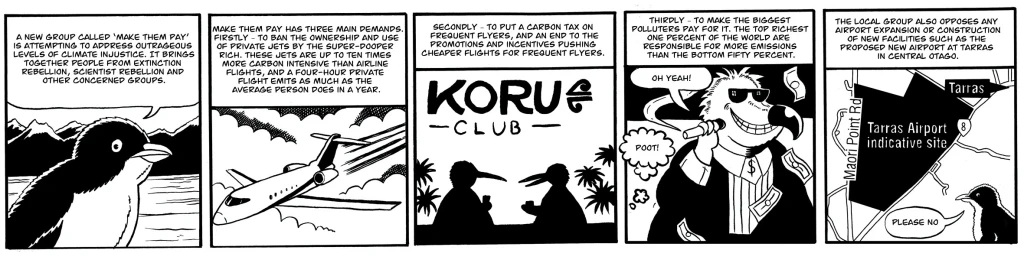
In the UK, the campaign Make Them Pay is targeting aviation emissions. It has three demands: to ban private jets, to tax frequent flyers and to make polluters pay. A 2019 report for the UK’s Committee on Climate Change also recommended a frequent flyer levy and a ban on air points.
While New Zealand doesn’t have that many private jets, our efforts to make polluters pay are not at all comprehensive with regards to aviation. There are many subsidies for aviation, and these tend to benefit the well off. There is no GST or fuel tax on international flights; they are not in the Emissions Trading Scheme or the carbon budgets. Yet, if a family catches the bus for a local holiday, the fuel is taxed and GST is paid on the tickets.
But a hidden problem are airline loyalty programs, such as Air New Zealand’s Airpoints, which now has 3.6 million members. Far from taxing or reducing frequent flying, these programs promote it. Credit cards are linked to the programs, so that all spending on the card earns points. In other words, the price of all other goods is pushed up to subsidise flying, the most emissions-intensive activity there is.
The link is most obvious in supermarkets, where the rising price of food subsidises flying. There’s a similar issue with Flybuys (2.4 million members), in which food subsidises other purchases, particularly petrol. (Z energy owns part of Flybuys and also sells the petrol reward.) AA Smartfuel – same problem.
If you do get a free flight, who is paying for it? The costs are spread across all goods and services sold by businesses supporting such schemes making these products more expensive. But it will be the higher-spending families who will make most use of these (tax-free!) rewards, so that poorer families not using such a card end up paying higher grocery bills to support the schemes.
Loyalty schemes are an effective and lucrative marketing tool for the airlines. In the US, the loyalty schemes of the largest airlines are valued at more than the airline itself: without them, they would be bankrupt. The rewards such as free upgrades expose travellers to ever more luxurious travel and higher emissions – business class seats, because of the extra space, are 3 to 4 times as damaging as economy class. (Travel writer Brook Sabin complained this week that he was struggling to redeem his free upgrades with Air New Zealand – no empty seats available in business class!) There’s a whole industry devoted to advising you how to optimise your ‘tier point runs’, flights devoted solely to achieving the next tier. Air New Zealand is even thinking of introducing an even higher tier, ‘Elite Plus’, which would allow you to bring a friend along for free. Where will it end?
Aviation has many aspects of being a reverse Robin Hood scheme. Taking from the poor and giving to the rich. There’s a lot of work to do to end this, but reining in the loyalty programs would be a good start.
This week the climate news has all been COP27, and as usual, it sounds discouraging, with delegates staying up all night wrangling over words, a process in which ‘phasing out fossil fuels’ gets progressively watered down to the (virtually meaningless) ‘phasing down unabated coal’.
So it was inspiring to hear about a different approach being taken for another challenging global pollution problem, plastic, in a talk by Massey University’s Trisia Farrelly. Soon she will be part of the first UN talks to draft an Internationally Binding Instrument to End Plastic Pollution. Just reaching this point – achieved in a UN vote on 2 March 2022 after several years of negotiations – is something of a triumph. The contrast with the Paris Agreement, which is not binding and which does not mention ending fossil fuel pollution, is striking.
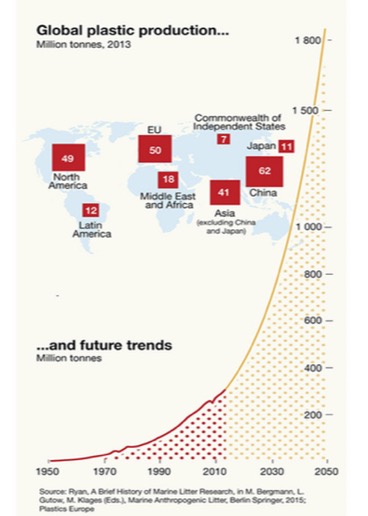
One of the problems with plastic is growth.
Most of this plastic has ended up as waste.
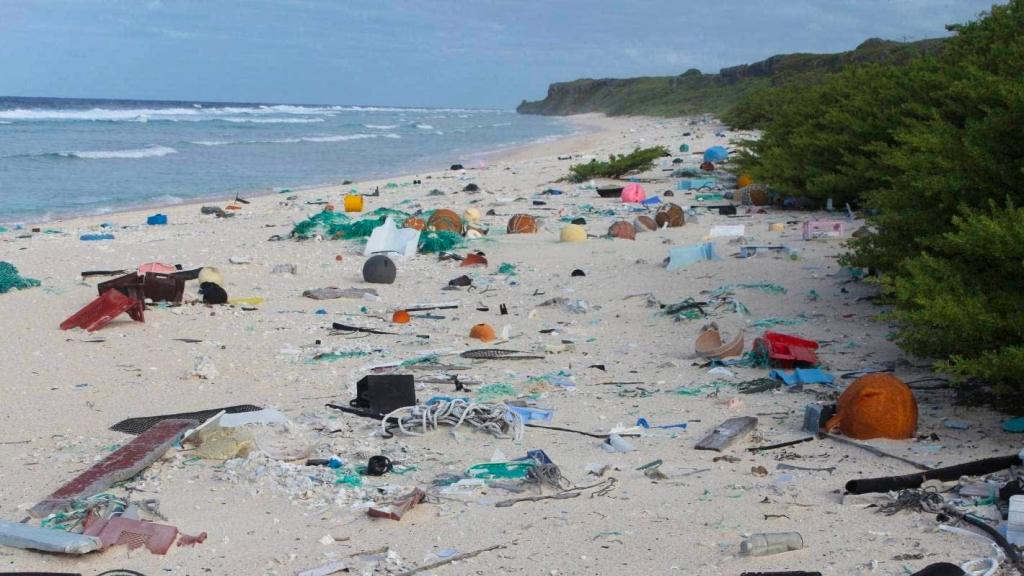
The consequences are all too familiar.
Henderson Island, Pitcairn, SE Pacific Ocean. Source: Stuff.
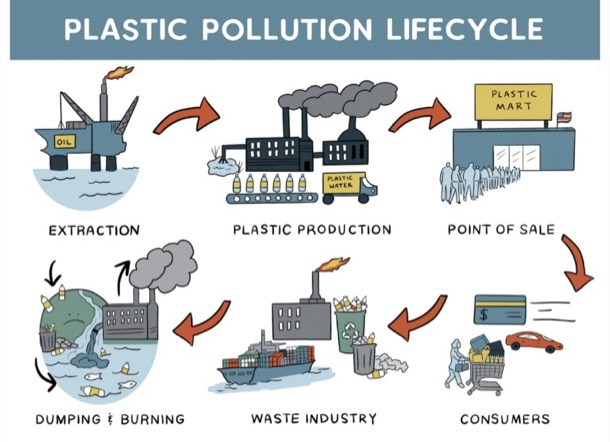
The key point about the proposed agreement is that it aims to address the full life cycle of plastic pollution – from exploring for oil, extracting it, turning it into products, the health impact of those products on consumers, to disposal and remediation.
The United States is trying to form a coalition, perhaps including Japan and Australia, that would push for something weaker, something more like the Paris Agreement, in which each country is free to develop its own voluntary plan, and with its scope restricted to managing the final products.
However, a core determination of a group of 34 countries (not yet including New Zealand), the “High Ambition Coalition“, is that full lifecycle impacts can only be addressed by stopping the growth of plastic production at the source. By turning off the tap.
Their first goal is to “Restrain plastic consumption and production to sustainable levels“.
Debates about the use of private helicopters have been taking place in Tāmaki Makaurau. Residents of Herne Bay, Waiheke Island, and Aotea Great Barrier Island have opposed landings and take-offs from private properties. People have talked of “decks shaking, crying babies and flying deck chairs – with early morning noise breaking the peace for neighbouring properties” and the disturbance to nesting birds. There have also been some safety worries. However, a new concern has been raised. Auckland Council has been accused of holding different standards on cutting climate emissions, asking people to reduce car use but not helicopter use.
While noisy internal combustion engine powered helicopters coming and going from a few private properties in Tāmaki Makaurau have attracted attention, under some ‘green growth’ scenarios there is the potential for thousands of electric powered flying vehicles creating a new level of ‘low emission’ mobility within Aotearoa New Zealand’s cities and regionally. This would herald a new golden age of personal mobility, or as the enthusiasts describe it, “advanced air mobility” (AAM). No longer would we need light rail to the airport in Wellington or Auckland. Flying taxis would be used. And, in fact, with vertical take-off inter-regional planes as part of this green growth future, the airport for regional flights might be in the centre of town. Under this scenario, the currently uneconomic Kāpiti airport would again be thriving.
And autonomous flying machines would be dropping off our pizza orders.
Our current helicopters are, of course, an amazing piece of technology. They can rush people from remote rural locations directly to hospital, pluck injured trampers off hillsides, or lift distressed sailors from a churning sea.
But there is also helicopter-based tourism, including heli-skiing in the South Island, wine tours to Waiheke Island, and Forest & Bird advertised trips that include helicopter transfers. This is one of the many reasons why New Zealand has lots of helicopters. According to Civil Aviation Authority of New Zealand data, there were 889 registered civilian helicopters in New Zealand in 2019, up from 761 in 2010. According to international data, the civilian fleet in the United States of America in 2019 was 9,348. On a per capita basis, this means we have roughly six times as many helicopters.
Helicopters use lots of fuel and as a result are heavy emitters of CO2 and other greenhouse gases. Helicopters use much more fuel than fixed-wing airplanes because their rotors are responsible for creating all the lift. A fixed-wing aircraft uses the engine to propel the plane forward, with the wings generating most of the lift. In addition, the rotating rotor blades of a helicopter will cause a lot of drag when the helicopter cruises.
Helicopter manufacturers are aware of the need to decarbonise and offer up the same set of solutions as for fixed wing aircraft, promoted as moving to ‘zero emissions’. But as we know for fixed-wing planes, none of these solutions are without major challenges. For example, it is possible that the biofuel used to run them might be made primarily with food crops or palm oil and contribute to our environmental problems rather than solve them.
Advanced air mobility
There are startups all over the world promoting flying cars in various forms and small electric planes for regional travel. In an interview in late 2021, the CEO of Volocity set out his vision for AAM:
Volocopter is working on three types of eVTOL vehicles: the VoloCity, a two-seater urban air taxi; the VoloConnect, for traveling between cities and suburbs; and the VoloDrone, for transporting cargo. VoloIQ, the company’s digital platform, is designed to connect all of these services and allow consumers to book flights easily. Volocopter is one of several eVTOL companies that have recently gotten considerable traction in the investor community; the company has raised more than $350 million in equity and has formed partnerships to bring its services to a number of cities, including Los Angeles and Paris.
If one thinks this is only the vision of fantasists, look at the just released Victoria state government AAM strategy document. In a ministerial forward it is stated:
Globally, the Advanced Air Mobility (AAM) sector is moving fast, with several companies seeking to enter the market from 2024-25. This fast-approaching horizon further emphasises the necessity for governments to develop the foundational structures, systems and market frameworks required for AAM.
The use of AAM in Victoria has the potential to revolutionise logistics, service delivery, emergency services, regional connectivity and passenger transport – providing opportunities for improvements in safety, time, cost and noise. As a zero-emission transport mode, AAM will also support the decarbonisation of our society.
Archer Aviation, based in Palo Alto, California, USA, is working to build an electric vertical takeoff and landing (eVTOL) aircraft and aerial ridesharing service that will move people throughout congested cities in a quick, safe, sustainable, and cost-effective manner. Through their work both on their eVTOL aircraft, and with partner cities such as Los Angeles and Miami, they are laying the groundwork to curb the growth of urban congestion, and the resulting historic levels of emissions in populous areas.
Closer to home, Tātaki Auckland Unlimited is working with Wisk Aero, creator of autonomous air taxis, to help bring them to Auckland one day.
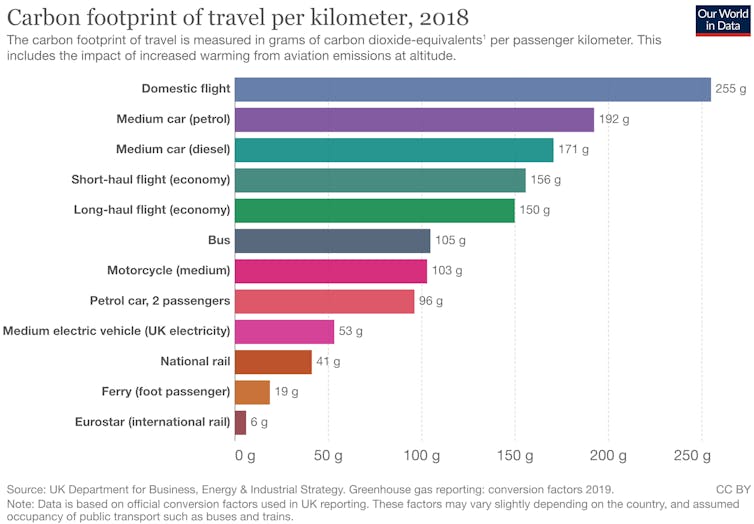
There are also regular media stories about larger electric planes, including those that can take off vertically. These are seen as transforming regional air travel. In fact, some airlines are now promoting this concept as a way of getting people out of cars and onto ‘zero emission’ planes. This is despite the energy and emissions benefit of passenger rail for many of these journeys.
Such visions gloss over challenges. Many of these electric flying machines turn out to be harder to produce than initially advertised, with often major range issues.
Another is the huge amount of renewable electricity required to keep these machines in the air. The laws of physics still apply to these descendants of helicopters. They use lots of power. As we decarbonise the whole economy, scarce renewable electricity would be better used to heat houses, power our buses and electrify our whole rail network.
There are also serious concerns as to whether there are enough minerals and other materials available to manufacture the vehicles.
But, even if possible, is this a future we really want? While probably quieter than helicopters, having our skies increasingly filled with flying machines would create other problems, including safety. And would this be only an option for the well off, while most of us wait in a queue for the low emission, low energy use electric bus?
We now need to carefully consider how we manage helicopters and the flying machines that may eventually replace them. There are clearly some new policy issues emerging as we try and dramatically reduce emissions, while at the same time trying to make our cities better places for all people to live in. The Ministry of Business, Innovation and Employment has recently published a discussion document called Aotearoa New Zealand Aerospace Strategy with submissions just closed.
I was born in Christchurch in 1964. I watched the moon landings on television. One of my early readers was “You Will Go To The Moon”. Oh, how I loved that book. I studied mathematics and physics at Canterbury and, later, at Caltech, where I met my heroes, Richard Feynman and Freeman Dyson. My work in scientific computing is used in orbital calculations including the long-term evolution of the solar system and novel routes to the moon. So by rights I should be all-in on space.
But as the decades have passed I have realized that the extreme risks of the present global ecological crisis call into question the entire program of accelerating technological change and resource use. Climate change, biodiversity loss, and pollution are three prominent aspects of the crisis, and resource overuse and poor governance two significant contributing factors.
The New Zealand government is consulting on two new policies, one for space and one for aerospace (think drones and flying cars; both close on 31 October). My submissions are attached below.
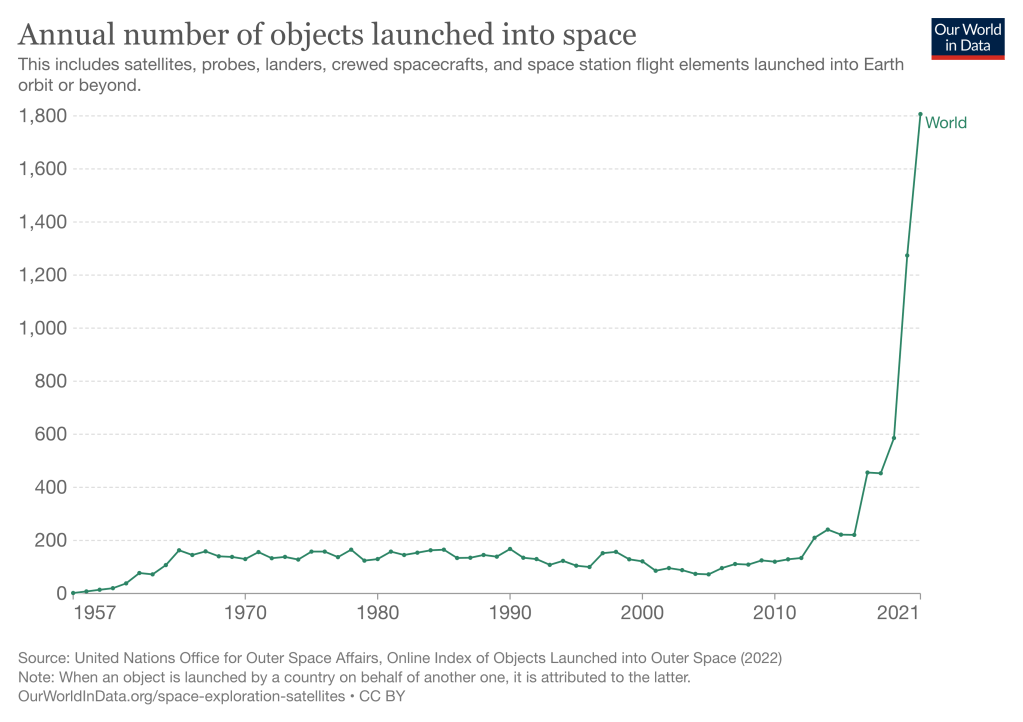
This is a time of rapid change in our use of space. Its use is rapidly increasing and commercialising; more and more countries are engaged in the space industry; and space is becoming more and more militarised. In fact we can watch ongoing space-controlled, semiautonomous drone warfare every day on the internet. The New Zealand company Rocket Lab launches satellites for the US National Reconnaissance (i.e. space spying) Office and designs and builds hardware for the US Space Force.
The space age began eighty years ago with the launch of a V2 missile into space, and continues with vast fleets of space-travelling and space-controlled ICBMs ready to launch. The nuclear threat is higher than at any time since 1962. The Bulletin of the Atomic Scientists Doomsday Clock stands at 100 seconds to midnight – and that was set before Russia’s invasion of Ukraine. Many believe that the United States is determined to gain complete dominance of space through the development of space weapons:
…the rapid expansion in space use and the difficulty of determining the true intent of some satellite systems are leading many analysts to the conclusion that the next steps in the militarisation of space will be the development, deployment and eventual use of space weapons.
Dave Webb, The Ethical Use of Outer Space, in Ethical Engineering for International Development and Environmental Sustainability, Springer 2015.
The consultation mentions the value of Starlink to Ukraine. Even in the few weeks since it was written, Elon Musk (the world’s richest person and the most controversial business-person in the world, and the dominant owner of SpaceX and Starlink) has further weaponised and politicised Starlink in dangerous ways. SpaceX has rapidly become so dominant in the US space industry that any ties to that industry inevitably create links to Musk. What with the near collisions, the pollution of the night sky, the risk of debris, and the climate impacts of the enormous number of launches needed to maintain the constellation, its politicisation and weaponization in an actual war, Starlink is a disaster in which the worst is yet to come.
These considerations throw the opening sentences of the consultation into a different light:
New Zealand’s association with space goes back centuries: the first Māori explorers navigated by the stars to Aotearoa New Zealand, and centuries later they were followed by European navigators whose instruments also looked to the stars. Today, our modern navigation systems are still guided from space.
Yes, Māori explorers used advanced sailing technology and navigation to settle Aotearoa, but also to greatly alter it. European colonisation led to violence, appropriation, destruction, and extinction (amongst other things). The new space race is likely to accelerate the inroads of violence into space.
Space is sometimes described as a ‘global commons’. But does that mean it is ours to use as we see fit? It is already crowded, polluted, and dangerous. Our track record in governing other global commons such as the atmosphere and ocean is not good.
Three interrelated efforts—lowering costs of accessing space, space tourism, and privatization—are currently viewed by space advocates as useful steps to the eventual realization of the larger space expansionist program. They are actually a mix of trouble and trivia leading to danger precisely because of their potential to open the larger door to extensive space activities. Everything space expansionists want to do in space depends upon accessing space more cheaply. But substantially lowering access costs is very much a double-edged sword. If it is cheaper and easier to get to orbit, then all space activities become cheaper and easier to accomplish, whether or not their effects are desirable.
Ambitious space expansion proposals also rest on dubious assumptions about human control of nature and technology and governance of superpotent new technologies. When these deficiencies are identified and corrected, space activities, actual and prospective, look very different, and space expansion loses much of its appeal.
Daniel Deudney, in Dark Skies: Space Expansionism, Planetary Geopolitics, and the Ends of Humanity (2020)
The American rocket pioneer David Lasser, anticipating widespread bombing of cities by rockets in “The rocket and the next war” in 1931, wrote
Whether the man of the future, looking back to 1931 will wish that the rocket had never been invented, no one knows. It seems to me that the rocket is one of the creations of the human mind, that serves as a test of our right to inherit the earth. Its powers of good and evil are so equal and opposite.
Unfortunately, we still don’t know.
One final visit to the pre-space age. How far have we come, really, from the impassioned plea of the space visionary Oswald Cabal in the closing moments of the 1936 movie Things to Come, “All the universe or nothingness?”
Biofuels – and a broader bioeconomy – are key parts of New Zealand’s recently released first emissions reduction plan, particularly for transport, forestry and a transition to a more circular use of resources.
Work is moving fast, with a biofuel mandate for land transport to be introduced from April 2023 and a plan to transform the forestry industry currently under consultation.
A bioeconomy is heralded as an opportunity to replace imported fossil fuels with carbon-neutral domestic biofuels and to create higher-value products from plantation forestry (much of which is currently exported as unprocessed logs) while supporting carbon sequestration at the same time.
New Zealand is not the only country thinking along these lines. Biofuels are part of a widespread strategy to address emissions from existing fossil-fueled vehicles, tens of millions of which are still being produced annually. They are also promoted for planes, ships and heavy trucks, often with few alternatives.
Both the Inflation Reduction Act, a landmark US law which aims to curb inflation by investing in domestic clean energy production, and the EU’s Fit for 55 package, expand support for biofuels through a combination of subsidies and mandates. In the International Energy Agency (IEA)’s Net Zero scenario, global biofuel production quadruples by 2050, to supply 14% of transport energy.
Unfortunately, a string of governmentreports, combined with experience of the real-world impacts of biofuels thus far, point to several downsides and challenges, both economic and environmental.
First-generation biofuels from food crops
The risks of first-generation biofuels, made from crops grown on arable land, are well known. They are not due to the fuels themselves or their production, but their indirect effects of how the land would have been used otherwise.
Already, 10% of the world’s grain is used for biofuels. This is at the heart of the “food-to-fuel” issue. This approach has been challenged because it could increase grain prices or, at the worst, lead to starvation. It has also led to agricultural expansion, often into ecologically sensitive areas.
Debated for years, it is now back in the spotlight as the effects of droughts in China, the US and Europe, combined with the war in Ukraine, push food prices up 50% on 2019-2020 levels.
Palm oil has borne the brunt of criticism about landuse change, as vast areas of rainforest in Indonesia and Malaysia have been cleared for its production. The impact of such “induced landuse change” (ILUC) gives palm oil biofuel nearly three times the emissions of fossil fuel.
But palm oil is a substitute for many other vegetable oils. Therefore, biofuel production from other oils like rapeseed (canola) is also implicated in ILUC, as diverting rapeseed to fuel leads to more palm oil entering the food chain.
Sustainability and credibility of feedstocks
The EU has undergone a lengthy process of strengthening the standards of its biofuel mandate. In the end, palm oil was the only feedstock listed as “high ILUC”, but was given a reprieve until 2030.
The cheapest biofuels with the biggest emissions savings are made from used cooking oil and beef tallow. But these feedstocks are in limited supply and open to fraud. They also already have other uses, which again raises the issue of substitution.
Z Energy’s NZ$50m tallow biodiesel plant, opened in 2018, has been mothballed due to the rising cost of tallow. The company has stopped work on plans for a much larger plant.
Since New Zealand’s biofuel mandate will initially be met solely by imports, questions of sustainability and certifiability of feedstocks will be crucial. It is concerning that landuse change will not be considered when calculating emissions reductions.
The fuels will count as zero-emission in New Zealand, while the actual emissions from growing, fertilising, processing and transporting will take place overseas, likely in countries with weaker climate targets. Unless accounted for, this is carbon leakage by design.
Source: ICCT; data from GLOBIOM for the European Commission.
Second-generation biofuels from inedible plant material
For all these reasons, proponents are keen to talk up the prospect of second-generation biofuels, made from non-food crops. In New Zealand’s case, the main crop is pine trees.
Although there is some forestry waste available, much of it is currently left on site and would be expensive to collect and transport. The Wood Fibre Futures report, commissioned by the government, focuses on logs-to-fuel, specifically “drop-in” fuels that can substitute directly for petrol, diesel or jet fuel.
However, there are no such plants in commercial operation anywhere. The report calls the risks of such an unproved technology extreme, with little prospect for mitigation.
The economics are also challenging, in part because log prices are high due to the efficiency of the log export market. A plant capable of producing 150 million litres of drop-in fuels a year – just 1.5% of New Zealand’s liquid fuel demand – would cost $1.2 billion and have a negative rate of return.
To obtain an acceptable return, the government would need to pay for half the cost of the plant and the logs, and also subsidise (or enforce) a 50% higher sale price of the fuel. The report envisages such a plant being completed by 2028 in New Zealand.
A fundamental obstacle is that any such use has to compete with other uses – including sawn timber, wood chips and wood pellets – which are far simpler, more profitable and come with greater carbon benefits.
Stop the mandate, strengthen alternatives
For all these reasons, we have formed the interest group Don’t Burn Our Future, which aims to stop New Zealand’s biofuel mandate.
As advocates of strong climate action, these are painful conclusions to reach. But we argue that for transport, the answer lies in the avoid/shift/improve framework, which encourages people to drive less, shift necessary trips to other modes and make them less polluting.
Biofuels only enter in the third and least important step (improve) and even there, they are the worst option.
The transport transformations envisaged in the new climate plans for Wellington and Auckland are heavily focused on avoidance and shifts to other modes. These options should be the priority.









 Planetary Ecology