How flying can be a climate solution

By Paul Callister and Robert McLachlan

The Nelson and Tasman communities have invested $32 million in a new airport terminal. It’s very smart, and made of wood, but it’s designed to increase fossil fuel emissions.
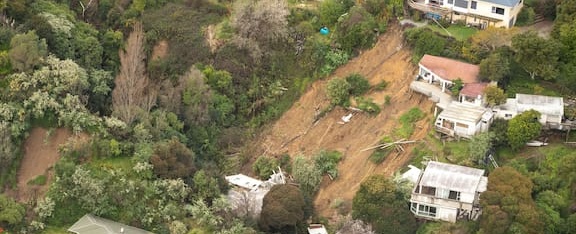
At the same time, Nelson has suffered repeated devastation from extreme storms, at a time when the city is looking to reduce emissions. The community’s critical asset – the airport – can be a helpful part of the city’s climate action plans.

Aviation is booming, especially in the Asia–Pacific region. Air travel has reached record numbers both domestically and internationally, with further strong growth forecast over coming decades.

Despite the financial headwinds faced by New Zealand’s regional airlines, operators say that “passenger numbers on regional airlines have never been better”. “Passenger numbers are through the roof”, says Sounds Air boss Andrew Crawford in a Newsroom article. Once again flights in and out of New Zealand are increasing, helped by the New Zealand government promoting international tourism as a key driver of economic growth.

To support the growth, international airlines are expanding capacity.

Airports across New Zealand have also set in place expansion plans. An example is Nelson. The airport wants to see passenger numbers double from 900,000 to 1.8 million a year by 2050.

Despite unambiguous evidence of the devastating impacts of human-induced climate change, commitments to decarbonise aviation are stalling both here and overseas. The result is that aviation emissions continue to increase at a time when other sectors are working hard to reduce theirs. In just-published research, Daniel Scott and Stefan Gössling examine the UN World Tourism Organization’s climate declarations and conclude that there has been limited to no progress on 25 climate action pledges. They also evaluate commitments by the World Travel and Tourism Council, IATA, International Civil Aviation Organization, and individual airlines, finding that none of their self-set targets has been met.

So how can aviation contribute to tackling climate change when no practicable technology-based solutions are on the horizon?

This problem of aviation emissions is playing out in Nelson, one of New Zealand’s premier tourist destinations. While it is known for its sunny days, in recent years it has also suffered from damaging storms that are predicted to become more frequent and intense with climate change. The August 2022 storm event caused more than $80m of damage in the region, and a downpour in recent weeks led to flooding in downtown Nelson. Recognising the need to reduce emissions, Nelson City Council will soon meet to approve its climate change strategy, aiming to reduce gross emissions by at least 6.8% each and every year, in line with the government’s target.

That will require significant new investment. Who should pay for it? Should it be the community as a whole, or should those who are causing the problem contribute more? If Nelson airport proposes to double passenger numbers without any realistic plan to reduce emissions, is there a way of adopting the “polluter pays” principle and using revenue from flying to help decarbonise other parts of the local economy?

There is a way. The airport is jointly owned by Nelson City Council and neighbouring Tasman District Council. It recently invested $32m in a new terminal (catering for future growth, which means growth in pollution), with further expansion on the drawing board. A “polluter pays” levy of $20 per departing passenger – about 10% of the average ticket price – would raise $9m per year towards climate action by the two councils. Potential uses of such a levy include funding active and public transport, helping businesses to reduce emissions via electrification, supporting community solar power, and funding adaptation infrastructure. Much greater price increases by Air New Zealand in recent years, of between 30% and 300% depending on the route, have had no impact on passenger numbers, indicating an ability and a willingness to pay. While most New Zealanders need to fly sometimes, most flying is done by a small number of frequent flyers. Globally, 1% of the world’s population, the wealthiest frequent flyers, are responsible for 50% of aviation emissions. Therefore, a “polluter pays” levy acts as a progressive, pro-climate tax.

It is true that New Zealand also has the Emissions Trading Scheme. Passengers contribute about $3 per domestic flight via the ETS. Unfortunately, this does little to nothing towards reducing emissions. At present the money either goes to the government (which has cancelled most direct climate spending) or towards the mass planting of pine trees, which is commonly criticised as being an ineffective strategy with negative effects on biodiversity.

Airports and airlines themselves should welcome such a levy, which could be introduced nationwide. They could then point to the tangible community benefits of the levy and maintain their social licence to operate in an era when the aviation industry’s bold claims (“Net zero by 2050!”) amount to so much greenwashing.

It needs to be recognised that such a levy only buys the aviation industry a little time, and that the industry needs to either rapidly decarbonise or start reducing flights to meet climate targets. At present it is impossible to know if any of their plans for lower-emission flights will come about or have much of an impact on emissions. We hope they do. But hope alone is not enough; hope needs action, and the time for action is now.
Tech hopes for the aviation industry

By Robert McLachlan

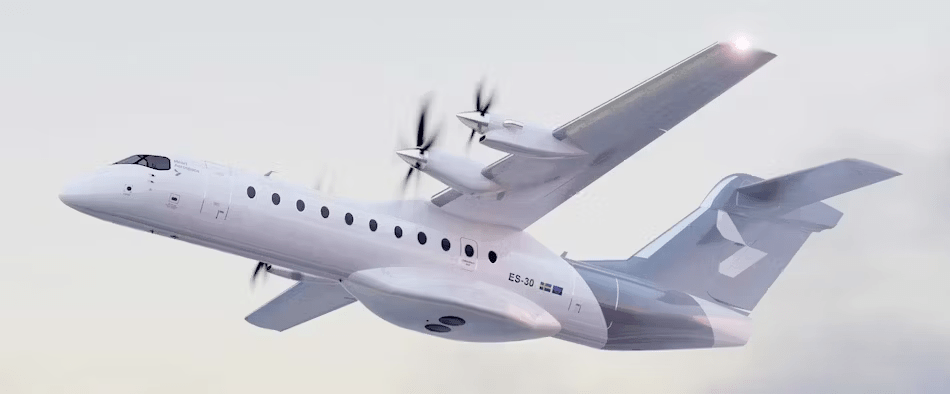
The third iteration of Heart Aerospace’s proposed new aircraft, now a 30-seat parallel hybrid.

Back in 2021 electric aircraft were a hot topic. Paul Callister and I looked at three startups (Heart Aerospace’s ES-19, Eviation’s Alice, and the Lilium Jet) to see if their claims stacked up. They all faced serious difficulties with weight, range (especially the reserve range required for safety), and unproven technology.

Two of the three (Lilium and Eviation,the latter pre-ordered by Air New Zealand) went bankrupt in February 2025, leaving only Heart Aerospace. Their ES-19 (pre-ordered by Sounds Air) has undergone two radical redesigns. In May 2024, an innovative wing strut was added and the range was halved to 200 km, extended by a serial kerosene generator (ideally used only as a reserve). Later, the wing strut disappeared, and two of the four electric motors were replaced by standard kerosene turboprops – essentially a parallel hybrid. No test aircraft has yet been flown or even built, but commercial operation is still promised for 2030.

On the policy front progress has been no better. The Climate Change Commission has made a strong recommendation to bring international aviation and shipping into New Zealand’s 2050 climate target; the government has yet to respond, and the Commission has no brief to look at the issue further. The public/private partnership Sustainable Aviation Aotearoa, established in 2022 as part of the first Emissions Reduction Plan, has yet to issue reports, advice, or communications of any kind.

This was the background in my mind as I prepared to address the Royal Aeronautical Society’s New Zealand Division on “Tech hopes for the aviation industry” on 29 May.

Please watch the video of the talk below, or read the slides.

There’s no easy way to cut aviation emissions, except by flying less

Paul Callister, Deirdre Kent and Robert McLachlan

We congratulate Stuff for its series on climate change. But one area has received relatively little attention – that of flying.

Though aviation is emission-profligate and the fastest growing source of emissions, it presents particular challenges. You can replace your petrol-driven car with a modern electric car. But flying is more complex, as there is no easy way of reducing its heavy dependence on fossil fuels in the foreseeable future.

For New Zealand, it is especially challenging. It has been estimated that, at any point in time, more than one million New Zealand residents are living or travelling overseas.

More than a quarter of New Zealanders were born overseas, many retaining close links to friends and family in their country of origin. Keeping in touch with whānau is a strong driver of the wish to fly. In addition, within New Zealand we don’t have fast rail linking our major centres, and low-cost long-distance bus travel is currently of poor quality. Our rapidly expanding tourism industry also depends on people often travelling long distances to get here.

The problem is that flying is an important contributor to our greenhouse gas emissions. This impact is forecast to increase in absolute terms and as a proportion of New Zealand’s total emissions.

The increase comes about through the rapidly growing popularity of long-distance travel, as well as a massive growth in airfreight driven in part by online retailing. (The Auckland airport company is currently planning for 40m passengers a year to pass through its facility by 2040.) The increase in flight emissions counteracts the reduction in greenhouse emissions that other sectors of the economy are working towards, including farming.

So what is the size of the challenge? New Zealand’s international aviation emissions, unregulated by the Paris Agreement, were 3.4m tonnes of CO₂ equivalent in 2016, up 152 per cent from 1990. There is insufficient land to produce enough biofuel and it’s a major challenge to go electric, even for short flights.

What can we do to change the trajectory?

Individuals can choose to fly less. Inspired by Sweden’s #flygfritt 2019challenge to be flight-free, Britain has launched its #flightfree2019 campaign. There is now a Fly-less Kiwis Facebook group.

Businesses, government agencies and universities can reduce their dependence on flying through video conferencing, virtual workshops and by examining the necessity of each trip. They can stop the practice of giving employees airpoints for personal use, a tax-free incentive to fly.

We can remove wider incentives including airpoints, flybuys, finance company loans for international travel, and subsidies for regional airlines.

We can improve low-carbon forms of travel within New Zealand, for example with high-speed trains between Auckland, Hamilton and Tauranga, and improved long-distance bus services.

As Wellington lawyer Tom Bennion states in Chris Watson’s book Beyond Flying, “Air travel is the ultimate low-hanging fruit in terms of a significant step that individuals can take immediately to prevent catastrophic climate change.”

This article appeared first on Stuff.co.nz on 12 December 2018. See original article.