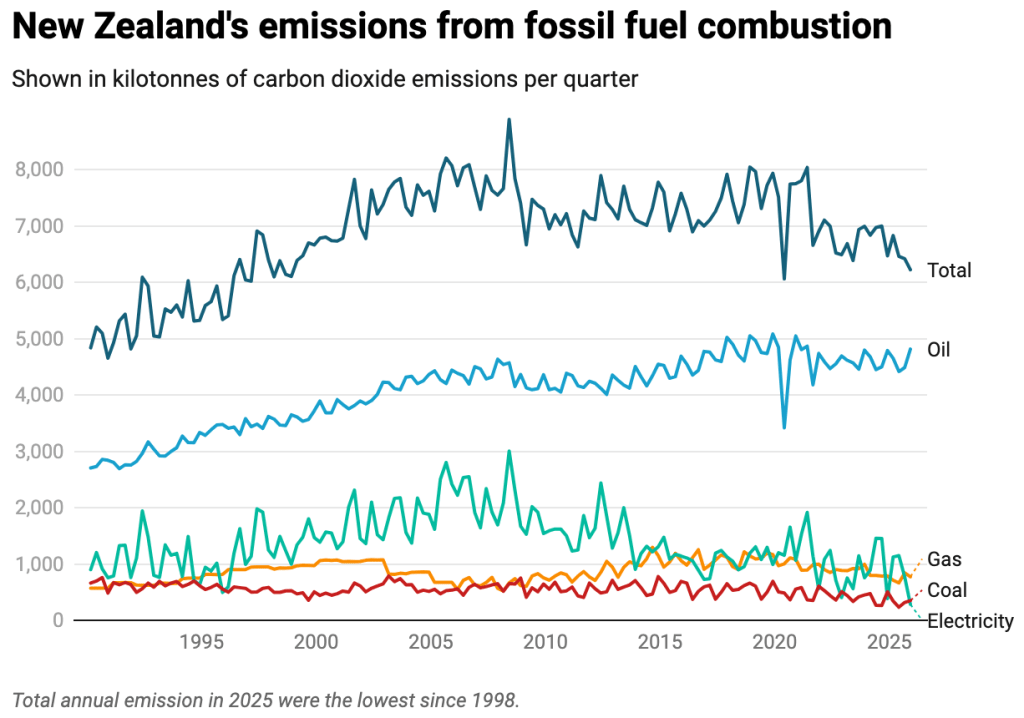
New Zealand’s latest quarterly energy report shows electricity production was above 90% renewable and emissions from generation fell to the lowest level on record.
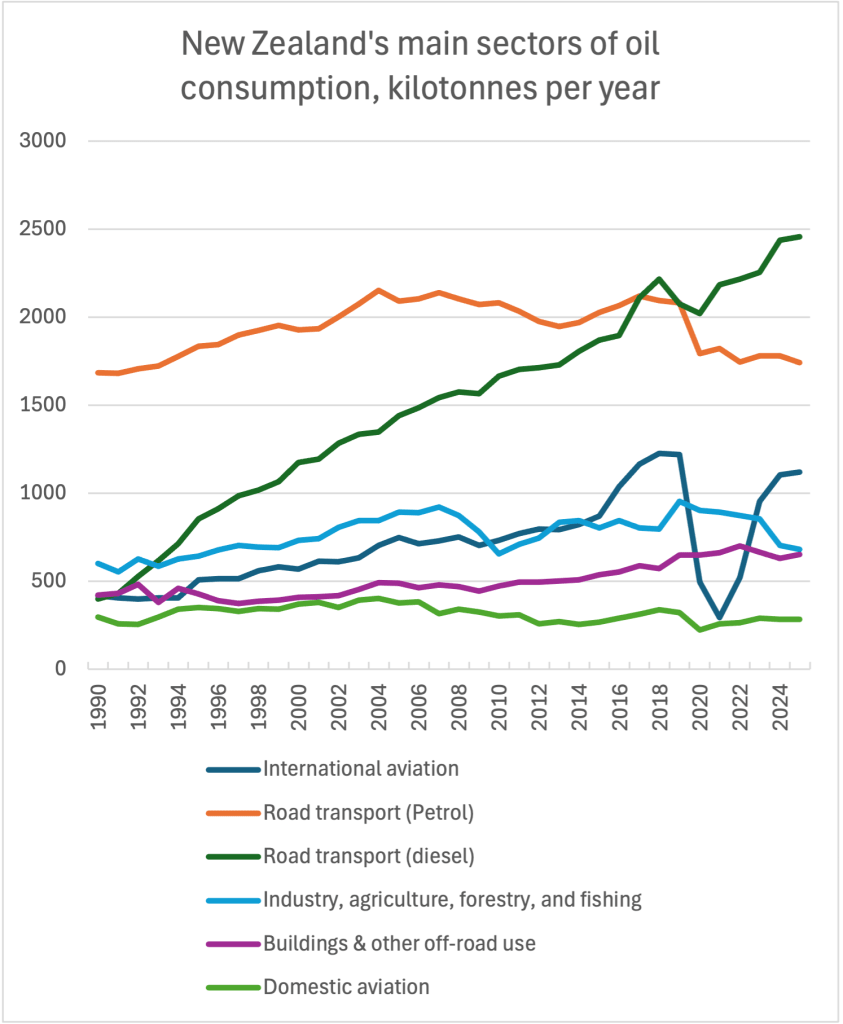
But it also shows New Zealand’s oil consumption, which had fallen markedly after the COVID pandemic, has crept back up to reach its highest quarterly level in five years.
Oil now comprises its highest quarterly share of New Zealand’s overall energy emissions on record.
Of the total carbon emissions from the burning of fossil fuels, 77% were from oil (mostly used for transport), 12% from industrial and domestic gas usage, 6% from coal, and just 5% from electricity generation.
Source: MBIE Energy Quarterly
Developing a coordinatedenergy strategy to reduce oil dependence would not only provide an effective climate response, but also protect New Zealand from recurring oil price and supply shocks.
The previous government had committed to a comprehensive strategy to transition to a renewable energy system in New Zealand’s first emissions reduction plan in 2022.
During two previous periods of high oil prices, New Zealand missed the chance to weaken the country’s dependence on oil.
The 1978 oil shock was a severe hit to the economy; New Zealand’s oil consumption did not recover to its previous level until 1990.
The soaring oil prices hit New Zealand at a time of extensive government control of the economy under the National government of Robert Muldoon, whose “Think Big” strategy included building an experimental plant to produce petrol from natural gas.
This was intended to build energy independence, but unfortunately it proved to be costly and ineffective.
The 2008 financial crisis also involved extreme oil price spikes and a prolonged recession. Oil consumption did not recover until 2015. One planned response was to introduce fuel economy standards for new cars – a form of regulation already in place in most OECD countries.
Had these standards been put in place and gradually strengthened over time, New Zealand would now be in a much better place, with less pollution and less economic dependence on oil.
However, a change in government in late 2008 led to the cancellation of the planned standards. New Zealand now uses nearly twice as much transport oil per capita as the UK, where such standards have been in place since 2001.
New law changed NZ’s trajectory
The Climate Change Response (Zero Carbon) Amendment Act of 2019 was a turning point. Before that, total fossil fuel emissions were flat or trending up. Afterwards, a wave of investments in renewable electricity, in the decarbonisation of industry and in low-emission transport turned the trend around.
This was perhaps not just due to the specifics of the act, which includes five-yearly carbon budgets, but to strong pro-climate signalling from the government of the day.
Under the current government, both messaging and policy have changed. As Climate Change Minister Simon Watts has repeatedly stressed, New Zealand’s main climate tool is now the emissions trading scheme (ETS). However, this now covers only 35% of net emissions and is not an effective way to reduce oil use.
At the current price of NZ$40 per tonne of carbon dioxide emissions, the ETS adds only nine cents per litre to the price of petrol. Given New Zealand’s high car dependency, this has virtually no effect on existing drivers or on car buyers.
How to cut oil use in transport
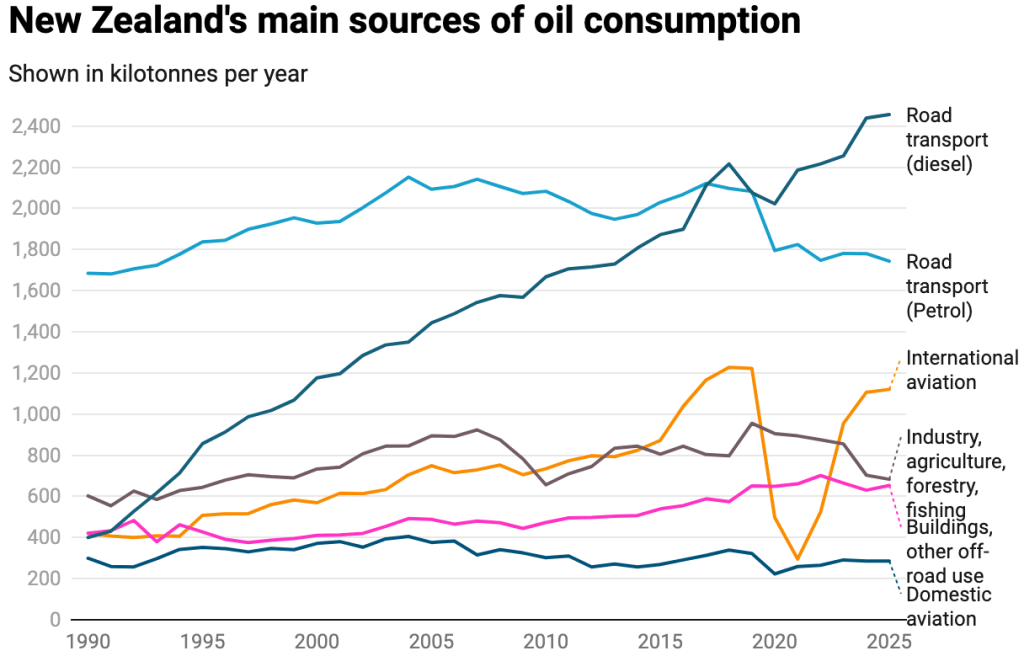
In New Zealand, 80% of oil goes into air and land transport. An oil transition plan really means a transport plan.
Source: MBIE Energy Quarterly
There is a known way to turn off the tap on oil. The “avoid, shift, improve” framework is supported by three decades of experience.
Changing work patterns such as shorter work weeks and working-from-home arrangements can help avoid unnecessary travel. Better infrastructure for walking and cycling and public transport helps to shift transport and dramatically reduce oil use.
The remaining private vehicle travel can be improved through electrification. This requires a combination of incentives and stronger emissions standards, as the International Energy Agency reinforced this week.
At present, New Zealand is still moving in the wrong direction. Over the past decade, the total distance driven by light vehicles increased by 20%, while the distance driven by utility vehicles is up 55%.
Each utility vehicle has 50% higher carbon emissions than a (fossil-fueled) passenger car. These trends have outweighed the improvements from the rise of hybrid and electric vehicles.
There is a limit to how quickly New Zealand’s fleet can realistically be electrified. For a country with the world’s highest rate of car ownership, mass purchasing of new cars is not a good transport solution by itself.
But in any event, phasing out fossil fuels is required for a safe future and should happen in ways that build energy resilience and independence.
Yes, we should have weaned off oil long ago. The oil shocks of the 1970s would have been a good time to start. Failing that, the 2007 oil price spike that was one of the triggers of the Global Financial Crisis. Never mind. The third best time to start is now.
New Zealand’s oil consumption for road transport has nearly doubled since 1990. Preliminary data from MBIE suggests another 4% rise between 2023 and 2025.
Industry is doing it tough.
What are the drivers of this increase? More cars, obviously, but also more people, with each person driving further.
Here’s the breakdown over the past decade:
Impact on road transport CO2 emissions from change in…
Change between 2013 & 2023
Population:
+16.1%
Fuel economy of fossil-fueled car fleet:
–15.6%
Distance driven in light vehicles, per person:
+4.5%
Fleet shift from cars to utes:
+4.5%
Proportion of electric driving
–1.7%
Total change in CO2 emissions
+4.2%
Utility vehicles emit 50% more than (non-hybrid) cars – 259 gCO2/km vs 175 gCO2/km – and the shift is at least partly cultural, with the twin-cab ute becoming a social norm. Utes now comprise 18% of the light vehicle fleet, do 23% of the kilometres, form 26% of sales, and emit 31% of light vehicle CO2. If that shift continues, as it appears to be doing, it forms a significant headwind to emissions reduction.
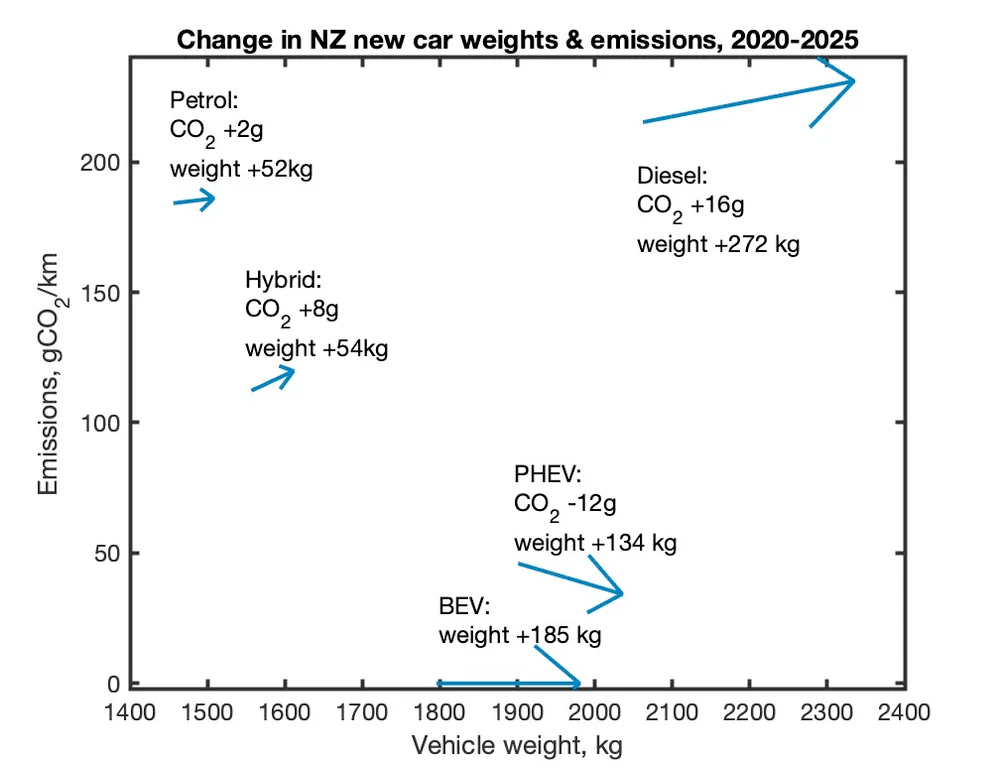
Lately, although the shift to hybrids is reducing emissions, fossil-fueled cars themselves are getting heavier and higher-emission.
What’s up with those diesel cars at 231 gCO2/km?! The average petrol hybrid at 121 gCO2/km does not even meet the 2026 fuel economy standard of 108 gCO2/km. Averaged over all sales, the target is being exceeded by 27 gCO2/km.
Overall, the picture is grim. On balance the country is no better prepared for an oil price or supply shock than we were in the 1970s – oil imports were 2.5% of GDP last year, compared to 1.8% in 1974. But in one respect, we do have an advantage. We know how we failed to seize the opportunity previously, and we know what will work this time.
New Zealand still has a choice, however. It already powers lights, hospitals and factories with renewable electricity. It could have powered a diverse transport system the same way, and it still can.
Every bus electrified, every cycleway built, every train funded is a direct reduction in exposure to the next crisis. The question now is whether New Zealanders begin to treat their car dependence not as a lifestyle choice but as a strategic liability.
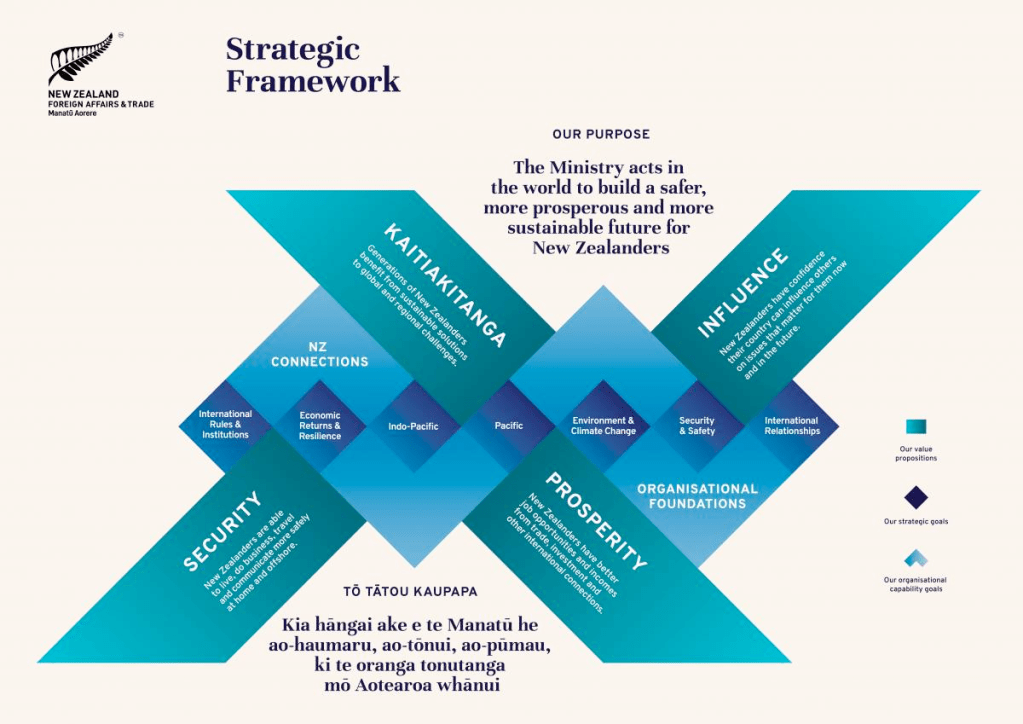
A graphic from the previous Assessment, conducted in 2023 under the previous government.
[The Ministry of Foreign Affairs and Trade is undertaking its triennial Strategic Foreign Policy Assessment. The Ministry writes: “The Assessment will examine the international context New Zealand will navigate in the decade to 2036, and what this means for us. The Assessment will consider the most important changes and drivers we see happening in the world, what they mean for New Zealand, what those changes mean for our relationships, and what they mean for our region — the Pacific and the Indo-Pacific.” Heidi O’Callahan’s submission is below. She would love to read other people’s submissions that tackle other (climate-exacerbated) topics, like overfishing, war, peacekeeping, humane treatment of refugees, terrorism, the scam economies and cyber security.
What are the big international issues you think New Zealand will have to navigate over the next 10 years, and what are the opportunities you think New Zealand can pursue?
The big international problems we must navigate are biodiversity loss and climate change, as well as the poverty, inequity, migration, societal breakdown and geopolitical instability exacerbated by these problems. To navigate these issues successfully requires accepting the root cause: an unsustainable economic paradigm of exploitation centred on the pursuit of economic growth.
Above all, our economy needs to operate within planetary limits; it must become more circular, socially-positive, and ecologically regenerative. Our best opportunities for international trade lie in low-carbon, high-value intellectual innovation. The current industries of bulk commodities (timber, milk products, meat, etc) and international tourism must be scaled back significantly. The scale of these industries cannot be justified on a climate basis, and their pollution and transport impacts are directly damaging to New Zealanders’ health, accessibility and freedoms.
What do you consider New Zealand’s foreign policy needs to do to protect and advance our interests in the world over the next 10 years?
Our government needs to act domestically to protect and advance our interests, if our foreign policy is to have a chance of helping us on the international front. We are currently witnessing the opposite; the government is introducing policy and legislation that is directly undermining our safety and wellbeing. This is happening across all spheres: Te Tiriti, transport, agriculture, education, health, climate, housing and social wellbeing are examples. In climate alone, the government has 1) unethically scrapped policies designed to reduce emissions, 2) reduced the climate targets on the basis of no evidence, 3) decided against bringing agriculture into the ETS and 4) indicated they will baulk at paying the bill for international credits to cover emissions that such a climate-ignorant set of actions creates (despite buying credits being the centrepiece of the National Party’s otherwise non-existent climate policy.)
MFAT cannot operate with any integrity on the international stage alongside such appalling government backsliding. So, while New Zealand’s foreign policy needs to support international climate regulations and rules that force wealthier countries like us to reduce emissions rapidly and pay for our past damage, it is hard for MFAT staff to be taken seriously when representing a hypocritical government.
Nor will MFAT succeed at advancing our economic interests or pursuing opportunities; the government’s climate denial will exclude us from markets and keep us out of key international decision-making.
It’s not just in climate we are becoming a laughing stock. The GPS on Transport attracted derision and ridicule from international experts. The UN Committee for the Elimination of Racial Discrimination highlighted how quickly New Zealand is going backwards under this racist government.
New Zealand’s foreign policy should advance real climate justice, climate action, the commitment to international agreements on improving transport safety, reducing racial, gender and age discrimination, the pursuit of improving the wellbeing of people in all countries (especially indigenous people, and the educational and health opportunities for girls and women), the promotion of sustainable practices and ecological regeneration, and above all, the dismantling of the economic paradigm that has led to the destruction of water, soil, air, natural and human resources.
But to pursue advancing these issues, diplomats should be able to draw on robust examples of domestic New Zealand practices, with truth and integrity. Currently, they cannot.
For you, your community, organisation or business: What matters most in the world beyond New Zealand? What places and international relationships matter most? What do you think are New Zealand’s greatest strengths and weaknesses in our international engagement?
We should pursue strong and respectful relationships with our Pacific neighbours. One important matter “in the world beyond New Zealand” is reducing hypermobility. The majority of people in the world have never set foot in an aeroplane. Yet a small minority continue to fly, with enormous climate impact, and we are all subsidising them to do so. Flying is one of the most inequitable and destructive activities humans can indulge in. Our foreign policy should seek international mechanisms and agreements to achieve substantial reductions in aviation. As a country with apparently much to lose (but also much to gain in other ways) from reducing international aviation, New Zealand is actually in a strong position to lead this international work, through demonstration of substantial systemic change. New Zealand needs to shrink our international tourism industry, and take steps to prevent our wealthy people from travelling so much. Our government must stop promoting New Zealand as a destination, stop allowing airport expansions, introduce taxes to prevent recreational and other avoidable flights, and support the transition to sustainable industries, including sustainable bike-, rail-, and coach-based domestic tourism.
The international relationships that matter most are in implementing and honouring the various UN conventions and agreements – on traffic safety, on climate, on wellbeing and health, etc. It seems, currently, that this government is rejecting the authority of the UN, willingly forgetting what atrocities led to the creation of the UN in the first place!
Currently, the most important international relationships my community has is with experts from other countries to help us try to make gains in evidence-based transport, agricultural, energy and climate policies for New Zealand. Currently, much community effort is being spent trying to undo or mitigate aggressive and regressive government actions that have no basis in evidence or accepted practices. It is very sad to see this waste of human toil and effort, which could be being used to build a better New Zealand.
Also important are the relationships with international experts on democracy. New Zealand’s poor democratic practices are stifling our progress. Deliberation and informed decision-making are the basis of good democracy. New Zealand will not thrive and we will not make the most of opportunities while most decisions are being made on the basis of misinformed opinions, corporate lobbying, misguided pursuits of economic growth, and populism.
New Zealand’s foreign policy should promote the international development of a body of knowledge about modern democracy. Such an international resource would be useful for all kinds of decision-making, and could help dispel the damaging myth that “one person one vote” is a sufficient basis for democracy.
New Zealand’s greatest strength in our international engagement is the goodwill built up over many decades by good diplomacy and leadership. While there has been a low bar for what a “good” country should do to improve the welfare of poorer countries and to pursue development goals, at least New Zealand often tried to be one of the more enlightened OECD countries. Internationally, the standard must improve. Unfortunately, New Zealand is not stepping up. The goodwill is evaporating rapidly.
Our biggest weakness in international relationships is the lack of integrity in our domestic policies.
Do you have any other thoughts on the international context you would like the team to consider?
How the climate changes depends on emissions right now and over the next few years. Net zero by 2050 is necessary but by then it will be largely irrelevant; the important point is the emissions trajectory to get there. Bureaucrats and leaders believe they face difficult decisions currently and rarely prioritise emissions reductions. Yet the different climate pathways will determine the options in front of future decision-makers, who will have fewer resources to be able to draw upon, will be functioning in more urgent circumstances, and are likely to be working within weaker institutions.
When this is fully understood, it is clear that decision-making is unlikely to get any easier! We must stick to ethical action that will help decision-makers in the future. We must invest to pursue rapid and significant emissions reductions, and rapidly transform our systems so they are low carbon. We must acknowledge that the true social cost of carbon is orders of magnitude higher than what our ETS scheme uses; much larger than what Europe is using. We must be responsible international neighbours, and ensure poor countries don’t have to make decisions between climate action and social or economic health.
None of this can be delayed while climate deniers have their turn at power plays in politics. Quality foreign policy, in the absence of quality domestic policy, is akin to “polishing a turd”.
Between 1892 and 2012, Statistics New Zealand published an annual yearbook. As noticed by Matt Lowrie, the 1992 Yearbook included this sidebar which departed from the usual dry style of the previous hundred years:
Plus ça change. Thirty-two years later, New Zealand still has one of the highest rates of car ownership in the world, Paris is eliminating most of its on-street parking, and Sydney has just opened another light rail line. I wonder what caused this outburst from the normally staid statistics agency. Did the new Chief Statistician, Len Cook, want to shake things up a bit?
What particularly caught my eye was this bit:
In New Zealand the average car currently manages a mileage of 100 kilometres per 10 litres. To reach the Government’s target of a 20 percent reduction in greenhouse gas emissions by the year 2000, this would have to be cut to 100 kilometres per 3.5 litres.
Even under the generous interpretation that the target here refers to new cars only, we’re still nowhere near 3.5 l/100km; the last few years hover around 6-7 l/100km. Pretty startling when you consider that the popular Honda Civic (a kind of large hatchback or small station wagon) was already delivering 5.3 l/100km in 1985, and that twenty years after the introduction of the hybrid Toyota Prius in 2001, only 2% of the light vehicle fleet was hybrid.
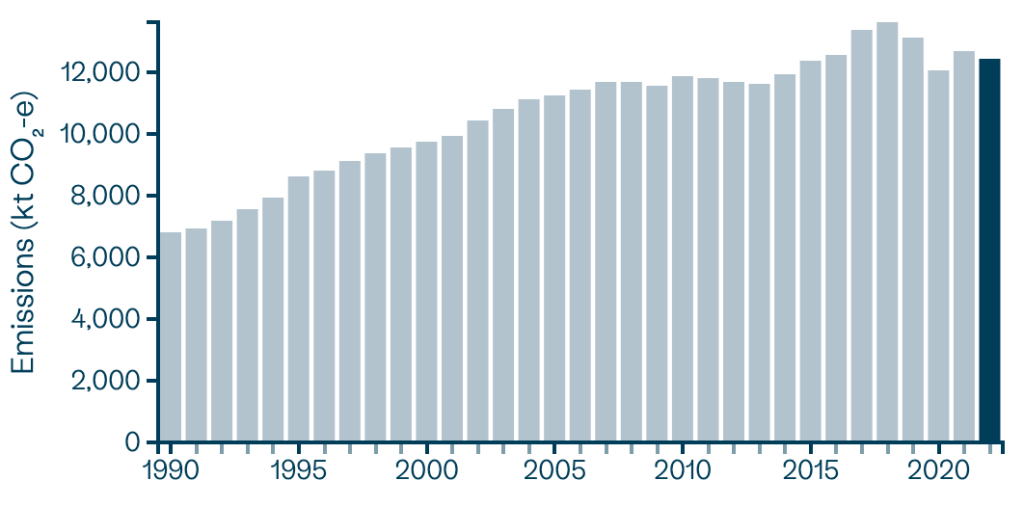
But enough about cars. What about that Government target of a 20% reduction in greenhouse gas emissions by the year 2000? Where did that come from? Needless to say, we’re not there yet either. Gross emissions of long-lived gases, and net emissions of all gases, are both up 40% on 1990 levels. This year, despite the downturn, 210,000 fossil-fueled cars will be imported, which if parked up would fill the entire length of State Highway 1. (Sorry, I mentioned cars again.)
To answer this I want to go back to a fascinating document from 1990, “Responding to Climate Change: A Discussion of Options for New Zealand”.
This was the year of the first IPCC report as well as of New Zealand’s first reports on climate science, climate impacts, and policy options. It was the year that both Labour and National (who defeated the incumbent Labour party in the October 1990 general election) adopted emissions targets. The May 1990 Climate Options report led to Labour adopting a target of –20% on 1990 levels by 2005. The election was to be held on 27 October; with a major international climate meeting falling on 29 October, National announced their own, more ambitious target (–20% on 1990 levels by 2000) just two days before the election.
The 1990 Climate Options Report
The report is comprehensive and offers 93 different options for consideration. They are grouped under social and behavioural measures, planning measures, market measures, legislative and regulatory measures, energy, transport, commercial buildings and households, industry, energy efficiency, agriculture, and forestry. Pretty comprehensive, and all of the options are given a balanced hearing. Any or all of them would have been a good idea.
Transport, as such a large source of emissions, is given a particularly thorough going-over. Suggestions include mandatory tune-ups, fuel efficiency standards, rebates for scrapping old vehicles, lower speed limits, fuel efficiency standards, fuel efficiency labelling, business tax incentives and levies, CO2-linked registration fees, integrated transport planning (hah!), mode shift such as rail freight, responsible town planning, staff transport, optimisation of freight routing and loading, and alternative fuels – CNG, biogas, bioethanol, electricity, and hydrogen.
One of the transport options in the 1990 report. 45 mpg is equivalent to 6.3 l/100km, a level that has still not been reached in 2024.
What’s notable is that all of these ideas were either already in use or under active consideration in many countries. The US introduced fuel efficiency standards in 1975. Norway introduced EV incentives in 1990, after the pop group A-ha had toured the country in an EV (refusing to pay tolls) the previous year. (Thirty-six years later, a quarter of the cars in Norway are electric, which gives some idea of the time and determination required for a technology transition. Per-capita transport emissions in Norway did not begin falling until 2010, and have only now returned to 1990 levels. On its present course, Norway will have decarbonised road transport by 2050, a sixty year journey.)
Morten Harket (left) and Magne Furuholmen from A-ha with Prof Rostvik (second left) and Frederic Hauge with their converted electric Fiat. (source)
So what happened? Unfortunately, from a promising start, the front fell off New Zealand’s climate response almost immediately. As Kirsty Hamilton writes,
This was particularly disappointing because most of the ingredients for a world class national response were present in New Zealand at the end of the 1980s. However, by 1997 New Zealand had gone from being in a prime position to serve as a positive catalyst in the debate, to at best sitting on the fence on key issues, and at worst becoming an impediment to the formulation of an effective international response to climate change.
Consideration of transport emissions virtually fell off the radar for years or decades. Consider the fate of just two of the policy options, fuel efficiency standards and labelling. (I lied when I said “enough about cars”.) They did not progress during the 1990s, but when Labour returned to power in 1999, standards and labelling did eventually make it into a policy document, the New Zealand Transport Strategy 2002. Labelling came into effect in April 2008, but standards fell victim to the election later that year that brought National back to power. Without standards, labelling did next to nothing. Another attempt by Labour to introduce standards in 2018 was blocked by New Zealand First; it took a further electoral cycle before standards were finally came into effect in 2023, 33 years after they were first suggested. That same year National returned and immediately weakened the standards.
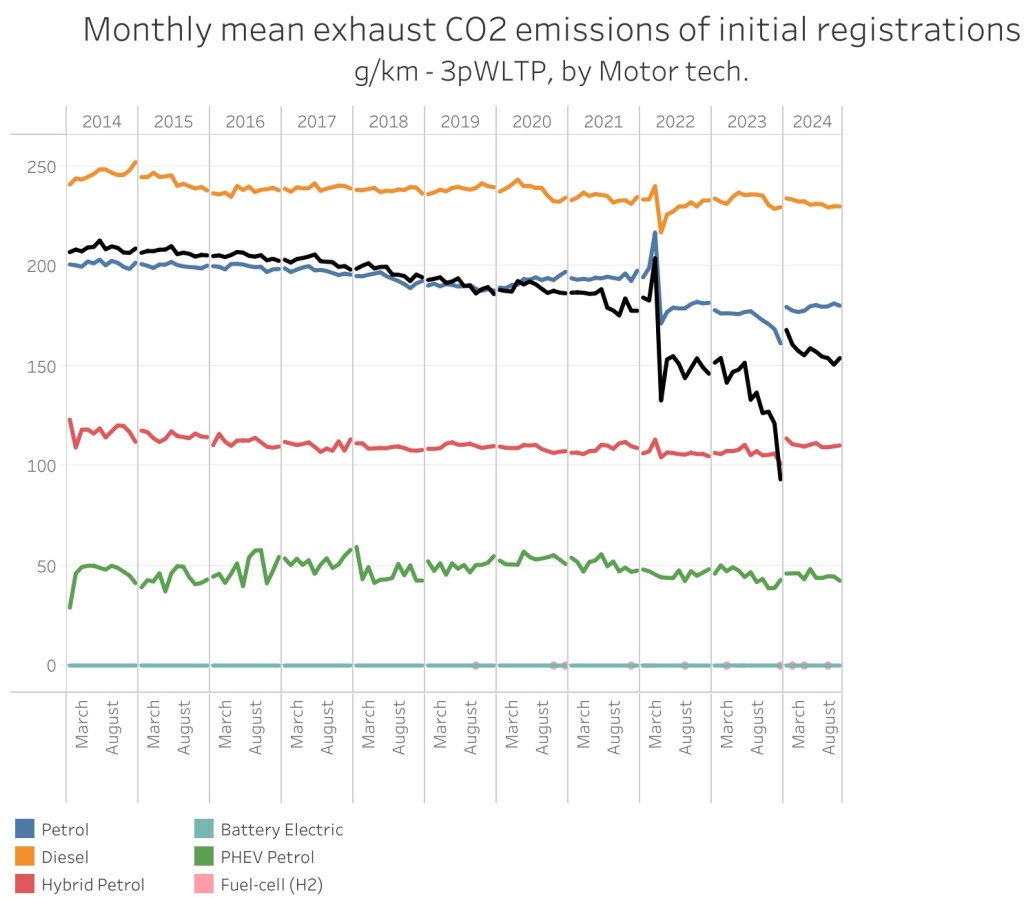
Emissions of newly registered light vehicles, 2014-2024, showing a reduction from 208 gCO2/km in 2014 (8.9 l/100km) to 156 gCO2/km in 2024 (6.7 l/100km). The Clean Car Discount (feebate) was in effect from July 2021 to December 2023. (Source)
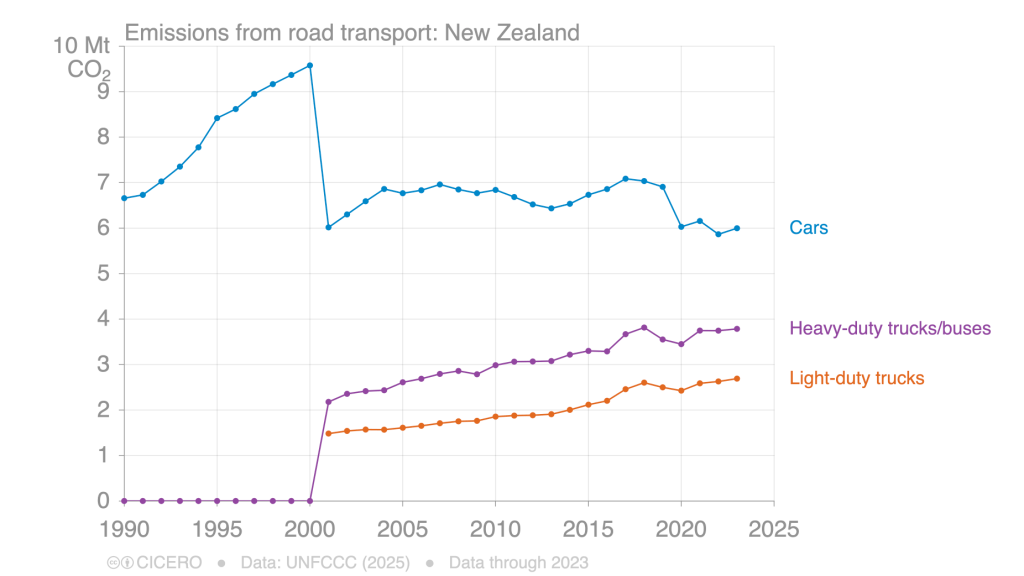
New Zealand’s road transport emissions increased 82% from 1990 to 2022. The increase per capita is 18% (source).
It’s been a similar story of vacillation in almost every other sector. Some of the causes run wide and deep and span the entire problem of climate change itself. Rather than go through the whole history, I want to stick to the 1990 report and ask – did they miss anything? I mean, clearly the authors did not anticipate the strong, organised and persistent opposition that would be raised to virtually any suggestion on how to cut emissions. Perhaps they can hardly be blamed for that. Did they miss anything that could plausibly have been included, and if so, would it have made any difference?
I think they did. They did miss the significant impacts of population growth (57% from 1990 to 2023, faster than the world average) and economic growth (also 57% in real per capita terms, faster than the US). Efficiency gains would have to be really heroic to overcome both of those. Questioning them would have killed the report in any event. Also, the authors weren’t thinking in terms of phasing out fossil fuels entirely, but that need wasn’t widely recognised until fairly recently, and remains a stumbling block even today.
No, the big thing they missed was renewable energy. I could hardly believe it. I had to read the report twice to be sure. In a 100,000-word report (the length of a decent novel), this is all we get:
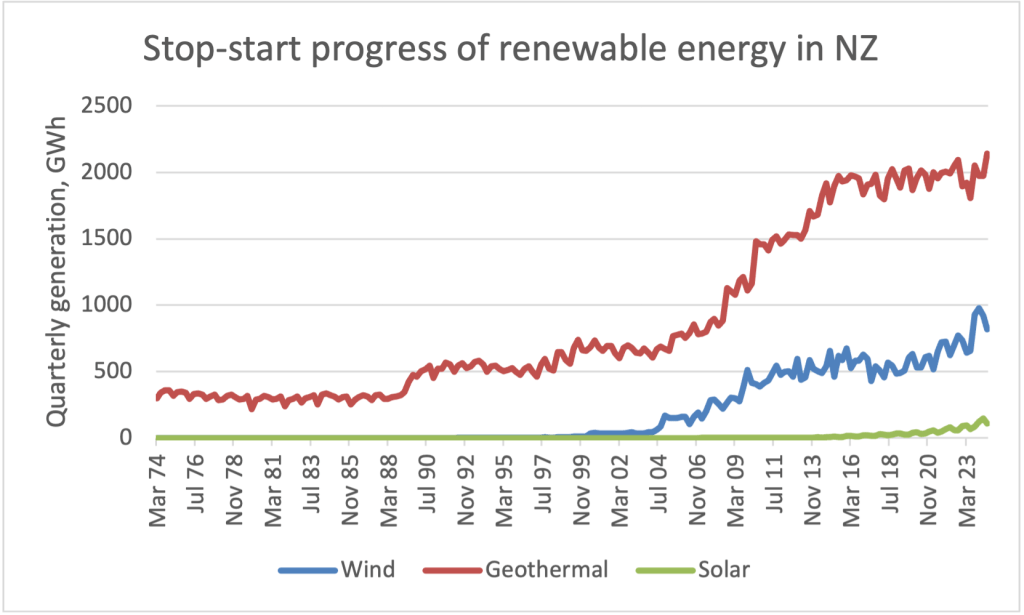
Surely the central importance of replacing fossil with renewable energy was well established by 1990? It’s even more surprising in view of New Zealand’s long-standing pride in its renewable resources (despite an unfortunate detour into gas in the 1970s). 1990 may have been a bit early for solar, but it was not too early for wind. Denmark was already generating 610 GWh a year from wind power in 1990 (similar to the Manapouri hydropower station), as was California, both having started in the 1970s. A New Zealand energy research group had published a report in 1987 outlining the feasibility of twelve 250 MW wind farms, triple what we have now in 2024. We built the first substantial geothermal power station in the world in 1958 and have never lost our world-leading expertise. Moreover, our second geothermal power station at Ohaaki (producing a sizeable 300 MWh a year) had only just opened the previous year.
I’m at a bit of a loss to explain this. Our experience in renewable energy since then has been one of repeated stops and starts, whereas the evidence from other countries is that large-scale transitions, whether in energy, transport, or otherwise, can take many decades and require sustained consistency of focus. Denmark has only largely decarbonised its electricity supply now, fifty years after their journey started.
Source: New Zealand Energy Quarterly, MBIE
I started out by calling this essay “What have we learned?”. Perhaps that was a bit ambitious. Is the lesson that comprehensive policy development and engagement is not enough? That we should have picked a smaller, more focused target and gone after it hard and fast, to bed in momentum and support? Or should we have been bolder to begin with? In the UK, the Royal Commission on Environmental Pollution (an independent agency in existence from 1970 to 2011) went really hard out in their 1994 report Transport and the Environment. They recommended doubling the price of petrol over the coming ten years, reducing total driving, and greatly curtailing road building. Even though none of that happened, their report is right on the facts, and perhaps it did set the scene for other measures which did eventually come about, and which have survived several changes of government.
Thirty-four years after our first climate report, we have at last turned the corner on emissions. In that sense we are on the way. But the harder step, of achieving a society-wide consensus on where we want to be and how to get there, still lies ahead.
Gillespie, A. (2001). New Zealand and the climate change debate: 1995–1998. In Climate Change in the South Pacific: Impacts and responses in Australia, New Zealand, and small island states (pp. 165-187). Dordrecht: Springer Netherlands.
Cherry, N. (1987). Wind energy resource survey of New Zealand: National resource assessment: summary and final report. New Zealand Energy Research and Development Committee, University of Auckland.
[This is my personal submission to the Draft Government Policy Statement on land transport. Submissions close at noon on Tuesday 2 April, 2024.]
In the Emissions Reduction Plan (ERP1), transport emissions fall 41% by 2035. As the Ministry of Transport says, “Achieving this will reduce our dependence on fossil fuels and give us a more sustainable, inclusive, safe and accessible transport system that better supports economic activity and community life.” There is plenty of detail in the plan:
The plan is supported by four specific transport targets:
Target 1 – Reduce total kilometres travelled by the light fleet by 20 per cent by 2035 through improved urban form and providing better travel options, particularly in our largest cities.
Target 2 – Increase zero-emissions vehicles to 30 per cent of the light fleet by 2035.
Target 3 – Reduce emissions from freight transport by 35 per cent by 2035.
Target 4 – Reduce the emissions intensity of transport fuel by 10 per cent by 2035.
Targets 1 and 3 are wrecked by the Draft GPS, while Target 4 is already suspended. Target 2 is also threatened by related government actions to slow the uptake of EVs and other low-emission vehicles: cancelling the CCD, imposing high RUCs on EVs (a world first), proposing to weaken the CCS, and proposing to replace fuel tax by RUCs based on distance and weight.[1] The Ministry advise that the first two of these alone may limit EV share of the light vehicle fleet to 7% by 2030 (and 23% market share)[2], vs. 12.5% in the Climate Change Commission’s Demonstration Path (and 64% market share), putting the 2035 target at risk. However, the Ministry’s model involves 22,000 EV sales in 2024. In fact there were only about 1,700 sales in the first quarter.
The ERP1 for transport is not rocket science and should not be at all controversial. Internationally, all transport climate plans include the basic elements of fuel standards, mode shift, public transport planning. The IPCC in their summary of evidence say the same thing. The debate is over the mixture of fees, incentives, regulations, and bans, not over the direction of travel. The Draft GPS would wreck this plan. Spending on walking, cycling, and public transport would reduce and become highly constrained. Spending on rail infrastructure would reduce drastically, which could render the national rail network non-viable. That in turn wrecks the New Zealand Rail Plan, intended to increase the proportion of heavy freight carried by rail by building high-tech truck/rail freight hubs and new rail ferries.
Dropping climate from the GPS drops it from NZTA, currently the lead agency charged with delivering emissions reductions from transport. What could replace it? The government is committed to meeting the emissions budgets, but have not yet released much detail about how they plan to do that, other than that the ETS will be the main tool.
But it is well known that carbon charges are not an effective way to reduce transport emissions. At current prices the ETS adds 15 cents per litre to the price of petrol, or $15/1000 km. The RUC rate for light vehicles is $76/1000 km. The carbon price would have to increase by a factor of five just to match that, which is unthinkable – it would destroy all other exposed sectors.
This issue has been covered extremely thoroughly in the international literature. In 2022, I co-authored a review with David Hall on “Why emissions pricing can’t do it alone”[3]. The Climate Change Commission identified ten types of barriers to a low-emission transition; tellingly, transport is the only sector for which they proposed specific fixes for all ten barriers. Nearly all of them are under attack.
So it is really flying in the face of evidence think that the ETS can be our main climate tool, particularly for transport. Details are lacking – Minister of Climate Change Simon Watts will only say that work on the second Emissions Reduction Plan (2026-2030) is under way. Analyst Christina Hood has repeatedly detailed how the ETS will struggle to deliver even under present conditions[4].
Emissions reductions first entered the GPS in 2015, under John Key. It was raised to a strategic priority in 2018 and 2021, but now it is proposed to be dropped. Presumably, all work streams in NZTA related to emissions reduction will be stopped and all work teams dissolved. So, despite all the other alarming and potentially disastrous parts of the Draft GPS, this one is the worst.
Section 5ZI(3) of the Climate Change Response Act 2002 states that
The Minister may, at any time, amend the plan and supporting policies and strategies to maintain their currency, (a) using the same process as required for preparing the plan; or (b)in the case of a minor or technical change, without repeating the process used for preparing the plan.
But the Draft GPS states, in contrast, that
Following the general election and a change of government in late 2023, the intended emissions reduction policies foreshadowed by the previous Government are being reassessed. For this reason, GPS 2024 has not undertaken the alignment exercise as anticipated in ERP1. The Emissions Trading Scheme (ETS) is the Government’s key tool to reduce emissions. In addition to the ETS, matters relating to climate change/emissions reduction issues are being worked through and will be addressed during development of the second Emissions Reduction Plan (ERP2).
Thus both the Draft GPS and the decision to not perform the alignment exercise are in violation of the Climate Change Response Act 2002. Note that the relevant “plan” referred to in section 5ZI(3) in this case is ERP1, not ERP2. In addition, many of the activities needed to support the 2nd and 3rd carbon budgets need to be undertaken in the first budget period.
Slower transport emissions reductions from existing policies mean that other policies will need to be developed to replace them. I am skeptical that the two that have been announced – higher carbon prices and faster EV charger rollout – can make up the difference. But at the very least the modelling and policy advice to support this approach should be published. To put it another way, the climate plan and the transport plan should be prepared together. But they have not been prepared together in what appears to be a deliberate strategy.
Another possibility is transport emissions will be allowed to decrease more slowly that previously intended and that other sectors will make up the difference. But transport is so large a share of emissions that it is hard to know where the other savings could come from. Three other large sectors are agriculture, industry, and trees. The first two may struggle to deliver greater cuts, while trees are already performing a far greater share of net emissions reductions than in any other developed country and are also facing policy challenges and risk transferring climate obligations to future budget periods.
To sum up, the Draft GPS constitutes climate denial.
Recommendations
R1. Perform the alignment exercise required of the GPS by ERP1.
R2. As the proposed changes to ERP1 are neither minor nor technical in nature, but strike directly at its heart, revise ERP1 using the process required by the Climate Change Response Act.
R3. Publish the legal advice received regarding R1 and R2 above.
R4. Reinstate emissions reduction as a strategic priority of the GPS.
the forces for increasing fossil fuel burning were vastly more powerful than the puny forces opposing them. All the talk about climate change in 2017–2019 had little effect on the behaviour of companies or individuals.
Have we turned the corner? Possibly. The pro-fossil fuel forces are still there, but the opposing forces are gathering strength, especially through the Zero Carbon Act which for the first time includes a falling cap on emissions. In the most sensitive sector, electricity, the changes can be seen already. My takeaway from the new 2019 data is that the big four, road transport, aviation, electricity, and food processing, that are so large, that have performed so poorly, and that have so much scope for transformation, are where we need to look for change.
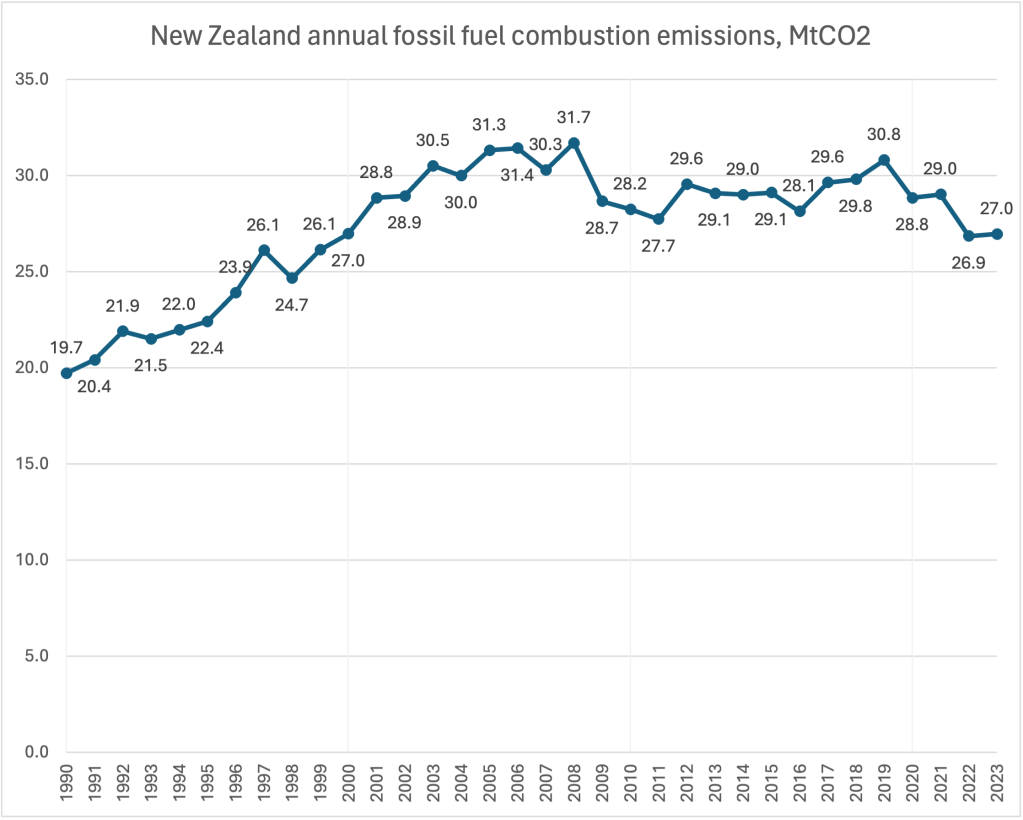
We don’t have full emissions data yet for 2023, but MBIE have just released a partial snapshot covering emissions from the burning of fossil fuels, which contribute 85% of gross CO2 emissions. 2023 was the first full post-lockdown year – travel restrictions were only eased in early and mid-2022.
Although emissions are up slightly, they are still well below the blow-out year of 2019, and stand at 23-year lows. 2022 and 2023 comprise the first half of the first 2022-2025 carbon budget, so low emissions in these two years will definitely help us meet the budget.
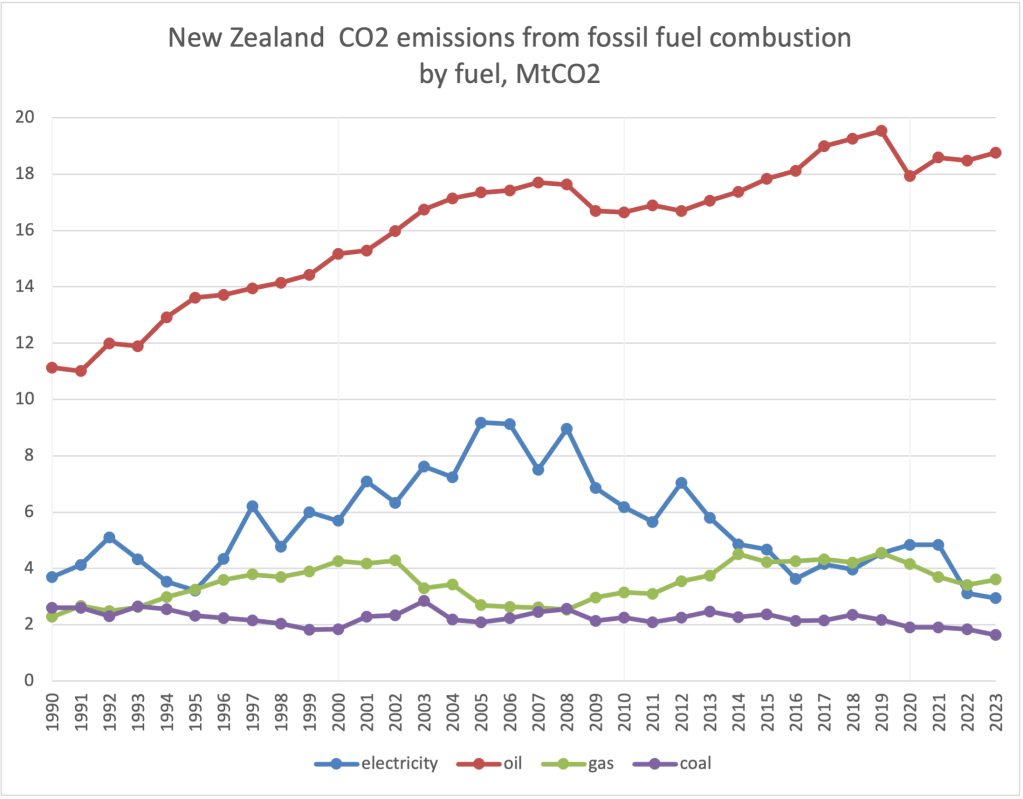
But digging into things in more detail, progress is not so great. Here’s the breakdown by fuel.
This shows that the fall in emissions in 2022-23 was due to falling electricity emissions, caused by full hydro lakes (hydro generation up 4200 GWh on the previous two years, or 5% of total generation) and new wind farms (up 1100 GWh). Solar (up 290 GWh) also started to make an appearance. That doesn’t mean that electricity emissions will bounce back, though: another 2800 GWh of new renewable generation is planned for the next three years, so even in an ‘average’ rain year we should be alright.
Clearly a major culprit is oil. It’s a big chunk of these emissions (70%) and it’s hard to move. Oil consumption is down on record highs, but not by much – closing the Marsden Point oil refinery in mid-2022 shifted 0.8 MtCO2 of emissions offshore, accounting for the whole decline.
The Clean Car Discount was introduced in mid-2021, and staying in place for 2 1/2 years, but has now ended. Road User Charges will be introduced on EVs in two weeks’ time, at a proposed rate of $76/1000 km – New Zealand will be the first country in the world to do this. (In Australia, the state of Victoria did impose RUCs on EVs, at A$25/1000 km, but this was annulled by the High Court last year.) There are also threats to weaken future fuel efficiency standards and to remove fuel excise duty entirely. Together these amount to a war on EVs which may lead to significant upward pressure on emissions. The fact that all the EVs in New Zealand are only saving 0.14 MtCO2 a year at present – too small to even see on the above graph – doesn’t mean they’re a failure, it just shows the scale of the problem and the persistence that is required.
Of course EVs are not the only or even the most important solution to transport emissions. In 2021 I wrote that “big battles over mode shift lie ahead” and these have now come to pass with the release of the Government’s draft policy statement on transport, which drastically de-emphasises cycling, passenger rail, and public transport. Climate Liberation Aotearoa have a handy mantra:
The first three are part of the first Emissions Reduction Plan, but the Government appears to think it is free to ignore the plan. As I read it, they are in violation of the Zero Carbon Act, which says that
The Minister may, at any time, amend the plan and supporting policies and strategies to maintain their currency (a) using the same process as required for preparing the plan; or (b) in the case of a minor or technical change, without repeating the process used for preparing the plan.







 Planetary Ecology