By Robert McLachlan
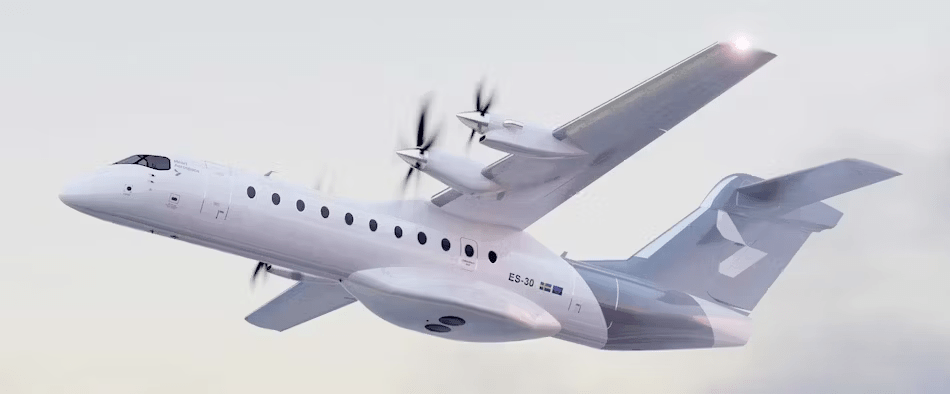
Back in 2021 electric aircraft were a hot topic. Paul Callister and I looked at three startups (Heart Aerospace’s ES-19, Eviation’s Alice, and the Lilium Jet) to see if their claims stacked up. They all faced serious difficulties with weight, range (especially the reserve range required for safety), and unproven technology.
Two of the three (Lilium and Eviation,the latter pre-ordered by Air New Zealand) went bankrupt in February 2025, leaving only Heart Aerospace. Their ES-19 (pre-ordered by Sounds Air) has undergone two radical redesigns. In May 2024, an innovative wing strut was added and the range was halved to 200 km, extended by a serial kerosene generator (ideally used only as a reserve). Later, the wing strut disappeared, and two of the four electric motors were replaced by standard kerosene turboprops – essentially a parallel hybrid. No test aircraft has yet been flown or even built, but commercial operation is still promised for 2030.
On the policy front progress has been no better. The Climate Change Commission has made a strong recommendation to bring international aviation and shipping into New Zealand’s 2050 climate target; the government has yet to respond, and the Commission has no brief to look at the issue further. The public/private partnership Sustainable Aviation Aotearoa, established in 2022 as part of the first Emissions Reduction Plan, has yet to issue reports, advice, or communications of any kind.
This was the background in my mind as I prepared to address the Royal Aeronautical Society’s New Zealand Division on “Tech hopes for the aviation industry” on 29 May.
Please watch the video of the talk below, or read the slides.
 Planetary Ecology