Climate change: a reply to the five most common comments from readers

The following article was first published by Stuff on 22 April 2019. Read the original article.

The Stuff series “Quick! Save the Planet” has been running for four months now, providing a wide canvassing of issues around climate change. The articles have attracted many recurring comments from readers, especially arguments about whether we should be cutting emissions at all. These arguments do all sound appealing and are well worth a closer look. Taken together, they illustrate why anthropogenic climate change is such a difficult, indeed unprecedented, issue for society to tackle.

“New Zealand is too small to make a difference.” 

This one is so widely believed that proponents of business as usual will often open with it: “New Zealand is responsible for just 0.2% of global emissions.” Some take it to the next level with, “My personal emissions are too small to make a difference.” This last variant is so extreme that it makes the fallacy very obvious. The emissions of any city, state, or nation of 4.8 million people are too small to make a difference to the global situation, but this is a global issue that can only be solved by collective action. In other collective issues that our society has addressed, including vaccination, democracy, taxation, and human rights, the relationship between the part and the whole is generally understood. Similarly, many things we do daily require us to abide by a social contract. For example, rules for road users are set for the safety of all, but only work properly if everyone abides by them. An individual doing their own thing, like driving in the opposite direction to the traffic flow, has an immediate and obvious impact (literally).  

There are other replies to this point as well. As James Shaw points out, countries with less than 1% of global emissions together add up to 30% of emissions.  A lot of littles add up to a lot.

In international negotiations, New Zealand definitely carries more weight than our 0.06% of world population would suggest. By banding together with other countries with similar goals, our influence can be huge. It already has been – some of the breakthroughs at Paris were directly thanks to the New Zealand team.

And where would you draw the line? Should Australia or the UK, with 1% of global emissions, count? Should Russia, with 5%? Some argue that even the US, with 15% of emissions, is irrelevant, and only China matters. Which brings us to the next point.

“It’s all about China.” 

(or India, or the US, or…) A variant of this one is, “Why should we do anything when no one else is?” China and India are undeniably important, and it’s good to know what is happening there. What is happening is that both countries are investing in renewable energy at staggering rates. In India, solar power is doubling every year, reaching 25GW by the end of 2018; 100GW is targeted for 2020. Wholesale prices for solar have plummeted to less than 5c/kWh. While coal plants are still being built, 25GW of planned plants were cancelled in 2018 and 40GW are mothballed. 

The truth is, most countries are working and investing frantically in this area. The Climate Change Performance Index is an annual assessment of 60 countries emissions trends and commitments. In 2019 New Zealand ranked 44th, India 11th. We are very far from being a leader, or even a fast follower. We have a long way to go, and learning from what is working in other countries is not a bad option.

It also needs to be remembered that India and China only recently became major industrial powers. Europe and the United States led the industrial revolution and began the extensive exploitation of fossil fuel reserves. Indeed empires were built on the wealth generated and are linked directly with European colonialism, exploitation and trade manipulation in countries including India and China. 

“Cutting emissions would wreck the economy.” 

It certainly hasn’t done that in countries where emissions are falling, like the US, Australia, and the UK. In fact, many of the steps we need to take will earn money. Energy efficiency and electrification are net wins, and also represent a switch to  clean, renewable, domestic energy sources (wind and water) over imported fossil fuels. We spend about $5b a year on the fossil fuels, a lot of which is wasted. Countries that are taking action in these areas are gaining a competitive advantage. 

There are some areas where it’s difficult to cut emissions at present, like international aviation. No one is suggesting stopping these overnight. All the more reason to look at them closely and form a plan.

“Hypocrite!” 

Politicians, climate change scientists, and climate advocates, are often called hypocrites for calling for reductions while continuing to emit themselves. It’s the Al Gore argument. Planeloads of civil servants flying to international climate change conferences come in for particular scorn. For a physical scientist, this argument is hard to even understand, because a person’s personal emissions appear to have no bearing whatsoever on whether or not their proposals are sound. (Besides, rock stars and CEOs have way higher emissions!) But emotionally, it packs a punch. No one likes to be called a hypocrite, and anyone who wants to criticise the government will want to draw attention to any apparent hypocrisy. Even though perpetual cries of hypocrisy can undermine trust in society, the charge should be considered seriously. In the long run, we all need to trust each other, to want to do the right thing, and to see others doing it too. 

Calling out others for hypocrisy might feel like justification for us doing nothing ourselves, but in fact it is more effective as a battle cry if you make lifestyle changes yourself. 

“No one talks about the elephant in the room, population growth.”

Global population growth is 1% a year and is slowly declining. So, we need to cut per capita emissions by 1% a year just to stand still, and then a few percent a year on top. Population growth makes the challenge a bit more difficult, but it’s not the main source of the problem. Most growth is taking place in countries with extremely low emissions, so (at least for now) they’re not contributing to the problem. Educating and empowering women, and building stable societies, tends to lower population growth. 

In New Zealand the situation is a bit different as much of our population growth comes from immigration. Our population growth is running at 2% a year – an extra 450,000 people in the past five years. This is a choice we’ve made as a society that creates all kinds of impacts throughout the environment, both human and natural. We do need to talk about it.

Robert McLachlan and Steve Trewick

Climate change is hitting hard across New Zealand

File 20190418 139088 13sw1xb.jpg?ixlib=rb 1.1
Finance minister Grant Robertson (left) and climate minister James Shaw address school children during a climate protest, promising that New Zealand will introduce zero carbon legislation this year. AAP/Boris Jancic, CC BY-ND

The major focus on climate change in Environment Aotearoa 2019, a stocktake on New Zealand’s environment released today, is a welcome change.

The report describes an environment that faces serious pressures, including species at risk of extinction, polluted rivers and streams, the loss of productive land as cities expand, and climate change.

On climate change, the report is more detailed and hard-hitting than past reports have been.


Read more: New Zealand’s urban freshwater is improving, but a major report reveals huge gaps in our knowledge


New Zealand’s global share of emissions

New Zealand’s greenhouse gas emissions are high internationally. In 2015, New Zealanders produced 17.5 tonnes of greenhouse gases (measured as carbon dioxide equivalent) per person, 33% higher than the average of 13.2 tonnes from industrialised countries.

In the latest figures from 2017, gross emissions rose 2.2% from 2016 and remain 23% above 1990 levels. The immediate causes are clearly stated: high emissions of methane and nitrous oxide from agriculture and sharply rising emissions of carbon dioxide from transport.

The report is silent on the root causes of rising emissions, including ineffective government action and community attitudes that rank climate change as a relatively low priority. Instead it states:

Our high per-person emissions are reversible if we adopt policies, technologies, or other means that reduce our production of greenhouse gases.

But this obscures the story of 30 years of policy work on climate change and 11 years trying to make New Zealand’s Emissions Trading Scheme work.


An earlier report on climate change did not foresee the flood of vehicles entering the country. This has now given New Zealand the highest rate of vehicle ownership in the OECD. New Zealand has 4.36 million vehicles, up half a million since 2015, but lacks the regulations found in many other countries, such as CO₂-linked registration fees and fuel efficiency standards. With a flood of cheap, high-emission used imports, it is no surprise that New Zealand’s transport emissions continue to rise.

Known unknowns

A key function of this latest report is to identify knowledge gaps. An important one for New Zealand is the relative strengths of different carbon sources and sinks, for example by different types of vegetation, soils and agricultural practices.

As emphasised recently by the Parliamentary Commissioner for the Environment, New Zealand is still focusing too much on plantation forestry as a short-term fix for our emissions problem. It is a risk because it creates a carbon liability for the future, as well as exposure to diseases and fires. Its true environmental impact is not well understood.


Read more: The scandal of calling plantations ‘forest restoration’ is putting climate targets at risk


The section on current climate impacts could not be more clear.

Climate change is already affecting Aotearoa New Zealand. Changes include alteration to temperature, precipitation patterns, sea-level rise, ocean acidity, wind, and sunshine.

New Zealand’s temperature has increased by 1ºC since 1909. While this is close to the global average, it is less than the global land average which has increased by 1.4ºC. New Zealand is protected to some degree by the Southern Ocean.

Warm days have increased and frosts decreased. Soils have dried, glaciers have melted, sea levels have been rising, the oceans have warmed and acidified, and sunshine hours have increased. No surprises so far. Climate science predicts an increase in extreme rainfall events, but this has not yet been detected statistically. At one-third of the measured sites, extreme wind has decreased, whereas an overall increase in wind is expected.

New Zealand not immune to climate change

If anything, the section on current impacts is too conservative. The data stops in 2016 before the epic years of 2017 and 2018, which saw many extreme weather events of all types. These were linked in part to El Niño, which raises global temperatures, and in part to an extreme Southern Annular Mode, an indicator whose strengthening is itself linked to climate change.


Read more: Farmed fish dying, grape harvest weeks early – just some of the effects of last summer’s heatwave in NZ


Few New Zealanders will forget the sequence of ex-tropical cyclones, 1-in-100-year floods, the sight of the Southern Alps without snow or the Port Hills on fire.

The report’s final section covers future impacts in the most forceful official statement seen yet. It lays out a blizzard of impacts in all areas of the environment, country, economy and infrastructure, including coastal flooding, erosion, tsunami risk, liquefaction risk and saltwater intrusion.

All aspects of life in New Zealand will be impacted.

The way forward

The uncertainties are clear. We don’t have a clear idea of the rate of future emissions, or the impacts under different emission scenarios. Some of the most important impacts, such as sea-level rise, are also the most uncertain. The report notes that information on cumulative and cascading impacts is limited. Climate change has the capacity to undermine environmental efforts elsewhere.

Polls show a rising awareness of climate change and a hunger for stronger action. The Zero Carbon bill is expected to go to select committee before June, but even when passed, emissions will not start falling until the mid-2020s, with the heavy lifting left to the 2040s and future emission reductions technologies.

A recent report on New Zealand’s transition to a low-emission economy outlines many more immediate actions. Let’s hope that this report, along with the public pressure from the School Strike 4 Climate and Extinction Rebellion movements, give the government the courage to act decisively.

Robert McLachlan. This article is republished from The Conversation under a Creative Commons license. Read the original article.

New Zealand’s greenhouse gas update 2017

Each year around this time, New Zealand, along with most other countries, reports its annual greenhouse gas emissions to the UN. The 2017 figures have just been released. (It takes a while to prepare and check the figures – if you delve into the spreadsheets and reports, you will see why.)

In countries with established and functioning emission reduction plans, these reports are a useful way to check, sector by sector, whether the plans are working, or whether they need to be adapted in some way to meet emissions targets. For example, in the UK, in 2017 emissions fell 3%, leaving net emissions 43% below 1990 levels.

We’re not at that point in New Zealand, as the Emissions Trading Scheme is widely regarded as having had little effect on emissions, there is no cap on emissions, the existing targets are very weak, and we are still waiting for the Zero Carbon Bill. Gross emissions have been fairly flat for a decade.

Even so, it was a bit of a surprise to see a sharp uptick in emissions in 2017. They jumped 5%:

Of course, this is a far cry from what is needed: limiting warming to 1.5ºC requires cuts in emissions of around 6% per year, with burning of fossil fuels halving by 2030.

Breaking it down into sectors, the big issue remains transport:

So many things wrong with this picture. Don’t do this.

Alas, the forces that contribute to rising emissions are still in place, and although consumers and businesses are starting to look at plans to lower emissions, they will take time to have an impact. As James Shaw commented recently, emissions are not likely to start falling significantly until the mid-2020s.

Don’t do this either. The stone age is over.

The vehicle fleet grew by 180,000 in 2017, and the total distance travelled, after being flat for several years, was up sharply too:

Fuel efficiency of the fleet is hardly improving. Altogether, transport emissions rose by 930,000 tonnes of CO2 – a 6% jump in a single year. This trend continues – although final emissions figures are not yet in, the fleet grew by another 140,000 vehicles in 2018. The measures that would cut emissions, and that are well underway in most developed nations – a feebate scheme, fuel efficiency standards, and rapid electrification of the national bus fleet – are still missing in New Zealand.

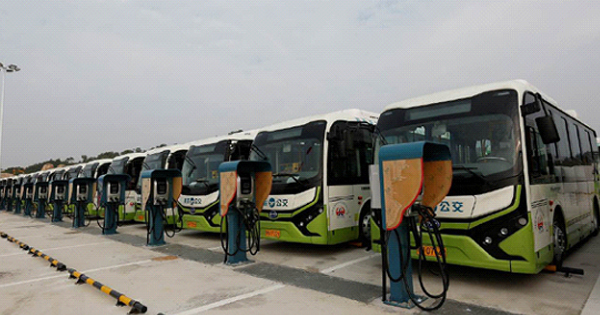
This is the kind of thing that will reduce transport emissions. Diesel buses are a major source of particulate emissions which are known to kill people.

Electricity emissions were up 580,000 tonnes, although they are still less than half what they were at their peak in 2005. Emissions likely fell in 2018, which was a better year for renewables, and should continue to trend down as more wind power is built. Mercury’s recent decision to build the Turitea wind farm should cut emissions by several hundred thousand tonnes a year and must have raised questions about the viability of gas power plants that are consented but not yet built.

Forestry sinks were down 870,000 tonnes: more trees were cut down than were planted. This situation is likely still in place, although it will be reversed when the billion tree programme kicks in.

Perhaps the most staggering sector is international aviation. These figures are reported, but are not part of our national targets. Emissions rose 362,000 tonnes, or 11%, in a single year, and are now up 178% on 1990 levels. 

Hmm…

Robert McLachlan

Robbing the bank: land use change.

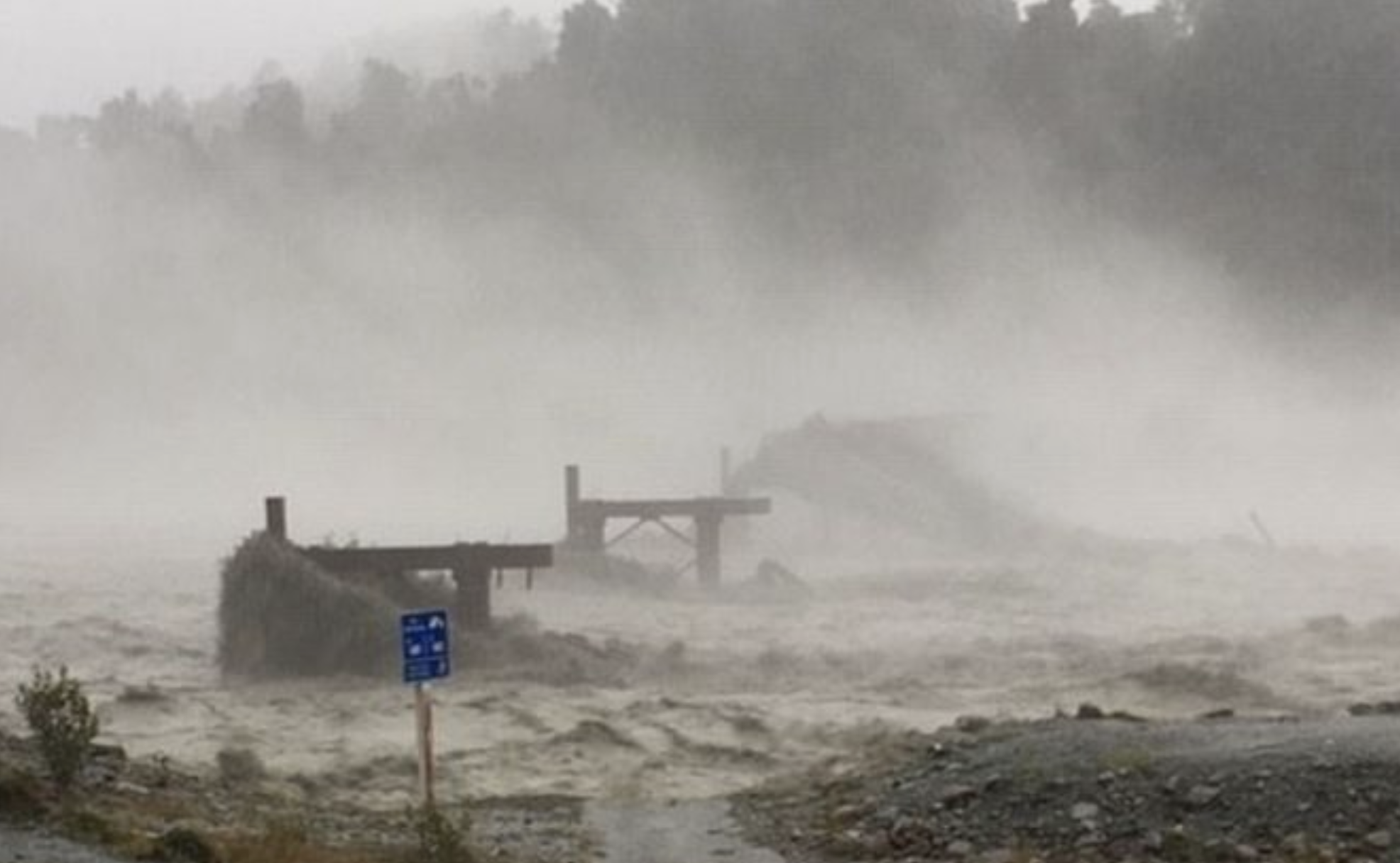
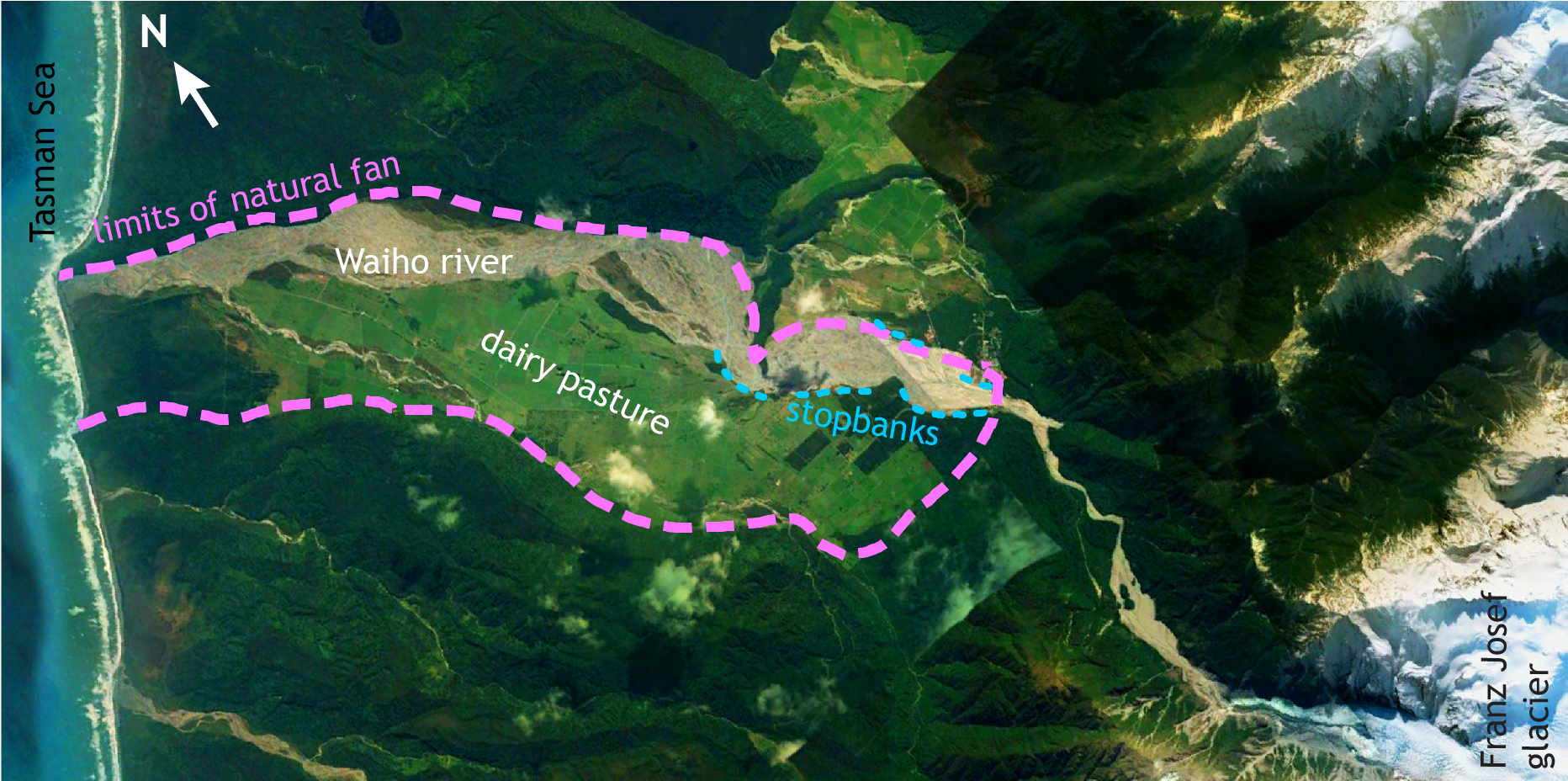
In an epic weather event affecting most of the West Coast on 26 March 2019, attention was focussed on the dramatic washout of the Waiho Bridge near Franz Josef, cutting the West Coast highway. In response, the West Coast Regional Council has suggested that a long-term strategy to safeguard the area is to remove stopbanks constructed in the 1980s.

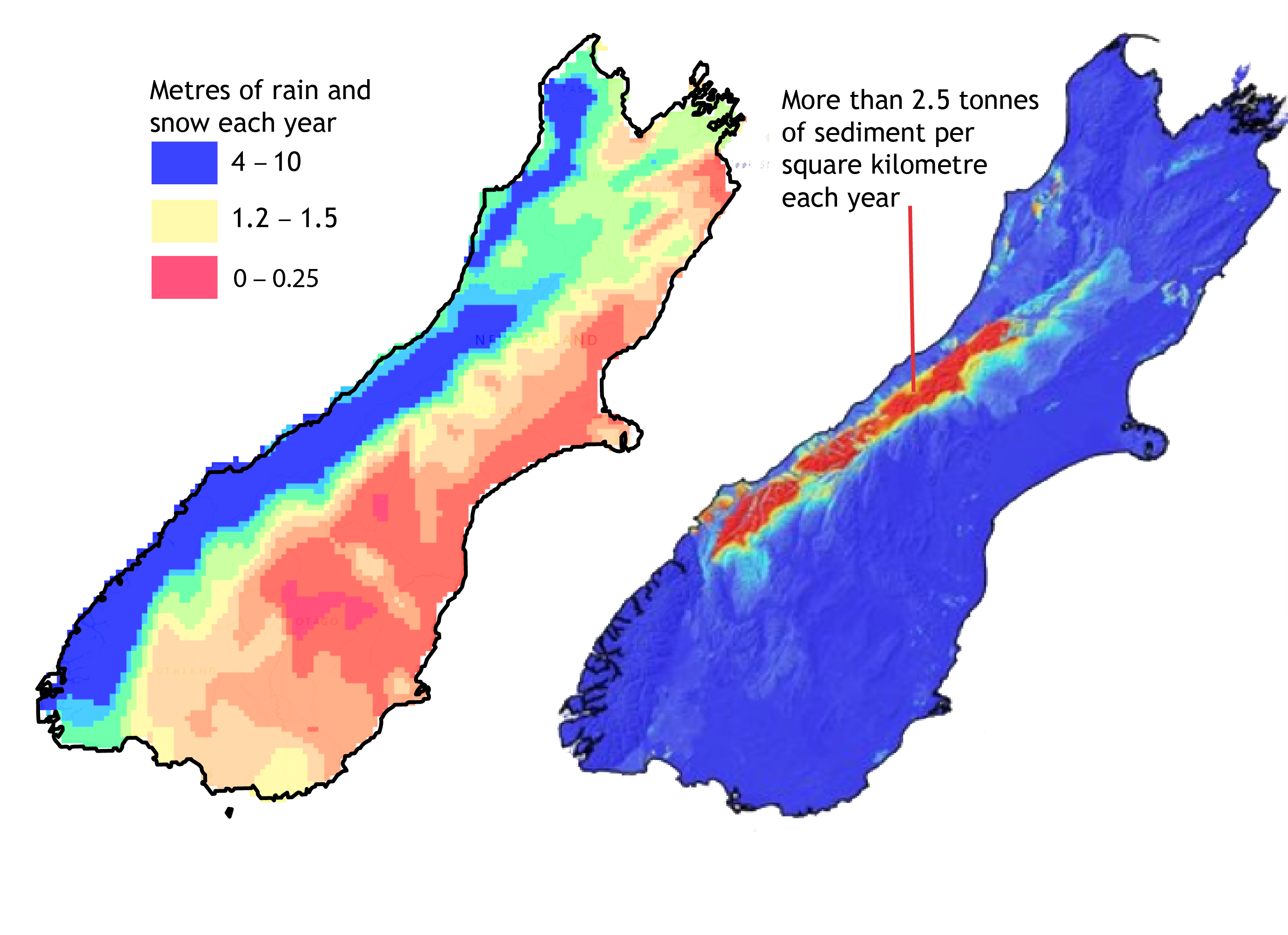
Knocking down stop-banks seems a perverse response to flooding, especially when it could result in the loss of farmland, but here’s the rub: before it was farmland it was floodplain. Recent heavy rain resulted in the collapse of the bridge crossing the Waiho river, not for the first time. The rain event was extreme even for the area – about 300mm in 24 hours, close to the monthly average for the area. The Waiho flows from the snout of the Franz Josef glacier, a major draw for tourists visiting the West Coast which is renowned for spectacular scenery and rain. The abundant precipitation in the west of South Island New Zealand is an integral part of its ecology and intimately linked to its landscape. Briefly, air laden with water vapour from the ocean is pushed from the west in response to Earth’s rotation.

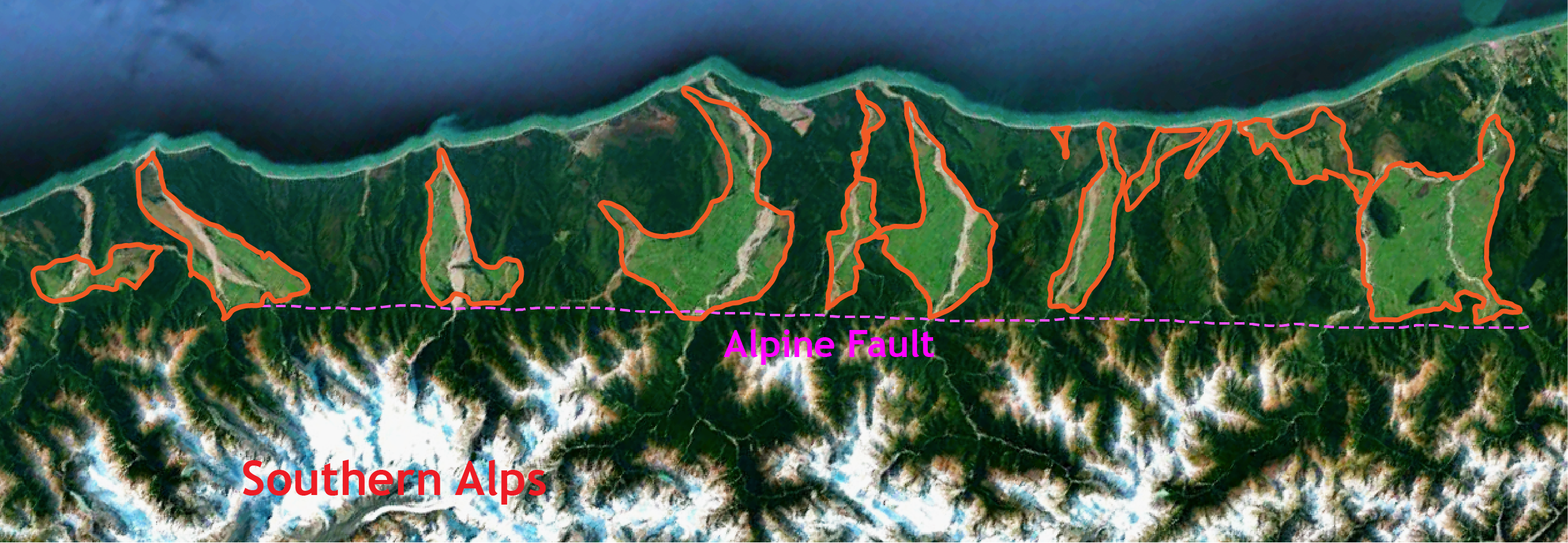
This weather circulates the southern seas largely unimpeded by land for at least 30 million years, since Australia and Antarctica were separated by tectonic forces. However, in South Island New Zealand, the Alpine Fault represents the collision of two tectonic plates that resulted in up-thrust of rock strata and eventual formation of the Southern Alps about 5 million years ago. The Southern Alps get in the way of some of the humid westerly wind forcing it up to cooler altitude where water condenses and falls as snow or rain. This orographic rain explains the huge difference in conditions between the wet west and dry east of the island. It also explains why glaciers flow down some west coast valleys, why the Southern Alps were so heavily glaciated during the Last Glacial Maximum 20,000 years ago, and why erosion rates are so high. The immense amount of water and sediment coming down from the mountains makes a powerful porridge that is a feature of braided rivers and alluvial plains in the region.

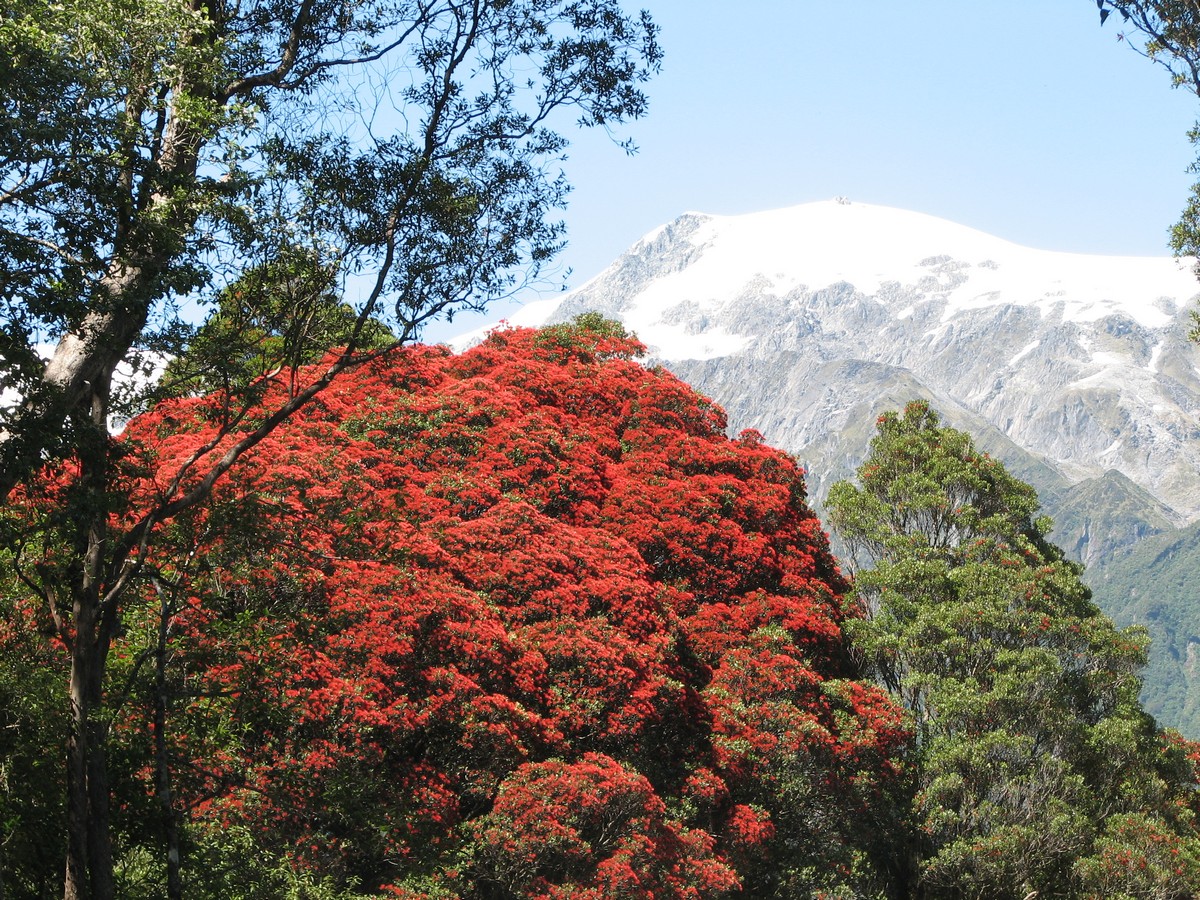
Downstream from the ill-fated Waiho bridge, the river weaves its way across flat land formed from sediment previously brought down to the area by water.  The land here is therefore a product of the alpine erosion (just as the Canterbury plains are), and as such has supported  for millenia an indigenous wet forest and wetland vegetation spanning sphagnum mosses to giant rimu, kahikatea  and southern rātā. Here lives a highly diverse fauna and flora with many species particular to the region (e.g. Okarito kiwi, several lizards, carnivorous snails, the world’s only green cave wētā) and many newly discovered species awaiting formal recognition. This low-lying flatland environment includes some of the most extensive areas of New Zealand wetland habitat, of which less than 10% remains. But this environment is also highly valued for conversion to agriculture and in particular dairy pasture. Pasture conversion means replacement of the indigenous habitat and its fauna and flora with a handful of European plants and cattle with their associated ejecta.

To achieve this transformation the natural floodplain of the Waiho River has been engineered (as have many New Zealand rivers) to restrict water flow using stopbanks bulldozed from the river bed. This approach seeks to reduce the meandering habitat of rivers with low slope so that land can be cleared and managed. At Franz Josef it became apparent more than 10 years ago that once created the stopbanks increased the accumulation of sediments upstream by confining the fanhead near where the road (SH6) crosses the river. This aggradation (raising of land) that is linked to failure of the bridge results when the rate of sediment supply is greater than the rate of removal, and did not happened prior to human intervention when the river occupied the wider flood plain.

The ghosts of natural drainage channels are impressed on the converted land. See GoogleEarth

So, despite the phenomenal disruption to the families involved, perhaps knocking down stopbanks is the right thing to do? Naturally, the experiences and circumstances of the people involved can never be ignored, but a planned national strategy for withdrawal from parts of our landscape is needed. As climate change, driven primarily by the use of fossil fuels bites deeper, coastal and waterway environments are certainly going to change, and so are weather patterns, the availability of water and the intensity of sunshine. These things affect people’s lives not just directly but indirectly through the changes in our biosphere. An inclusive approach to future-proof our economy, lifestyles and biosphere will have to come as the alternative of fighting against the inevitable changes cannot succeed. We cannot stop it raining on the West Coast. The building of more and higher stopbanks is a useful metaphor for all manner of human activities that are simply not sustainable. Building “stopbanks” sometimes provides short term solutions but tends to relocate, accumulate and exacerbate underlying problems. The already highly stressed natural landscape of Aotearoa, of which more than half is in agricultural use, needs us to take proper, unselfish and collective responsibility.

Most of the river flats on the West Coast are now pastures

Steve Trewick

We need a legally binding treaty to make plastic pollution history

File 20190314 28496 1l9vu3m.jpg?ixlib=rb 1.1
The world urgently needs to move past plastic. Veronika Meduna

A powerful marriage between the fossil fuel and plastic industries threatens to exacerbate the global plastic pollution crisis. The Center for International Environmental Law (CIEL) estimates the next five years will see a 33-36% surge in global plastics production.

This will undermine all current efforts to manage plastic waste. It is time to stop trying (and failing) to bail out the bathtub. Instead, we need to turn off the tap.

The United Nations Environment Assembly (UNEA) has recognised plastic pollution as a “rapidly increasing serious issue of global concern that needs an urgent global response”. An expert group formed last year proposed an international treaty on plastic pollution as the most effective response.

Together with Giulia Carlini, at CIEL, I was part of a 30-strong group of non-governmental organisations within this expert group attending the UNEA summit this week to discuss how we can start making plastic pollution history.

Unfortunately, despite strong statements from developing countries, including the Pacific Island states, a small group of countries stalled negotiations. This effectively turns back the clock on ambitious global action, and leaves us more desperate than ever for a real solution to our plastic problem.

Why we need a treaty

The first step is to reject the many false solutions that pop up in our news feeds.

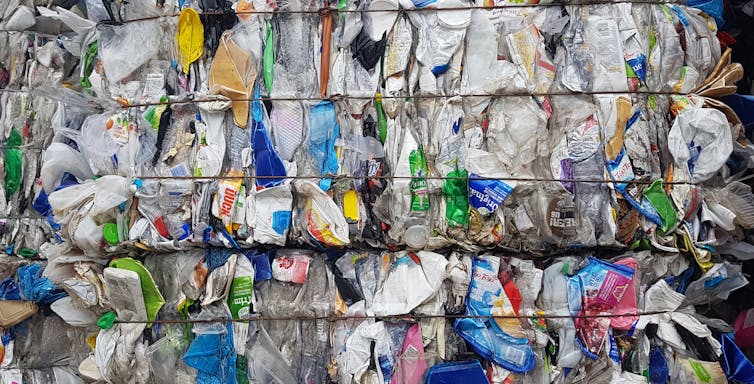
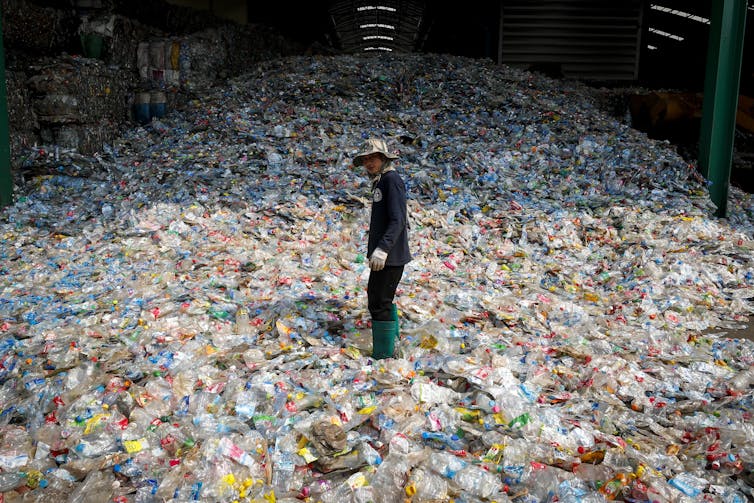
Recycling is one of those false solutions. The scale of plastic production is too big for recycling alone. Of all the plastics produced between 1950 and 2015, only 9% have been recycled. This figure is set to plummet as China and a growing number of developing countries are rejecting plastic waste from Australia, New Zealand and the rest of the world.

China had been a major destination for Australia and New Zealand’s recyclable waste. China’s shutdown meant Australia lost the market for a third of its plastic waste. It also left New Zealand with 400 tonnes of stockpiled plastic waste last year.

With limited domestic recycling facilities, Australia and New Zealand are seeking new markets. Last year, New Zealand sent about 250,000 tonnes of plastic to landfill, and a further 6,300 tonnes to Malaysia for recycling. But now Malaysia is also rejecting other countries’ hazardous plastic waste.

Sending our platic to Asia is not a solution. EPA/Diego Azubel, CC BY-SA

Even if we manage to find new plastic recycling markets, there is another problem. Recycling is not as safe as you might think. Flame retardants and other toxins are added to many plastics, and these compounds find a second life when plastics are recycled into new products, including children’s toys.

Plastic-to-energy is a false solution

What about burning plastic waste to generate energy? Think again. Incineration is expensive, can take decades for investors to break even. It is the opposite of a “zero waste” approach and locks countries into a perpetual cycle of producing and importing waste to “feed the beast”. And incineration leaves a legacy of contaminated air, soil, and water.

Producing lower-grade materials from plastic waste (such as roads, fenceposts and park benches) is not the solution either. No matter where we put it, plastic doesn’t go away. It just breaks into ever smaller pieces with a greater potential for harm in air, water, soil and marine and freshwater ecosystems.

This is why researchers are paying more attention to the less visible hazards posed when micro (less than 5mm long) and nano (less than 100 nanometres long) sized plastics carry pathogens, invasive species and persistent organic pollutants. They have found that plastics can emit methane contributing to greenhouse gas emissions.

Tyres wear down into microplastics which find their way into the ocean. When plastics break down to nanoparticles, they are small enough to pass through cell walls. Our clothes release plastic microfibres into water from washing machines.

Plastic is truly global

Plastic pollution moves readily around the globe. It travels through trade, on winds, river and tidal flows, and in the guts of migrating birds and mammals. We don’t always know which toxic chemicals are in them, nor their recycled content. Plastic pollution can end up thousands of kilometres from the source.

This makes plastic pollution a matter of international concern. It cannot be solved solely within national borders or regions. A global, legally binding treaty with clear targets and standards is the real game-changer we urgently need.

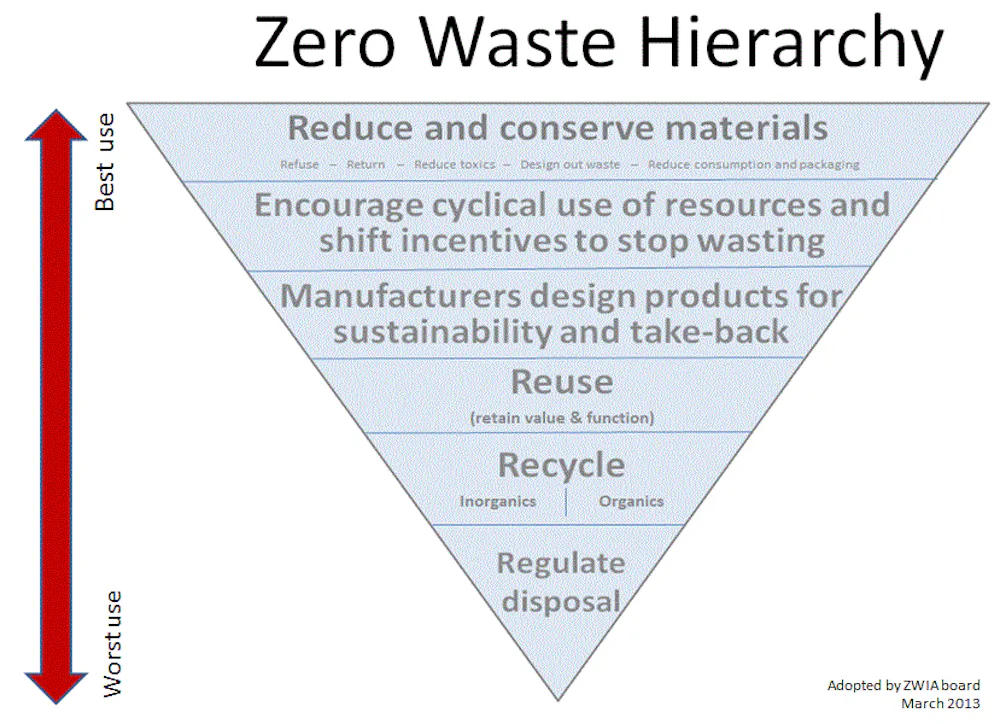
The NGO component of UNEA’s expert group recognised an international treaty as the most effective response. The proposed treaty has the potential to capture the full life cycle of plastics by focusing on prevention, right at the top of the waste hierarchy.

The Zero Waste hierarchy. Zero Waste Europe

These solutions could include restricting the volume of new or “virgin” plastics in products, banning avoidable plastics (such as single-use plastic bags and straws), and curbing the use of toxic additives.

More than 90 civil society organisations around the world and a growing number of countries have indicated early support for a treaty. Australia and New Zealand have not.

By Trisia Farrelly. This article is republished from The Conversation under a Creative Commons license. Read the original article.