By Paul Callister and Robert McLachlan
Aviation is booming, especially in the Asia–Pacific region. Air travel has reached record numbers both domestically and internationally, with further strong growth forecast over coming decades.
Despite the financial headwinds faced by New Zealand’s regional airlines, operators say that “passenger numbers on regional airlines have never been better”. “Passenger numbers are through the roof”, says Sounds Air boss Andrew Crawford in a Newsroom article. Once again flights in and out of New Zealand are increasing, helped by the New Zealand government promoting international tourism as a key driver of economic growth.
To support the growth, international airlines are expanding capacity.
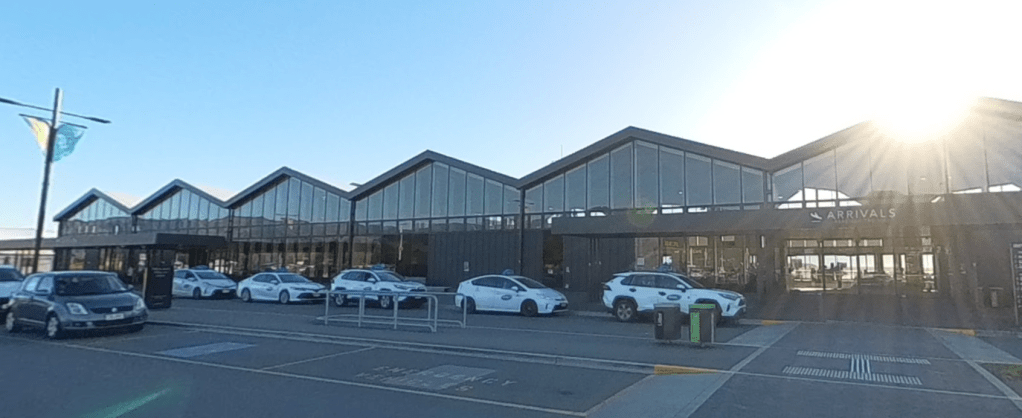
Airports across New Zealand have also set in place expansion plans. An example is Nelson. The airport wants to see passenger numbers double from 900,000 to 1.8 million a year by 2050.
Despite unambiguous evidence of the devastating impacts of human-induced climate change, commitments to decarbonise aviation are stalling both here and overseas. The result is that aviation emissions continue to increase at a time when other sectors are working hard to reduce theirs. In just-published research, Daniel Scott and Stefan Gössling examine the UN World Tourism Organization’s climate declarations and conclude that there has been limited to no progress on 25 climate action pledges. They also evaluate commitments by the World Travel and Tourism Council, IATA, International Civil Aviation Organization, and individual airlines, finding that none of their self-set targets has been met.
So how can aviation contribute to tackling climate change when no practicable technology-based solutions are on the horizon?
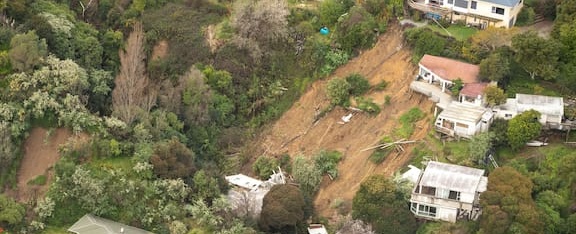
This problem of aviation emissions is playing out in Nelson, one of New Zealand’s premier tourist destinations. While it is known for its sunny days, in recent years it has also suffered from damaging storms that are predicted to become more frequent and intense with climate change. The August 2022 storm event caused more than $80m of damage in the region, and a downpour in recent weeks led to flooding in downtown Nelson. Recognising the need to reduce emissions, Nelson City Council will soon meet to approve its climate change strategy, aiming to reduce gross emissions by at least 6.8% each and every year, in line with the government’s target.
That will require significant new investment. Who should pay for it? Should it be the community as a whole, or should those who are causing the problem contribute more? If Nelson airport proposes to double passenger numbers without any realistic plan to reduce emissions, is there a way of adopting the “polluter pays” principle and using revenue from flying to help decarbonise other parts of the local economy?
There is a way. The airport is jointly owned by Nelson City Council and neighbouring Tasman District Council. It recently invested $32m in a new terminal (catering for future growth, which means growth in pollution), with further expansion on the drawing board. A “polluter pays” levy of $20 per departing passenger – about 10% of the average ticket price – would raise $9m per year towards climate action by the two councils. Potential uses of such a levy include funding active and public transport, helping businesses to reduce emissions via electrification, supporting community solar power, and funding adaptation infrastructure. Much greater price increases by Air New Zealand in recent years, of between 30% and 300% depending on the route, have had no impact on passenger numbers, indicating an ability and a willingness to pay. While most New Zealanders need to fly sometimes, most flying is done by a small number of frequent flyers. Globally, 1% of the world’s population, the wealthiest frequent flyers, are responsible for 50% of aviation emissions. Therefore, a “polluter pays” levy acts as a progressive, pro-climate tax.
It is true that New Zealand also has the Emissions Trading Scheme. Passengers contribute about $3 per domestic flight via the ETS. Unfortunately, this does little to nothing towards reducing emissions. At present the money either goes to the government (which has cancelled most direct climate spending) or towards the mass planting of pine trees, which is commonly criticised as being an ineffective strategy with negative effects on biodiversity.
Airports and airlines themselves should welcome such a levy, which could be introduced nationwide. They could then point to the tangible community benefits of the levy and maintain their social licence to operate in an era when the aviation industry’s bold claims (“Net zero by 2050!”) amount to so much greenwashing.
It needs to be recognised that such a levy only buys the aviation industry a little time, and that the industry needs to either rapidly decarbonise or start reducing flights to meet climate targets. At present it is impossible to know if any of their plans for lower-emission flights will come about or have much of an impact on emissions. We hope they do. But hope alone is not enough; hope needs action, and the time for action is now.

 Planetary Ecology
Hello
I am gobsmacked by the headline and the tone of this piece. When have offsets ever worked?
In my view your headline, the isea and the tone act as effective promoters of BaU. They are, to use your words, “technologies of prevarication”. (The financial system is effectively a technology as are wings and engines etc etc).
The most significant line in your piece is “While most New Zealanders need to fly sometimes, …” and the key-word is “need”. No-one needs to fly. People choose to fly.
I think that if people really understood the gravity of the situation, and the agency that they have, to make a difference (through their choices) then not-flying is a no-brainer.
Isn’t this the space that you normally communicate about? Greta Thunberg doesn’t fly! And she is a very effective communicator.
(I, too, am a proud practitioner of “no-flying”. It changes everything for me. Life goes on and one’s life trajectory changes a bit. Things slow down, radius of activity shrinks and new opportunities and learning open up. And I sincerely believe it is a very small step taken “in Service of LIFE.”)
Unfortunately for the industry, without massive number of travelers, and a growth trajectory, the whole financial model that the aviation system is built upon falls apart very very quickly.
It is a very fragile system, and, yes, the failure of the aviation system would be very very significant.
But so is wrecking the planet.
Please, please reconsider how you use your platform.
“Technologies of prevarication”, your words, are very effective at enabling BaU, IMHO.
Cheers for your mahi.
W
Thanks for your comment. For many years Robert and I have promoted the idea of ‘flying less’ through our research reports and through social media. But it seems to be an idea that has not ‘taken off’. We are reminded daily that domestically there are few options to travel except by driving or catching InterCity buses. International travel is constantly promoted, whether it be bringing in more tourists or offers for New Zealanders to see the world. Information about the negative effects of flying seem to have little impact on behaviour. How do you think this could change?
Warren,
I congratulate you on your work <https://youtu.be/weMzpFm_GXU> (Warren Begley and Ōtamahua/Quail Island Ecological Restoration Trust. Department of Conservation) and forgive you your passion.
I am in the Guy McPherson <https://en.wikipedia.org/wiki/Guy_McPherson> camp, although, like Malthus <https://en.wikipedia.org/wiki/Thomas_Robert_Malthus> he got the timescale wrong.
As I said in the comments to the post 10 June 2025, “Tech hopes for the aviation industry”, reducing emissions from aeroplanes involves trains and ships, and punitive taxes on Jet A-1.
That is how I read the present article. Forget electric aircraft, pursue biofuel from CO2 not food, but most of all concentrate on lowering emissions where the laws of this universe (physics) permit and make airline passengers pay. Especially the frequent flyers and owners of private jets.
Since we cannot even get Kiwis to increase taxes on other people, ie the poor don’t support capital gains tax they would never pay, it is unlikely anyone anywhere is going to agree to stop flying.
I do not expect my 2-year-old grandson to die of old age, and at 82 myself, I’m no longer sure I will either. This clueless government is going to allow developers to build on prime agricultural land, so we might end up hungry after a few more floods.
Reducing GHG emissions isn’t even a remote possibility.
Best wishes,
New Zealand should consider more use of passenger rail. Parts of the Auckland-Wellington main line are already electrified with renewable hydro power. A comparable example is Brisbane-Rockhampton in Qld. Electrified tilt trains cut the schedule in half. These are the fastest trains in Australia (160km/hr) and on same narrow gauge as NZ.
Thank you, Paul and Robert, for getting this out. This sort of discussion is much needed.
However we need to be careful about just trying to lighten the footprint of activities we should have clear plans to phase out rapidly. I think a piece like yours, in essence advocating for a pragmatic intermediate solution, must be clear about the basically flawed business model at the heart of the funding stream
That said, you’ve done a good job of touching base on matters like the existing ETS passenger levy, and that this extra levy must not be seen as a permanent fix.
Your reference to “adaptation infrastructure” I take as supplementing (or substituting for) the likes of special extra storm recovery rate Nelson recently applied. Is that what you have in mind?
I agree it’s not a permanent fix. One problem with carbon pricing is that it hasn’t been possible to get the price high enough to have sufficient impact. But, it is better than nothing.
Fossil fuels must be replaced with lower-emission alternatives where possible; other sectors must be phased out. The question is how to achieve that. After years of studying the aviation industry I am still struck by how they manage to get away with not only their plans for continual growth, but also broad policy support to enable it.
Robert
Hello hello, Talking of action, do you have access to Simon Watts (who is minister for energy and climate change) or Nick Smith (Mayor of Nelson) to actively pursue this suggested strategy below? Your strategy sounds good, as you say, time for action? Let me know if I can help? Cheers,Karleen Reeve