By Robert McLachlan
Yes, we should have weaned off oil long ago. The oil shocks of the 1970s would have been a good time to start. Failing that, the 2007 oil price spike that was one of the triggers of the Global Financial Crisis. Never mind. The third best time to start is now.
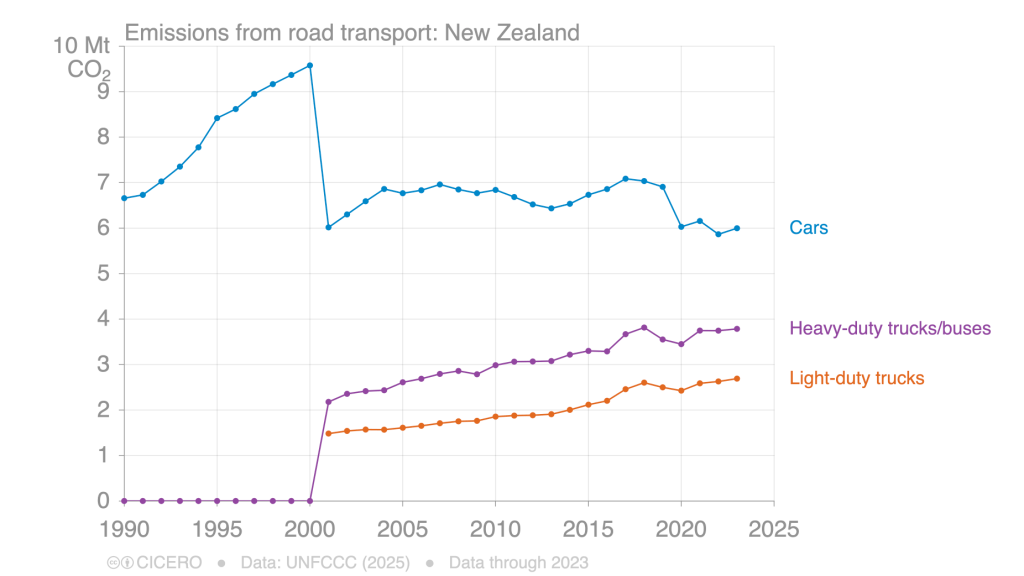
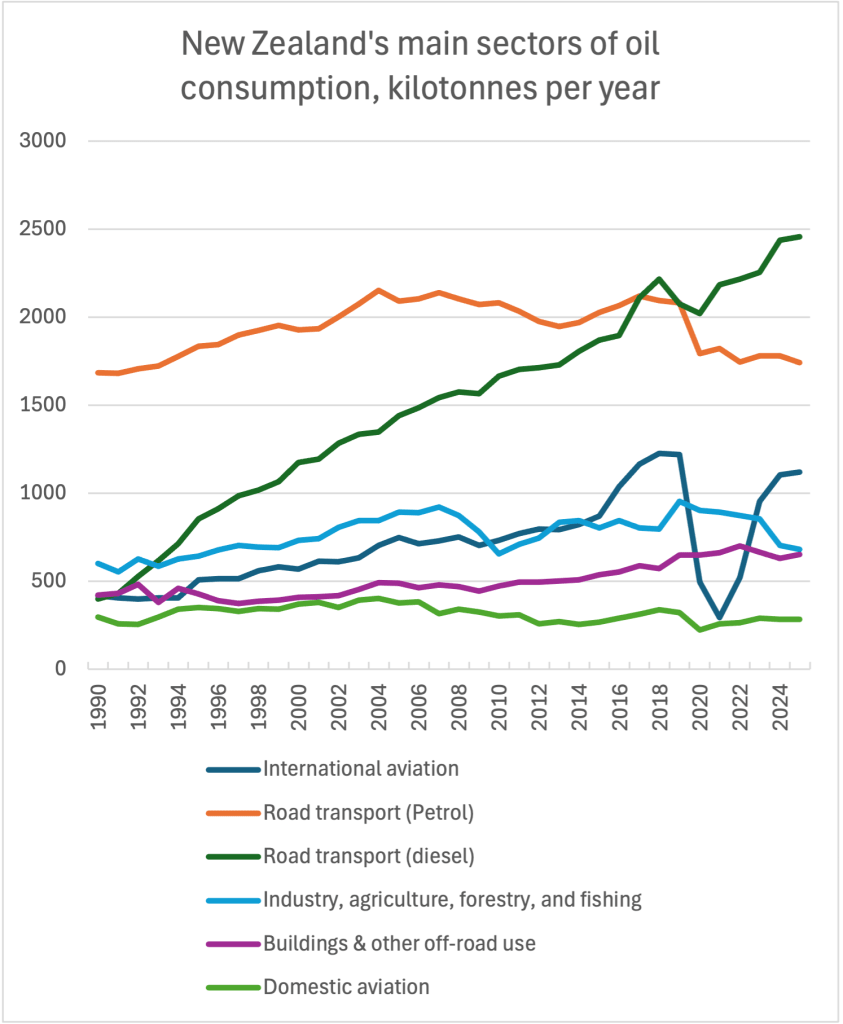
What are the drivers of this increase? More cars, obviously, but also more people, with each person driving further.
Here’s the breakdown over the past decade:
| Impact on road transport CO2 emissions from change in… | Change between 2013 & 2023 |
| Population: | +16.1% |
| Fuel economy of fossil-fueled car fleet: | –15.6% |
| Distance driven in light vehicles, per person: | +4.5% |
| Fleet shift from cars to utes: | +4.5% |
| Proportion of electric driving | –1.7% |
| Total change in CO2 emissions | +4.2% |
Utility vehicles emit 50% more than (non-hybrid) cars – 259 gCO2/km vs 175 gCO2/km – and the shift is at least partly cultural, with the twin-cab ute becoming a social norm. Utes now comprise 18% of the light vehicle fleet, do 23% of the kilometres, form 26% of sales, and emit 31% of light vehicle CO2. If that shift continues, as it appears to be doing, it forms a significant headwind to emissions reduction.
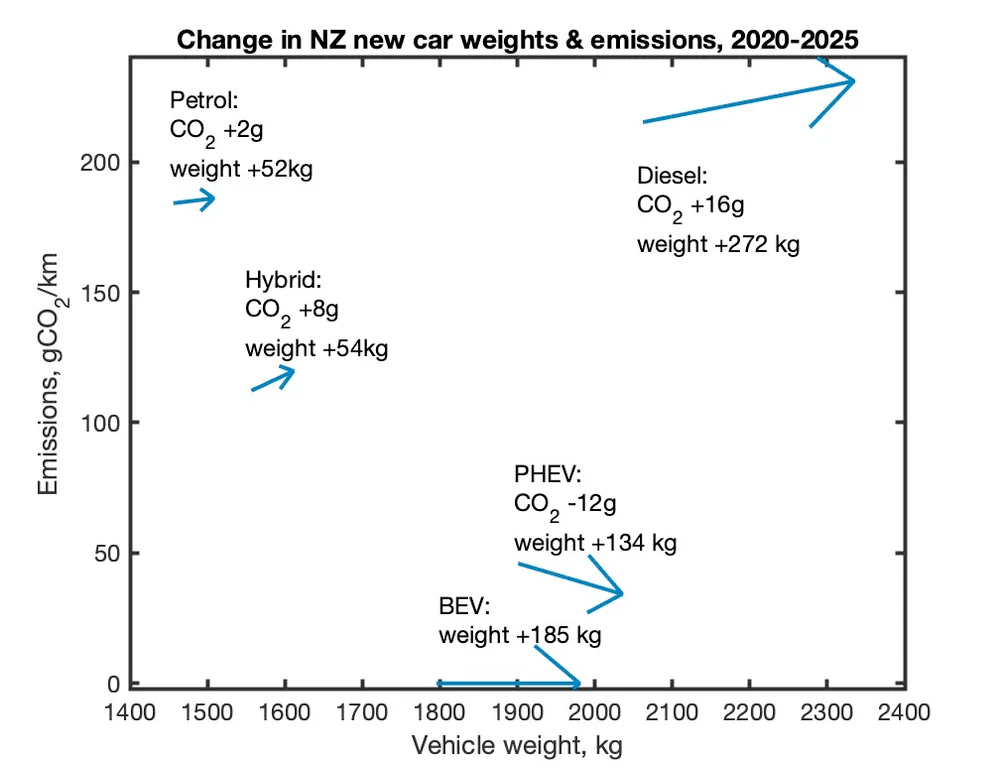
Lately, although the shift to hybrids is reducing emissions, fossil-fueled cars themselves are getting heavier and higher-emission.
Overall, the picture is grim. On balance the country is no better prepared for an oil price or supply shock than we were in the 1970s – oil imports were 2.5% of GDP last year, compared to 1.8% in 1974. But in one respect, we do have an advantage. We know how we failed to seize the opportunity previously, and we know what will work this time.
As Tim Welch wrote last week,
New Zealand still has a choice, however. It already powers lights, hospitals and factories with renewable electricity. It could have powered a diverse transport system the same way, and it still can.
Every bus electrified, every cycleway built, every train funded is a direct reduction in exposure to the next crisis. The question now is whether New Zealanders begin to treat their car dependence not as a lifestyle choice but as a strategic liability.

 Planetary Ecology