This week the climate news has all been COP27, and as usual, it sounds discouraging, with delegates staying up all night wrangling over words, a process in which ‘phasing out fossil fuels’ gets progressively watered down to the (virtually meaningless) ‘phasing down unabated coal’.
So it was inspiring to hear about a different approach being taken for another challenging global pollution problem, plastic, in a talk by Massey University’s Trisia Farrelly. Soon she will be part of the first UN talks to draft an Internationally Binding Instrument to End Plastic Pollution. Just reaching this point – achieved in a UN vote on 2 March 2022 after several years of negotiations – is something of a triumph. The contrast with the Paris Agreement, which is not binding and which does not mention ending fossil fuel pollution, is striking.
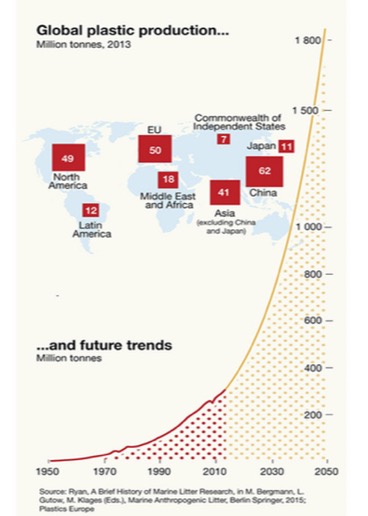
One of the problems with plastic is growth.
Most of this plastic has ended up as waste.
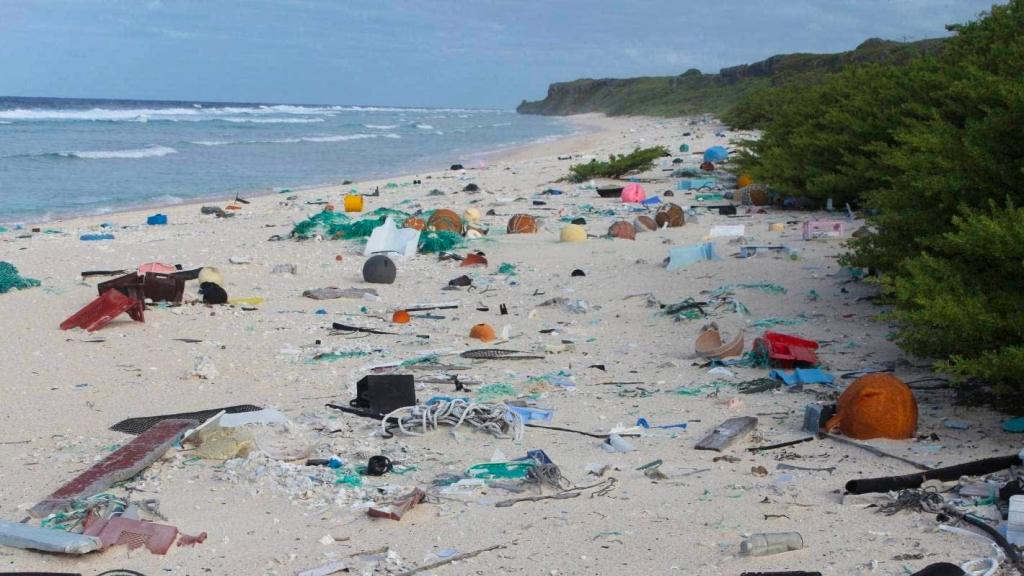
The consequences are all too familiar.
Henderson Island, Pitcairn, SE Pacific Ocean. Source: Stuff.
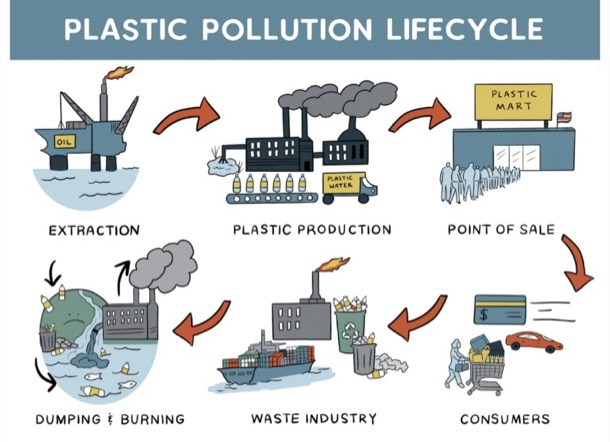
The key point about the proposed agreement is that it aims to address the full life cycle of plastic pollution – from exploring for oil, extracting it, turning it into products, the health impact of those products on consumers, to disposal and remediation.
The United States is trying to form a coalition, perhaps including Japan and Australia, that would push for something weaker, something more like the Paris Agreement, in which each country is free to develop its own voluntary plan, and with its scope restricted to managing the final products.
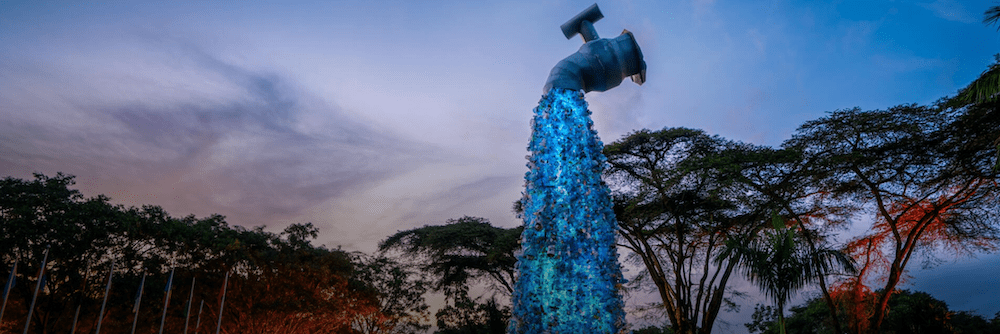
However, a core determination of a group of 34 countries (not yet including New Zealand), the “High Ambition Coalition“, is that full lifecycle impacts can only be addressed by stopping the growth of plastic production at the source. By turning off the tap.
Their first goal is to “Restrain plastic consumption and production to sustainable levels“.
Debates about the use of private helicopters have been taking place in Tāmaki Makaurau. Residents of Herne Bay, Waiheke Island, and Aotea Great Barrier Island have opposed landings and take-offs from private properties. People have talked of “decks shaking, crying babies and flying deck chairs – with early morning noise breaking the peace for neighbouring properties” and the disturbance to nesting birds. There have also been some safety worries. However, a new concern has been raised. Auckland Council has been accused of holding different standards on cutting climate emissions, asking people to reduce car use but not helicopter use.
While noisy internal combustion engine powered helicopters coming and going from a few private properties in Tāmaki Makaurau have attracted attention, under some ‘green growth’ scenarios there is the potential for thousands of electric powered flying vehicles creating a new level of ‘low emission’ mobility within Aotearoa New Zealand’s cities and regionally. This would herald a new golden age of personal mobility, or as the enthusiasts describe it, “advanced air mobility” (AAM). No longer would we need light rail to the airport in Wellington or Auckland. Flying taxis would be used. And, in fact, with vertical take-off inter-regional planes as part of this green growth future, the airport for regional flights might be in the centre of town. Under this scenario, the currently uneconomic Kāpiti airport would again be thriving.
And autonomous flying machines would be dropping off our pizza orders.
Our current helicopters are, of course, an amazing piece of technology. They can rush people from remote rural locations directly to hospital, pluck injured trampers off hillsides, or lift distressed sailors from a churning sea.
But there is also helicopter-based tourism, including heli-skiing in the South Island, wine tours to Waiheke Island, and Forest & Bird advertised trips that include helicopter transfers. This is one of the many reasons why New Zealand has lots of helicopters. According to Civil Aviation Authority of New Zealand data, there were 889 registered civilian helicopters in New Zealand in 2019, up from 761 in 2010. According to international data, the civilian fleet in the United States of America in 2019 was 9,348. On a per capita basis, this means we have roughly six times as many helicopters.
Helicopters use lots of fuel and as a result are heavy emitters of CO2 and other greenhouse gases. Helicopters use much more fuel than fixed-wing airplanes because their rotors are responsible for creating all the lift. A fixed-wing aircraft uses the engine to propel the plane forward, with the wings generating most of the lift. In addition, the rotating rotor blades of a helicopter will cause a lot of drag when the helicopter cruises.
Helicopter manufacturers are aware of the need to decarbonise and offer up the same set of solutions as for fixed wing aircraft, promoted as moving to ‘zero emissions’. But as we know for fixed-wing planes, none of these solutions are without major challenges. For example, it is possible that the biofuel used to run them might be made primarily with food crops or palm oil and contribute to our environmental problems rather than solve them.
Advanced air mobility
There are startups all over the world promoting flying cars in various forms and small electric planes for regional travel. In an interview in late 2021, the CEO of Volocity set out his vision for AAM:
Volocopter is working on three types of eVTOL vehicles: the VoloCity, a two-seater urban air taxi; the VoloConnect, for traveling between cities and suburbs; and the VoloDrone, for transporting cargo. VoloIQ, the company’s digital platform, is designed to connect all of these services and allow consumers to book flights easily. Volocopter is one of several eVTOL companies that have recently gotten considerable traction in the investor community; the company has raised more than $350 million in equity and has formed partnerships to bring its services to a number of cities, including Los Angeles and Paris.
If one thinks this is only the vision of fantasists, look at the just released Victoria state government AAM strategy document. In a ministerial forward it is stated:
Globally, the Advanced Air Mobility (AAM) sector is moving fast, with several companies seeking to enter the market from 2024-25. This fast-approaching horizon further emphasises the necessity for governments to develop the foundational structures, systems and market frameworks required for AAM.
The use of AAM in Victoria has the potential to revolutionise logistics, service delivery, emergency services, regional connectivity and passenger transport – providing opportunities for improvements in safety, time, cost and noise. As a zero-emission transport mode, AAM will also support the decarbonisation of our society.
Archer Aviation, based in Palo Alto, California, USA, is working to build an electric vertical takeoff and landing (eVTOL) aircraft and aerial ridesharing service that will move people throughout congested cities in a quick, safe, sustainable, and cost-effective manner. Through their work both on their eVTOL aircraft, and with partner cities such as Los Angeles and Miami, they are laying the groundwork to curb the growth of urban congestion, and the resulting historic levels of emissions in populous areas.
Closer to home, Tātaki Auckland Unlimited is working with Wisk Aero, creator of autonomous air taxis, to help bring them to Auckland one day.
There are also regular media stories about larger electric planes, including those that can take off vertically. These are seen as transforming regional air travel. In fact, some airlines are now promoting this concept as a way of getting people out of cars and onto ‘zero emission’ planes. This is despite the energy and emissions benefit of passenger rail for many of these journeys.
Such visions gloss over challenges. Many of these electric flying machines turn out to be harder to produce than initially advertised, with often major range issues.
Another is the huge amount of renewable electricity required to keep these machines in the air. The laws of physics still apply to these descendants of helicopters. They use lots of power. As we decarbonise the whole economy, scarce renewable electricity would be better used to heat houses, power our buses and electrify our whole rail network.
There are also serious concerns as to whether there are enough minerals and other materials available to manufacture the vehicles.
But, even if possible, is this a future we really want? While probably quieter than helicopters, having our skies increasingly filled with flying machines would create other problems, including safety. And would this be only an option for the well off, while most of us wait in a queue for the low emission, low energy use electric bus?
We now need to carefully consider how we manage helicopters and the flying machines that may eventually replace them. There are clearly some new policy issues emerging as we try and dramatically reduce emissions, while at the same time trying to make our cities better places for all people to live in. The Ministry of Business, Innovation and Employment has recently published a discussion document called Aotearoa New Zealand Aerospace Strategy with submissions just closed.
I was born in Christchurch in 1964. I watched the moon landings on television. One of my early readers was “You Will Go To The Moon”. Oh, how I loved that book. I studied mathematics and physics at Canterbury and, later, at Caltech, where I met my heroes, Richard Feynman and Freeman Dyson. My work in scientific computing is used in orbital calculations including the long-term evolution of the solar system and novel routes to the moon. So by rights I should be all-in on space.
But as the decades have passed I have realized that the extreme risks of the present global ecological crisis call into question the entire program of accelerating technological change and resource use. Climate change, biodiversity loss, and pollution are three prominent aspects of the crisis, and resource overuse and poor governance two significant contributing factors.
The New Zealand government is consulting on two new policies, one for space and one for aerospace (think drones and flying cars; both close on 31 October). My submissions are attached below.
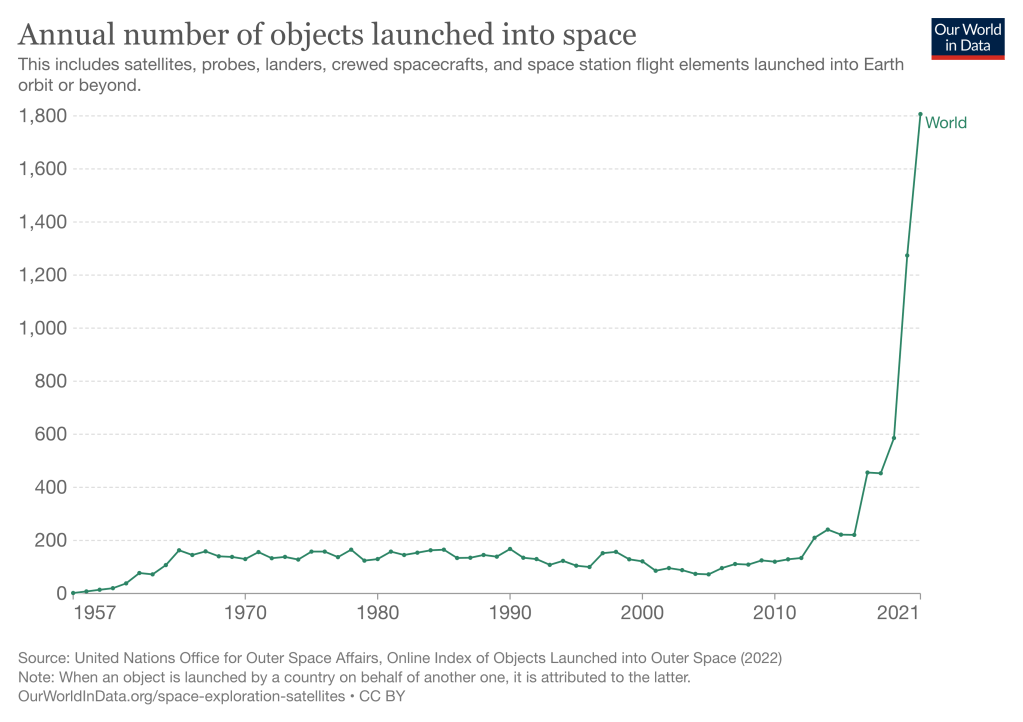
This is a time of rapid change in our use of space. Its use is rapidly increasing and commercialising; more and more countries are engaged in the space industry; and space is becoming more and more militarised. In fact we can watch ongoing space-controlled, semiautonomous drone warfare every day on the internet. The New Zealand company Rocket Lab launches satellites for the US National Reconnaissance (i.e. space spying) Office and designs and builds hardware for the US Space Force.
The space age began eighty years ago with the launch of a V2 missile into space, and continues with vast fleets of space-travelling and space-controlled ICBMs ready to launch. The nuclear threat is higher than at any time since 1962. The Bulletin of the Atomic Scientists Doomsday Clock stands at 100 seconds to midnight – and that was set before Russia’s invasion of Ukraine. Many believe that the United States is determined to gain complete dominance of space through the development of space weapons:
…the rapid expansion in space use and the difficulty of determining the true intent of some satellite systems are leading many analysts to the conclusion that the next steps in the militarisation of space will be the development, deployment and eventual use of space weapons.
Dave Webb, The Ethical Use of Outer Space, in Ethical Engineering for International Development and Environmental Sustainability, Springer 2015.
The consultation mentions the value of Starlink to Ukraine. Even in the few weeks since it was written, Elon Musk (the world’s richest person and the most controversial business-person in the world, and the dominant owner of SpaceX and Starlink) has further weaponised and politicised Starlink in dangerous ways. SpaceX has rapidly become so dominant in the US space industry that any ties to that industry inevitably create links to Musk. What with the near collisions, the pollution of the night sky, the risk of debris, and the climate impacts of the enormous number of launches needed to maintain the constellation, its politicisation and weaponization in an actual war, Starlink is a disaster in which the worst is yet to come.
These considerations throw the opening sentences of the consultation into a different light:
New Zealand’s association with space goes back centuries: the first Māori explorers navigated by the stars to Aotearoa New Zealand, and centuries later they were followed by European navigators whose instruments also looked to the stars. Today, our modern navigation systems are still guided from space.
Yes, Māori explorers used advanced sailing technology and navigation to settle Aotearoa, but also to greatly alter it. European colonisation led to violence, appropriation, destruction, and extinction (amongst other things). The new space race is likely to accelerate the inroads of violence into space.
Space is sometimes described as a ‘global commons’. But does that mean it is ours to use as we see fit? It is already crowded, polluted, and dangerous. Our track record in governing other global commons such as the atmosphere and ocean is not good.
Three interrelated efforts—lowering costs of accessing space, space tourism, and privatization—are currently viewed by space advocates as useful steps to the eventual realization of the larger space expansionist program. They are actually a mix of trouble and trivia leading to danger precisely because of their potential to open the larger door to extensive space activities. Everything space expansionists want to do in space depends upon accessing space more cheaply. But substantially lowering access costs is very much a double-edged sword. If it is cheaper and easier to get to orbit, then all space activities become cheaper and easier to accomplish, whether or not their effects are desirable.
Ambitious space expansion proposals also rest on dubious assumptions about human control of nature and technology and governance of superpotent new technologies. When these deficiencies are identified and corrected, space activities, actual and prospective, look very different, and space expansion loses much of its appeal.
Daniel Deudney, in Dark Skies: Space Expansionism, Planetary Geopolitics, and the Ends of Humanity (2020)
The American rocket pioneer David Lasser, anticipating widespread bombing of cities by rockets in “The rocket and the next war” in 1931, wrote
Whether the man of the future, looking back to 1931 will wish that the rocket had never been invented, no one knows. It seems to me that the rocket is one of the creations of the human mind, that serves as a test of our right to inherit the earth. Its powers of good and evil are so equal and opposite.
Unfortunately, we still don’t know.
One final visit to the pre-space age. How far have we come, really, from the impassioned plea of the space visionary Oswald Cabal in the closing moments of the 1936 movie Things to Come, “All the universe or nothingness?”
Biofuels – and a broader bioeconomy – are key parts of New Zealand’s recently released first emissions reduction plan, particularly for transport, forestry and a transition to a more circular use of resources.
Work is moving fast, with a biofuel mandate for land transport to be introduced from April 2023 and a plan to transform the forestry industry currently under consultation.
A bioeconomy is heralded as an opportunity to replace imported fossil fuels with carbon-neutral domestic biofuels and to create higher-value products from plantation forestry (much of which is currently exported as unprocessed logs) while supporting carbon sequestration at the same time.
New Zealand is not the only country thinking along these lines. Biofuels are part of a widespread strategy to address emissions from existing fossil-fueled vehicles, tens of millions of which are still being produced annually. They are also promoted for planes, ships and heavy trucks, often with few alternatives.
Both the Inflation Reduction Act, a landmark US law which aims to curb inflation by investing in domestic clean energy production, and the EU’s Fit for 55 package, expand support for biofuels through a combination of subsidies and mandates. In the International Energy Agency (IEA)’s Net Zero scenario, global biofuel production quadruples by 2050, to supply 14% of transport energy.
Unfortunately, a string of governmentreports, combined with experience of the real-world impacts of biofuels thus far, point to several downsides and challenges, both economic and environmental.
First-generation biofuels from food crops
The risks of first-generation biofuels, made from crops grown on arable land, are well known. They are not due to the fuels themselves or their production, but their indirect effects of how the land would have been used otherwise.
Already, 10% of the world’s grain is used for biofuels. This is at the heart of the “food-to-fuel” issue. This approach has been challenged because it could increase grain prices or, at the worst, lead to starvation. It has also led to agricultural expansion, often into ecologically sensitive areas.
Debated for years, it is now back in the spotlight as the effects of droughts in China, the US and Europe, combined with the war in Ukraine, push food prices up 50% on 2019-2020 levels.
Palm oil has borne the brunt of criticism about landuse change, as vast areas of rainforest in Indonesia and Malaysia have been cleared for its production. The impact of such “induced landuse change” (ILUC) gives palm oil biofuel nearly three times the emissions of fossil fuel.
But palm oil is a substitute for many other vegetable oils. Therefore, biofuel production from other oils like rapeseed (canola) is also implicated in ILUC, as diverting rapeseed to fuel leads to more palm oil entering the food chain.
Sustainability and credibility of feedstocks
The EU has undergone a lengthy process of strengthening the standards of its biofuel mandate. In the end, palm oil was the only feedstock listed as “high ILUC”, but was given a reprieve until 2030.
The cheapest biofuels with the biggest emissions savings are made from used cooking oil and beef tallow. But these feedstocks are in limited supply and open to fraud. They also already have other uses, which again raises the issue of substitution.
Z Energy’s NZ$50m tallow biodiesel plant, opened in 2018, has been mothballed due to the rising cost of tallow. The company has stopped work on plans for a much larger plant.
Since New Zealand’s biofuel mandate will initially be met solely by imports, questions of sustainability and certifiability of feedstocks will be crucial. It is concerning that landuse change will not be considered when calculating emissions reductions.
The fuels will count as zero-emission in New Zealand, while the actual emissions from growing, fertilising, processing and transporting will take place overseas, likely in countries with weaker climate targets. Unless accounted for, this is carbon leakage by design.
Source: ICCT; data from GLOBIOM for the European Commission.
Second-generation biofuels from inedible plant material
For all these reasons, proponents are keen to talk up the prospect of second-generation biofuels, made from non-food crops. In New Zealand’s case, the main crop is pine trees.
Although there is some forestry waste available, much of it is currently left on site and would be expensive to collect and transport. The Wood Fibre Futures report, commissioned by the government, focuses on logs-to-fuel, specifically “drop-in” fuels that can substitute directly for petrol, diesel or jet fuel.
However, there are no such plants in commercial operation anywhere. The report calls the risks of such an unproved technology extreme, with little prospect for mitigation.
The economics are also challenging, in part because log prices are high due to the efficiency of the log export market. A plant capable of producing 150 million litres of drop-in fuels a year – just 1.5% of New Zealand’s liquid fuel demand – would cost $1.2 billion and have a negative rate of return.
To obtain an acceptable return, the government would need to pay for half the cost of the plant and the logs, and also subsidise (or enforce) a 50% higher sale price of the fuel. The report envisages such a plant being completed by 2028 in New Zealand.
A fundamental obstacle is that any such use has to compete with other uses – including sawn timber, wood chips and wood pellets – which are far simpler, more profitable and come with greater carbon benefits.
Stop the mandate, strengthen alternatives
For all these reasons, we have formed the interest group Don’t Burn Our Future, which aims to stop New Zealand’s biofuel mandate.
As advocates of strong climate action, these are painful conclusions to reach. But we argue that for transport, the answer lies in the avoid/shift/improve framework, which encourages people to drive less, shift necessary trips to other modes and make them less polluting.
Biofuels only enter in the third and least important step (improve) and even there, they are the worst option.
The transport transformations envisaged in the new climate plans for Wellington and Auckland are heavily focused on avoidance and shifts to other modes. These options should be the priority.
The challenges posed by humanity’s ever-increasing material and energy use and its impacts on planetary systems – most notably climate and biodiversity – are hardly new or unknown. They have been intensely studied in many disciplines for decades. But as we enter a new phase characterised by widespread and obvious impacts and continue rushing headlong into a minefield studded with points of no return, many academics around the world have concluded that current approaches are woefully insufficient and that something new is needed.
This is a story circling around the equation
materials + energy + technology ➞ consumption ➞ impacts
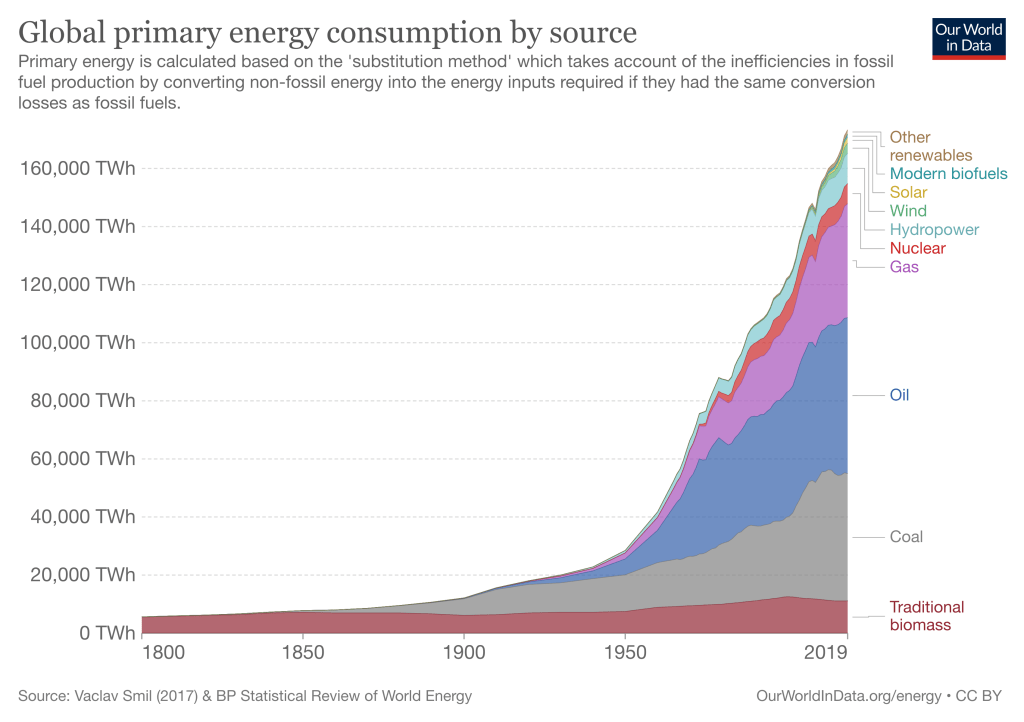
To start with energy, here is a graph of world energy consumption since 1800:
The rapid increase after 1950 is clearly visible, as is the fact that most energy comes from coal, oil, and gas – fossil fuels. The so-called ‘modern renewables’, wind and solar, on which our hopes of a safe future rely, are so small as to be hardly visible. The period from 1950 is the ‘Great Acceleration’, a time when all aspects of human activity sped up to an unprecedented degree.
For a long time, from Thomas Malthus to the successive waves of the Covid-19 pandemic, people have been trying to persuade other people of the extreme importance and awesome power of exponential increase. Charles Darwin in the Origin of Species famously used the example of elephants:
The elephant is reckoned the slowest breeder of all known animals, and I have taken some pains to estimate its probable minimum rate of natural increase; it will be safest to assume that it begins breeding when thirty years old, and goes on breeding till ninety years old, bringing forth six young in the interval, and surviving till one hundred years old; if this be so, after a period of from 740 to 750 years there would be nearly nineteen million elephants alive descended from the first pair.
If we return to the graph of energy consumption and restrict to the period from 1960, we get a different picture:
The growth is linear, not exponential. This is a sign that something is constraining its growth. If we could have gotten our hands on more energy, we would have.
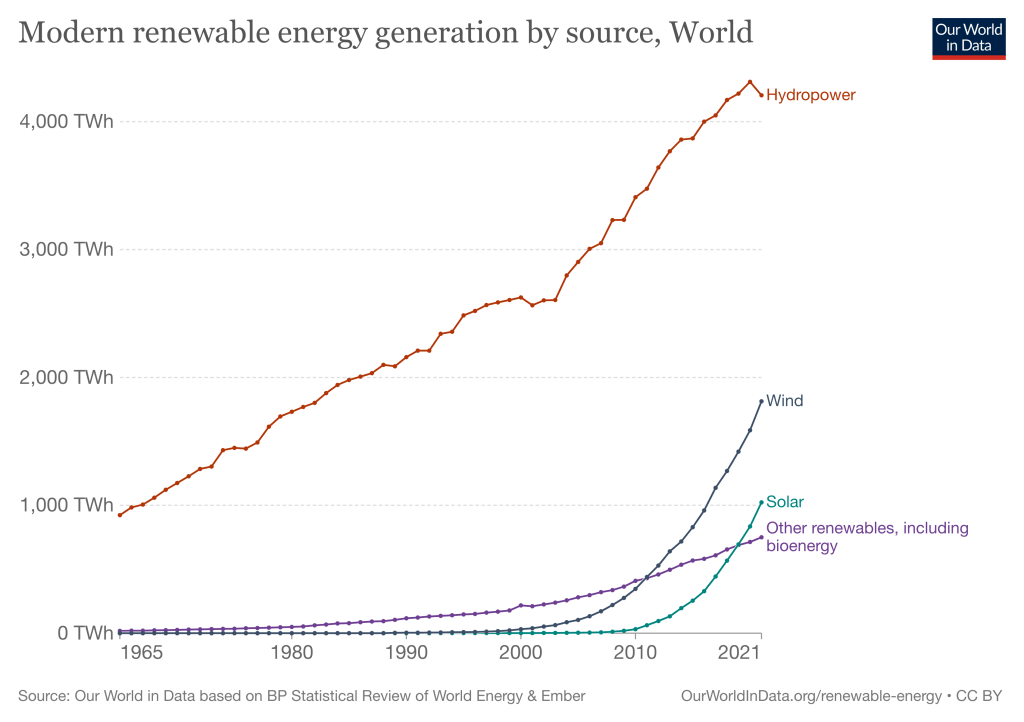
At the moment, solar and wind power are increasing rapidly, contributing 2% of world energy use.
We are essentially very near the start of a monumental effort to transform the world’s energy system.
The EU’s 2030 target was originally 32%. It has been successively raised to 36% and then (in the Green New Deal) 40%, and in response to the war in Ukraine, to 45%.
However, the global picture for material use looks strikingly different.
Source: Jason Hickel. This is all the fossil fuels, minerals, and rocks extracted from the earth, and all harvested biological problems. The black line is Hickel’s estimate of a sustainable limit for extraction.
It shows a continuing acceleration in extraction. The emerging constraints on energy use encouraged energy efficiency, so that more material could be extracted and processed for the same energy. Although some of the materials can last a long time (roads, buildings), eventually all of it ends up as waste.
In recent decades, some advanced economies have shifted from manufacturing to services and become more purely consumer societies. Domestic material use stopped increasing.
Cement emissions, a stand-in for the size of the construction industry, stopped increasing in advanced economies in the last quarter of the 20th century. The population of the US is 2.5x that of Japan, and the EU, 3.5x.
The new products became wants and then needs, and material use continued to increase, even in countries that were already rich.
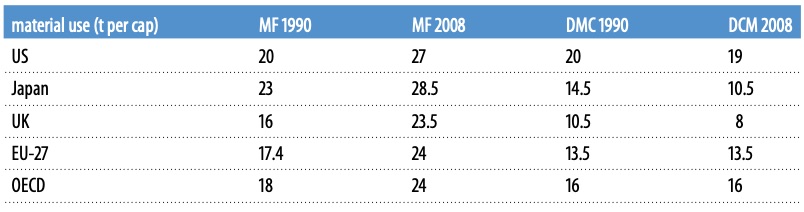
Material footprint (MF) per person continues to increase, even in the most developed regions. Domestic Material Consumption (DMC) per person has declined due to the shift in manufacturing to Asia (source).
It’s the same story in other areas of production, such as meat.
All those animals have to eat, mostly grain and soybeans. If global growth continues without limits, could we really see the whole world consuming at the levels now seen in the US? That would mean a further tripling of production. The role of power in driving ever-high meat consumption is discussed in a paper by Doris Fuchs and others: in ensuring cheap land for feed production obtained through agglomeration and forest clearance, in industrialised farming, in ignoring externalities, in processing and marketing, and also by consumers themselves who also want low prices.
All this production creates environmental impacts. The standard approach is to continue with production, but to try to minimise the impacts. Unfortunately, this has proved persistently difficult, particularly where the impacts are cumulative (build up over time), collective (pollution spreads a long way from the source), or suffer cascading consequences into the future.
Climate change suffers from all three phenomena, and as is now well known, it has turned out to be far harder to reduce emissions than was originally imagined when serious efforts began in the 1990s.
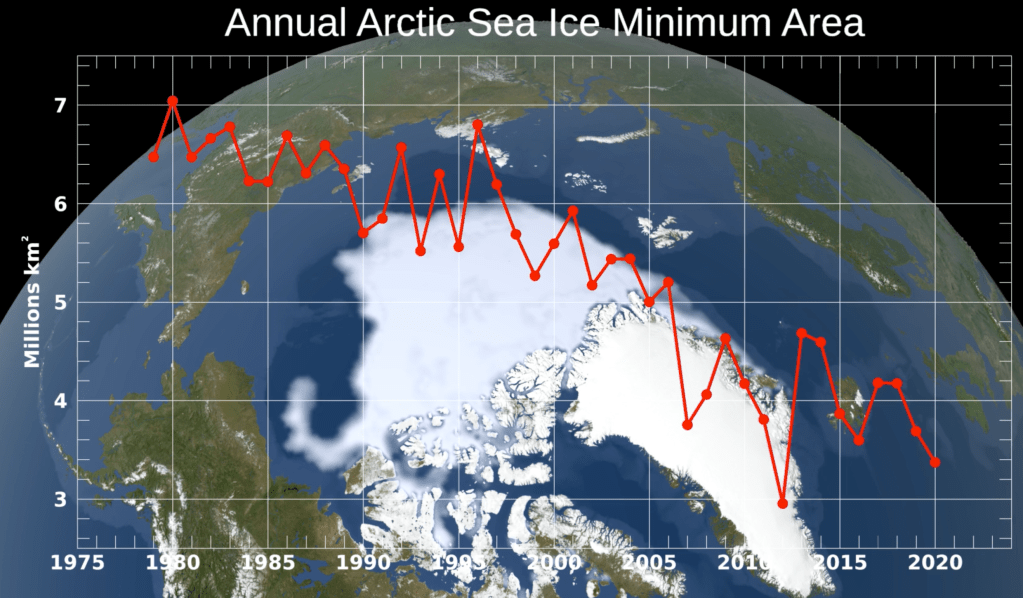
Many impacts of climate change were not predicted in advance and some are poorly understood even now. The catastrophic collapse of north pole sea ice in 2007 was a great surprise.
Apart from further amplifying warming, this has been speculatively linked to the slowing of the Gulf Stream and to changes in the northern jet stream leading to weather extremes in Europe and the US.
In the oceans, coral bleaching was first observed in 1984 and its causes were the subject of dispute for many years. Now it is common and is unequivocally linked to warming seas. Although it was known that a lot of atmospheric CO2 would end up in the oceans, and this was studied intensively for decades, the fact that this would lead to a significantly lowering of global ocean pH did not become well known until 2003.
The instability of the marine glaciers of West Antarctica, although conjectured in the 1970s, was not clearly observed until the 21st century, and its future course is highly uncertain, and may depend sensitively on the degree of warming.
However, even apart from climate change, human activities are squeezing out the natural world. Wild mammals are now just 4% of the global mammal biomass.
Confirmed extinctions have accelerated rapidly, and 1/3 of all known vertebrate species are threatened (2/3 in New Zealand).
Source: IPBES, 2019.
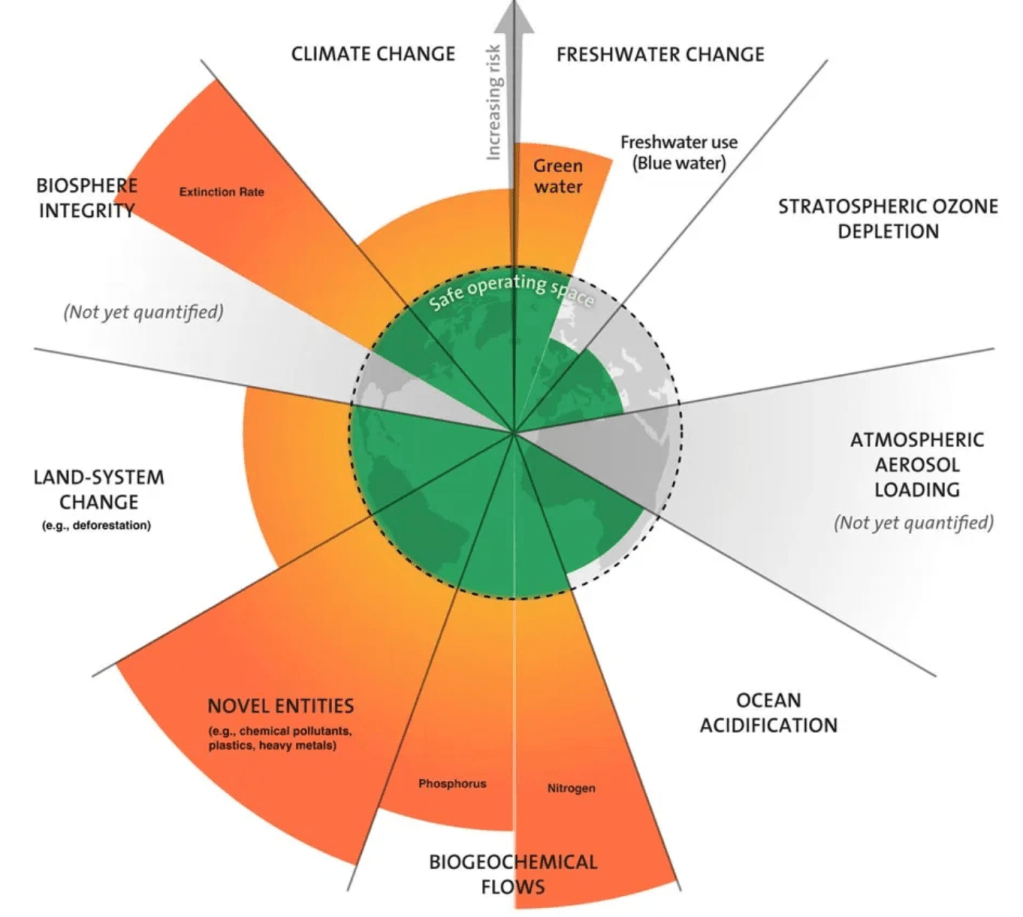
Faced with such multiple challenges, Alex Steffen and Johan Rockström introduced in 2009 the concept of “planetary boundaries”, nine categories of global environmental impact. For each category, a safe operating limit was to be determined, followed by a zone of uncertainty and an unsafe zone. In their most recent update, 8 of the 9 boundaries had been quantified, and in 6, we had departed from the safe zone.
It’s noticeable that the most urgent challenges worldwide are also the main environmental issues facing New Zealand.
For example, freshwater quality impacted by nitrogen and phosphorus pollution from farming has been persistently difficult to address. The Canterbury Water Management Plan, praised for its collaborative, trust-building framework, has failed nearly all of its targets, such as “an upward trend in diversity and abundance of native fish populations“: “We have not identified key Canterbury species to monitor nor do we conduct regular fish monitoring… The data we do have show that the native fish habitat and populations… continue to decline.”
Johan Rockström has worked with New Zealand’s Ministry for the Environment to study the planetary boundaries in our context. Their report is well worth reading.
Let’s return to the equation from the start,
materials + energy + technology ➞ consumption ➞ impacts.
The mainstream solutions to climate change rely heavily on technology. Some of the required technologies definitely exist, such as wind and solar power, although questions remain as to how quickly they can scale up without being impacted by resource limitations.
To pick just one example, solar panels are now using 10% of the world’s silver supply, which is lower than its 2014 peak. The conventional answer is that if supply is limited, the price will rise, which will either lead to more supply or to the use of substitutes or to different technology altogether. That is one possibility, and it’s what has often happened in the past. But should we bet our future on this happening for every single resource, in a timely and orderly way?
Secondly, many pathways rely on technology that is either not yet in commercial use – like wood-based biofuel and synthetic e-fuels – or has consistently struggled to develop at scale, like carbon capture and storage. Aviation is a striking example: airlines are announcing “net zero 2050” targets, but their route to reach that point is filled with nonexistent technology, like hydrogen- and battery-electric planes and vast quantities of very high integrity sustainable fuels.
Meanwhile, new, energy-intensive technologies are coming along all the time, like cryptocurrency mining and flying cars.
Carey King has argued that the modern, fossil-fueled economy is a kind of “superorganism” that resists all attempts to rein it in. He parodied St Augustine’s 4th century AD plea (“Give me chastity and continency, only not yet. For I fear that You would hear me quickly, and that quickly You would heal me of that disease of lust, which I wished to have satisfied rather than extinguished”):
Give me rapid reductions in greenhouse gas emissions, only not yet. For I fear that the economy would hear me quickly, and that quickly it would heal me of that disease of growth, which I wished to have satisfied rather than extinguished.
Carey King, The Economic Superorganism: Beyond the Competing Narratives on Energy, Growth, and Policy, 2021
Echoes of this can be seen throughout New Zealand’s climate change response, which, despite the encouraging-sounding “net zero” goals, is based on prolonging fossil fuel use as long as possible – well into the 22nd century. Our “carbon capture and storage” is based on trees, a notoriously unstable way to store carbon and which, under our carbon budgets, slows down the exit from fossil fuels.
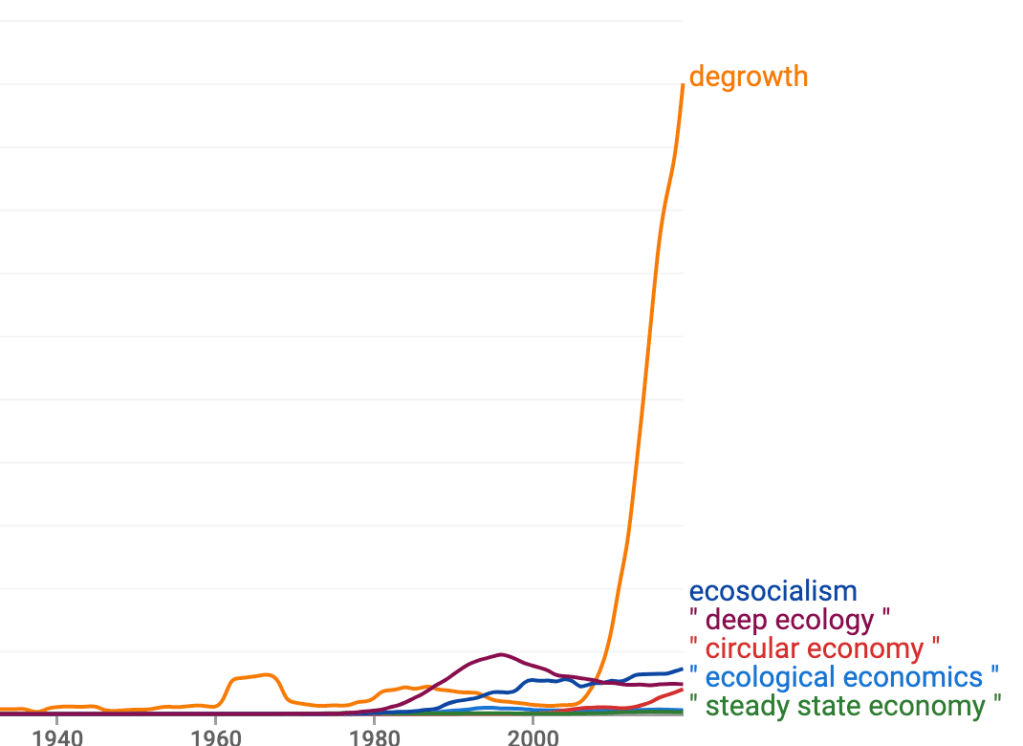
Now despite the misplaced optimism in the early days about how easy it would be to cut emissions, academics have not been idle. Numerous approaches and schools of thought have been developed in response to what is increasingly seen as a complex global ecological crisis:
Source: Google Ngram. Relative frequency of the given phrases in books.
Unfortunately, not only have the problems not been solved, even within the academic world progress has been limited. How much have traditional university economics, engineering, and agriculture taken on these ideas?
But now a new idea is gaining ground – degrowth.
In Jason Hickel’s words, degrowth is the “planned reduction of energy and resource throughput designed to bring the economy back into balance with the living world in a way that reduces inequality and improves human well-being”. Degrowth shines a spotlight directly on the “consumption” part of the equation.
materials + energy + technology ➞ consumption ➞ impacts
In “Providing decent living with minimum energy: A global scenario“, Joel Millward-Hopkins turns the question around. Instead of looking at present activity, a scenario of “decent living” is developed: good quality housing, transport, healthcare, education and so on. He finds that it could be delivered indefinitely with 4 MWh of energy per person.
The “Absolute Zero” study, led by materials engineer Julian Allwood from Cambridge University, argues that “net zero” is not a strong enough target and, further, that new technologies cannot be anticipated and, in any event, do not diffuse quickly enough. In this scenario, existing technologies are used to reach zero emissions in the UK by 2050.
Radical energy conservation makes the renewable transition much, much easier.
On the material footprint side, it is easy to imagine how we might use less materials. If everything used half the material, and lasted twice as long, material use falls by three-quarters. If inessential products were not made, and essential ones used to their maximum potential, the job is done. Who has ever bought something they regretted? Who has bought something they didn’t use much, or in which a tiny plastic part broke and could not be repaired?
Taken together, the challenges look formidable. Are we doing everything we can to address them? Two new groups of academics, the Planetary Limits Academic Network and Faculty for a Future argue that we are not, and that radically new interdisciplinary approaches are needed.
One final word about technology. It really is a two-edged sword. When I first saw “2001: A Space Odyssey” as a teenager, I saw themes like the evolution of consciousness, our place in the universe, our destiny. Now, it looks more like a parable of how technology has brought mankind to a dead end.
In the famous three-million-year flash-forward,
the bone and the satellite are not just tools, they are weapons. (The satellite is an orbiting nuclear warhead.) And here is astronaut Frank Poole, running and running in circles and going nowhere. Apparently, Kubrick wanted this scene to be even longer.
Later on, Frank is killed by the artificial intelligence HAL 9000, famously the most human character in the whole film.
2001 was a tribute to the collective genius of humanity for having turned this merciless world into a place fit for human habitation. It was also a merciless assault on the delusion that the world is susceptible to human will.
This post is a version of a talk given on 17 August 2022 at the Institute for Governance and Policy Studies, Victoria University of Wellington, which is available to view. Thanks to Mike Joy for setting up and hosting the talk. For further reading, I recommend the 2016 theme issue of the Proceedings of the Royal Society, Series A, on “Material Demand Reduction”. In particular, I have drawn on the following articles.
Julian M. Allwood, Timothy G. Gutowski, André C. Serrenho, Alexandra C. H. Skelton and Ernst Worrell, Industry 1.61803: the transition to an industry with reduced material demand fit for a low carbon future, http://dx.doi.org/10.1098/rsta.2016.0361
Doris Fuchs, Antonietta Di Giulio, Katharina Glaab, Sylvia Lorek, Michael Maniates, Thomas Princen, and Inge Røpke, Power: the missing element in sustainable consumption and absolute reductions research and action, http://dx.doi.org/10.1016/j.jclepro.2015.02.006
Martin Young, Francis Markham, Arianne C. Reis, and James E. S. Higham, Flights of fantasy: A reformulation of the flyers’ dilemma, https://doi.org/10.1016/j.annals.2015.05.015
Next Monday, 22 August 2022, is the 21st birthday of a terrific project of the New Zealand National Library, Papers Past, a sweeping attempt to digitise vast range of old newspapers, books and magazines. A series of public events and online panel discussions marks the occasion.
Thanks to Papers Past, the now-famous “Coal Consumption Affecting Climate” article, from the Rodney and Otamatea Times of 14 August 1912, was rediscovered and became known around the world. (Its 110th anniversary has been noted by James Shaw and Toby Manhire, among others.)
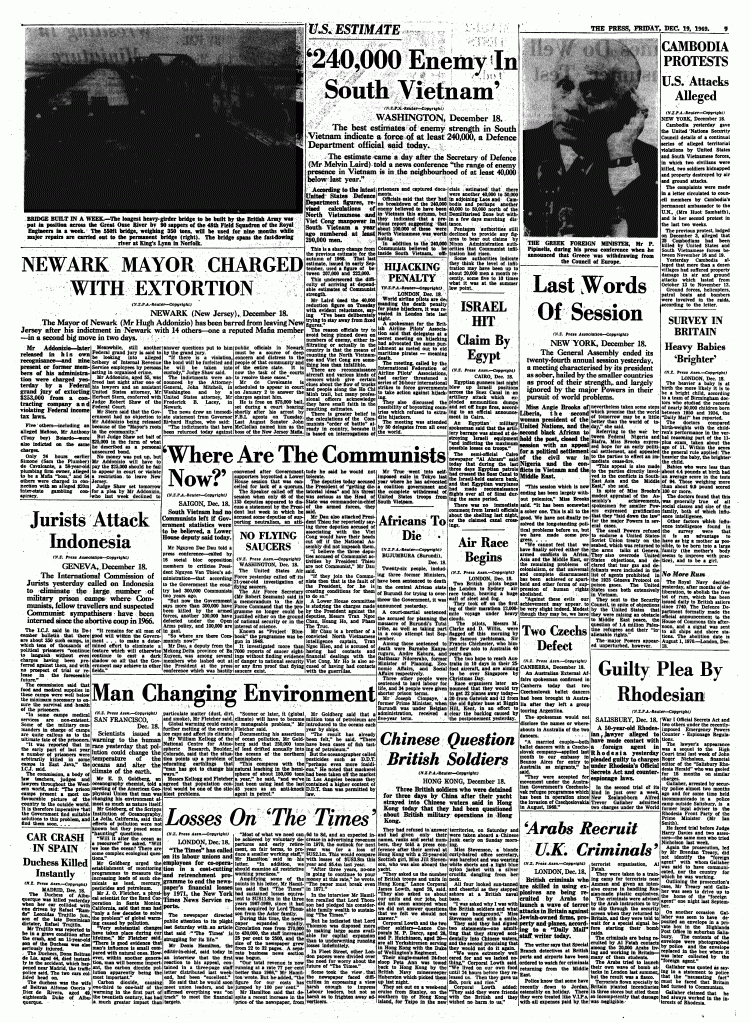
Here’s another early climate change article, from the Christchurch Press of 19 December 1969:
Scientists issued a warning to the human race yesterday that that pollution could change the temperature of the oceans and alter the climate of the earth.
Mr E. D. Goldberg, an oceanography chemist, told a meeting of the American Geophysical Union that man was changing his environment almost as much as nature itself.
Mr Goldberg, of the Scripps Institution of Oceanography, La Jolla, California, said that effects of pollution were not known but they posed some “haunting” questions. “Will it alter the ocean as a resource?” he asked. “Will we lose the ocean? There are some complex ecological questions.”
Mr Goldberg urged the establishment of monitoring programmes to measure the increasing loads of such chemicals as lead, mercury, pesticides and petroleum. Mr J. O. Fletcher, a physical scientist for the Rand Corporation in Santa Monica, California, said that man had “only a few decades to solve the problem” of global warming caused by pollution.
“Very substantial changes have taken place during our lifetime,” Mr Fletcher said. “There is good evidence that man’s influence is small compared with natural ones. However, within another generation, man will become important, the carbon dioxide pollution apparently being the most important.” Carbon dioxide, causing one-third to one-half of the warming in the first part of the twentieth century, has had a much greater impact than particulate matter (dust, dirt and smoke), Mr Fletcher said. Global warming could cause further melting of the earth’s ice caps and affect its climate, Mr William Kellogg of the National Centre for Atmospheric Research, Boulder, Colorado, said that the situation points up a problem of educating earthlings that “man has got to change his ways.”
Messrs Kellogg and Fletcher agreed that population control would be one of the stickiest problems.
“Sooner or later, it (global climate) will have to become a manageable problem,” Mr Fletcher said. Documenting his assertions of ocean pollution, Mr Goldberg said that 250,000 tons of lead drifted annually into the oceans of the northern hemisphere. “This compares with the natural leaching in the hemisphere of about 150,000 tons a year,” he said, “and we’ve just been using lead the last 15 years as an anti-knock agent in petrol.”
Mr Goldberg said that a million tons of petroleum are introduced to the oceans each year by ships. “The result has already been felt,” he said. “There have been cases of fish tasting of petroleum.” But the oceanographer called pesticides such as D.D.T. “perhaps even more insidious.” He noted that mackerel had been taken off the market in Los Angeles because they contained a higher content of D.D.T. than was permitted by law.
The article holds up pretty well. Within a generation, carbon dioxide did become important, dominating natural factors.
The context of the article is interesting, too. The Vietnam war, the cold war, terrorism, the Middle East, and attempts by the UN to solve world problems (including a treaty on the seabed) dominate the world news. And flying saucers.
This was just a few years before the first oil shock of 1973 which is now seen as a turning point in the post-war era. Some countries responded with a shift in their long-term energy strategies: Britain moved from coal to North Sea gas, France to nuclear, Sweden to nuclear and biomass. Emissions in these countries are now less than half their 1970s peaks.
But we’ve also learned that in most cases, turning off the tap on a cheap energy source is not that easy. Attempts to do so will be met with all kinds of resistance.
Now we are again seeing an energy crisis, with the main trigger being the war in Ukraine, at the very time that we need to accelerate the move off fossil fuels, while simultaneously coping with impacts on food prices due to the combined effects of the war with drought in Europe.
In fifty years time, will 2022 look like a turning point?
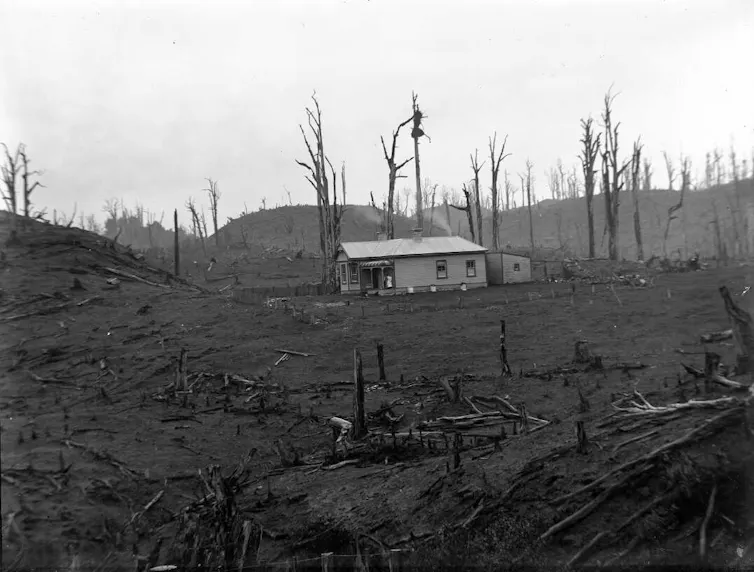
The ways in which New Zealand remembers European colonisation have changed markedly in recent years. Critics have been chipping away at the public image of Captain James Cook, the New Zealand Wars have been included in the new compulsory history curriculum, and streets honouring colonial figures have been renamed.
However, while New Zealand is slowly recognising the historical injustices suffered by Māori, the same reappraisal hasn’t extended to the natural environment. The dramatic transformation of “wild untamed nature” into “productive land” by European settlers in the 1800s continues to be widely celebrated as a testament to Kiwi ingenuity and hard work.
My soon-to-be published research, based on a survey of 1,100 people, suggests this narrative could be partly responsible for New Zealanders’ apparent complacency on climate change compared to other countries.
Essentially, it appears those who refuse the “taming of nature” narrative – and instead recognise the 19th century as a period of environmental destruction – are more likely to have what psychologists call an “environmental self-identity”.
The findings further suggest that changing individual behaviour as a strategy to tackle environmental threats (as recommended in the Climate Commission’s 2021 report) might mean addressing how we communicate the history of environmental change in schools, museums and at public heritage sites.
In particular, this might mean framing what happened in the 1800s as more about loss than achievement.
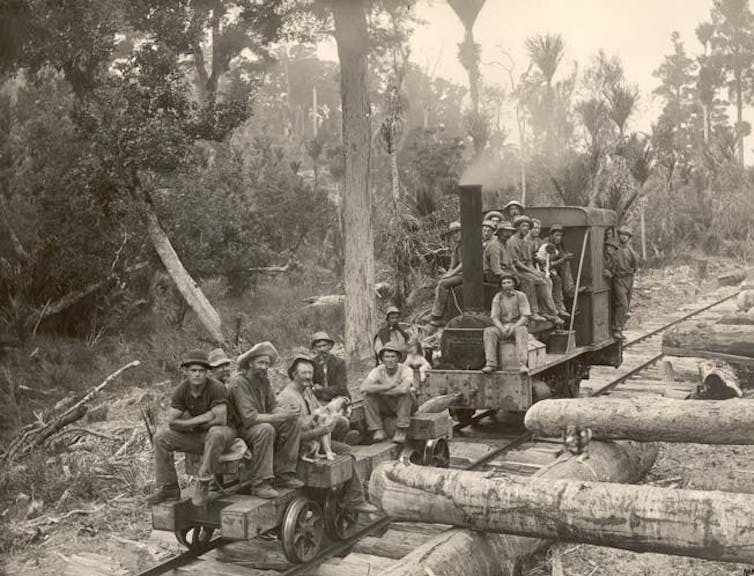
‘Taming nature’: clearing bush in the Coromandel, late 19th century. Unknown photographer, via Wikimedia Commons
A story of progress or decline?
Prior to human settlement, Aotearoa New Zealand had been isolated from other landmasses for around 60 million years. The result was the evolution of a unique ecosystem that was highly vulnerable to disturbances.
Māori arrived around 1300 and brought with them invasive mammals: the Polynesian dog (kurī) and the Pacific rat (kiore). Through widespread burning, Māori – either intentionally or accidentally – destroyed large areas of forest in drier eastern parts of Te Wai Pounamu (South Island) and Te Ika a Māui (North Island).
Moreover, archaeological research suggests a number of bird species were hunted to extinction, including moa and adzebill.
European settlers began arriving in large numbers after the signing of the Treaty of Waitangi in 1840. On the back of (often dubious) purchase deals, the introduction of private property laws and forceful confiscation, vast areas of Māori land ended up in European hands.
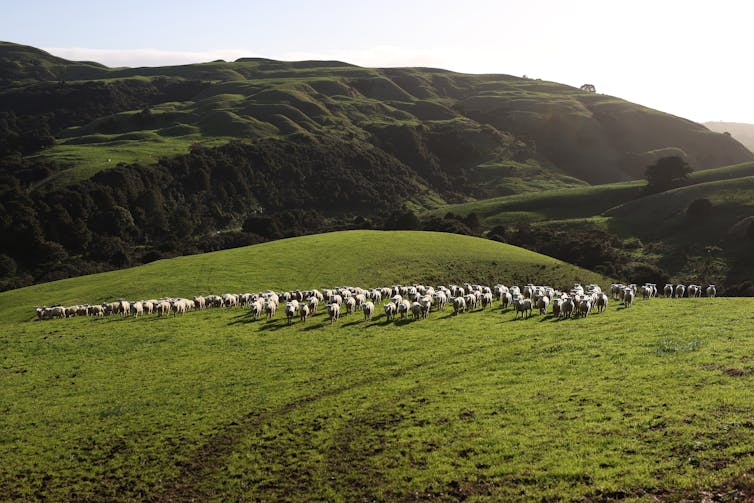
What followed was a classic example of what’s been called “ecological imperialism”. Much of the remaining forest was transformed into grassland for sheep and cattle. Acclimatisation societies introduced other familiar animals and plants from Europe.
Purposefully and accidentally introduced species – such as stoats and ship rats – wreaked havoc on the native wildlife. Within a few decades of European colonisation, several birds went extinct, including the huia, the piopio and the laughing owl. European capitalism also had a devastating impact on seal and whale populations.
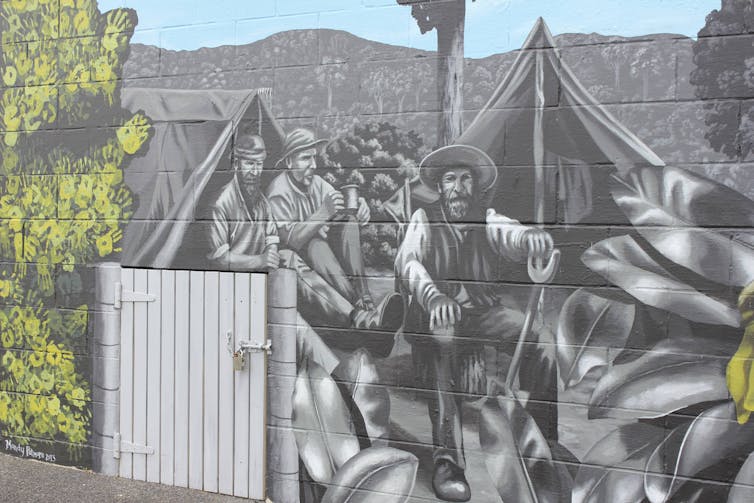
Veneration of the pioneers: a mural by artist Mandy Patmore depicts bushmen at their camp with the Waitakere Ranges in the background. Auckland Libraries Heritage Collections, CC BY-NC
A “usable past”
Despite the long history of environmental change, it is the transformation of the landscape in the 1800s that occupies the most prominent place in New Zealand’s collective memory, relative to other periods. The reason is fairly simple: the era provides what memory scholars call a “usable past” – usable because it helps to construct a distinctive New Zealand identity in the present.
Similar to historical events such as the signing of the Treaty of Waitangi and the Gallipoli campaign, the “taming of nature” in the 1800s is remembered as an experience that forged the nation. European settlers – in particular the bushmen who cleared the forest to make way for farms and pastures – are portrayed as the prototypical New Zealander.
Their hard work and “number eight wire” ingenuity still define popular versions of the national character today. And media continue to portray the countryside as the “real” New Zealand, including in advertisements and television shows.
It should be stressed this is largely a narrative of the European settler majority. For Māori communities, the transformation of the landscape under European colonialism is more a story of decline than progress. Māori memories of environmental change in the 1800s are intertwined with memories of colonial violence and dispossession.
Most New Zealand farms were once dense bush that was cleared by burning and logging. Getty Images
Memory shapes environmental attitudes
My survey sought to explore whether different interpretations of New Zealand’s environmental history shape people’s attitudes towards nature, and whether those interpretations make it more or less likely that people see themselves as someone who acts in an “environmentally friendly” way – the environmental self-identity mentioned earlier.
A key finding is that those respondents who pinpointed the 1800s – rather than Māori settlement or the second half of the 20th century – as the most destructive period of environmental change were most likely to describe themselves as environmentally friendly.
For Māori respondents, this is perhaps not entirely surprising. An awareness of injustices suffered in the 1800s tends to go hand in hand with a strong spiritual connection with the land and a sense of responsibility towards nature.
More significant is that European New Zealanders who recognise the environmentally destructive role of 19th-century settlers were more likely to identify themselves as environmentally friendly than those who point to other periods in history.
It appears those European New Zealanders who acknowledge the environmental destruction caused by their ancestors feel a greater responsibility to fix these mistakes in the present.
How we remember the past matters
To encourage more pro-environmental behaviours, the survey results suggest New Zealand needs to move away from narratives that glorify environmental change of the early colonial era as an expression of national character.
Such interpretations of history reinforce ideas that get in the way of achieving a sustainable future. They promote a strongly utilitarian perspective on our relationship with the environment. Nature is reduced to a commodity to be exploited in the pursuit of human interests.
New Zealand has taken the first steps to work through its violent political past, but this process also needs to include colonialism’s devastating effects on the environment.
Rather than remembering the transformation of the landscape by European settlers as a nation-defining moment, public history should encourage an examination of human complicity in the destruction of nature. Hopefully, this can help transform such understanding into present-day environmental action.
The Emissions Reduction Plan, released last month, is a major milestone in the journey which began five years ago when environmental groups called for a Zero Carbon Act.
One of its provisions is to establish a renewable energy target. This refers to all energy, not just electricity. Addressing climate change means stopping burning fossil fuels so that eventually, all of society’s energy needs are met with renewables.
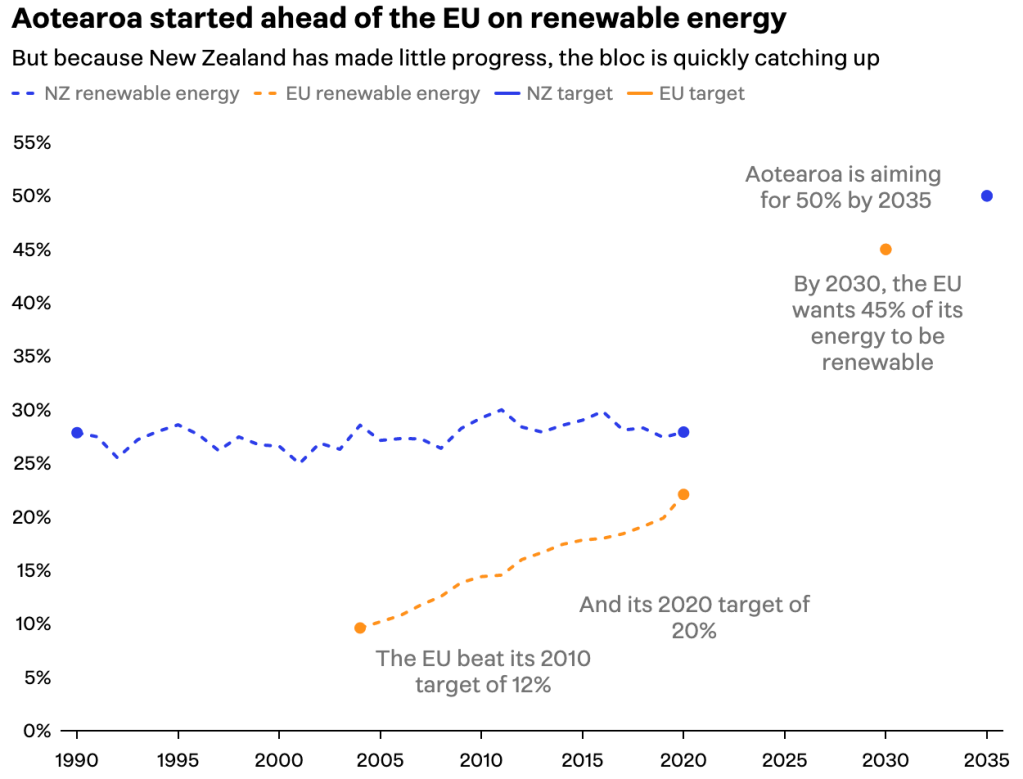
In 2020, 28% of New Zealand’s energy was renewable. That’s better than the world average of 11%, but well behind the renewable energy superpowers of Norway, Sweden, and Iceland, which are all over 70%.
Alarmingly, we have not made any progress on this measure since 1990.
Adopting a renewable energy target was a key recommendation of the Climate Change Commission. They called for a target of 50% renewable energy by 2035, and this has now been adopted.
A renewable energy target has long been a central part of Europe’s climate change response. Their first target (12%) was adopted as long ago as 1997. Their next target (20% by 2020) was adopted in 2009, and was achieved.
Their 2030 target was initially set at 32% in 2018, but was raised to 40% in the Green New Deal, and then, in May – in response to Russia’s invasion of Ukraine – increased further to 45%.
In raw numbers, the European target is more ambitious than New Zealand’s, but Europe also has form in this area, while we are (almost) starting from scratch.
Why do we need an energy strategy, when we already have carbon budgets and measures to meet them, like the Emissions Trading Scheme? The Commission wrote that developing a national energy strategy would help to ensure different aspects of the energy system in Aotearoa are considered in a coherent way: not just emissions reductions but reliability, affordability, infrastructure, supply chains, workforce needs, and fairness.
To these we could add that an energy target provides a backstop to cutting emissions. The carbon budgets measure net emissions from all gases. Overperforming in one area, say by planting trees or cutting biomethane, would risk underperforming on others, especially fossil fuels. But a steady phase-out of fossil fuels for energy is an absolute requirement for a safe future.
(You’d think that message would have sunk in by now. But alarming numbers of people are still buying brand new cars powered entirely by fossil fuels.)
When you’re driving a one-tonne car, most of the energy from the combusted fossil fuels goes towards propelling the heavy vehicle itself forward, rather than its passengers. The steel, plastics and glass of the car body also produce lots of greenhouse pollution in manufacturing. For that reason, the smaller the vehicle, the lower the lifetime carbon footprint. Using an ebike for short journeys is much greener than a traditional car, and even beats an EV.
A target also draws attention to our total energy consumption. We get through a lot, about 40% more per capita than the EU.
Strategies such as low-energy housing located where people can walk where they need (the “15-minute city”) will reduce energy consumption as we move off fossil fuels. The target in the Emissions Reduction Plan to reduce driving 20% by 2035 – a massive energy saver – is a landmark decision in an area which has previously been open slather.
Conversely, airport and road expansions that increase energy use and fossil fuel use are questionable.
Globally, it is very difficult to meet the 1.5C or even the 2C target without substantial reductions in energy use – an approach that has been called “green growth for the poor, degrowth for the rich.”
An energy strategy will also focus attention on what energy does for us, both for the economy and for our wellbeing. A wellbeing approach would emphasise those things that are essential for a decent quality of life, including healthcare, work, education, environment, and civic and family life.
It would prompt an examination of the distribution of energy consumption, and of what level is excessive in the context of a global crisis.
Notably, there were initiatives in the budget for low- and medium-income people such as cheaper public transport and grants to dispose of old cars.
But most household emissions come from high-income households. They have high emissions and the means to reduce them. But with no one being compelled to do anything, we must rely instead on a combination of incentives and regulations from the government, whose long-term impact is hard to foresee.
Two-thirds of New Zealand’s fossil energy comes from oil. (One quarter is gas, one twelfth coal.)
The oil alone was costing us $7 billion a year even before the war in Europe – funded by oil and gas sales – pushed up prices. That starts to make the Climate Emergency Response Fund’s $1b a year look like a small change. The outsized share of oil once again points to the need for a revolution in transport.
This article appeared first in Stuff. Read the original article.
Submissions have now closed on a potential law change that would shift the emphasis from fast growing pine and other exotic forests to permanent native forests to absorb our emissions. These are complex debates involving forest ecology, economics, as well as ideology. The decision will have a major impact on long-term land use, especially with regard to marginal farmland. This, in turn, will affect farmer and Māori landowner decisions on how to maximise returns from their land.
Underpinning these debates is a critical issue. How realistic is it to use native forests to absorb our emissions?
Focussing on transport alone, according to the Climate Change Commission, our domestic transport related emissions need to be reduced by 13 percent by 2030, just eight years away; and by 41 percent by 2035 (compared to 2019). The year 2050 is a date often quoted for reaching ‘net zero’.
Some claim these are conservative targets. It should also be noted that these targets currently ignore international aviation and shipping emissions.
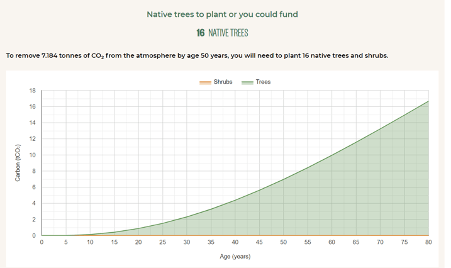
Trees that Count promote the Tāne’s Tree Trust National Carbon Calculator. This allows individuals and organisations to plug in the amount of emissions needed to be absorbed. The calculator then works out how many trees and shrubs need to be planted and how long it will take to fully absorb the carbon. This assumes, of course, all the trees are well looked after and will thrive long term. This is not always the case.
With regard to natives, it is clear that large podocarps such as totara, kahikatea and kauri are the heavy lifters in terms of carbon absorption. But, trees such as kahikatea are best suited for damp, low-lying areas of land, not steep, thin soiled, hillsides. Unlike pines and some other exotics, these podocarps are generally hard to establish and, at least initially, grow slowly.
Case study: a working holiday abroad
So, here is a simple example based on native planting. A 20-year-old decides to take a return economy flight to London from Wellington.
First, they use Air New Zealand’s calculator. The total distance flown is 37,662 km. Air New Zealand estimates this generates 2.772 tonnes of CO2. The cost to offset this CO2 is a mere $67.42.
But, being somewhat sceptical of relying on an airline calculator, they then try the Toitū Envirocare travel calculator.
This calculator suggests they will generate 7.184 tonnes of CO2, significantly more than Air New Zealand’s estimate. As a further check the atmosfair calculator was used. This asks for aircraft type and requires a stop over as it calculates a direct flight is not possible. Using Singapore as the stopover, this calculator puts the emissions at 11.563 tonnes. This is much higher again, partly through how radiative forcing effects are calculated. But for the purposes of this exercise let us use the 7.184 tonnes from the Toitū Envirocare calculator.
Using the Tāne’s Trust calculator, focussing only on trees and not shrubs, shows only 16 trees need to be planted. This looks hopeful. If the trees and suitable land are available and well cared for, it might be possible to get these in the ground for about $10 each. So the carbon can be absorbed at the relatively low cost of $160. Still, this is more than double the Air New Zealand offset cost.
But, on closer observation, this calculator shows very little carbon is absorbed in the early years. In fact, it will take 50 years for the carbon from this one trip to be taken up by the trees. The 20-year-old will be 70 by the time the trip is fully ‘paid’ for in carbon terms.
Thinking that this is not good enough, the young carbon-conscious traveller decides they want all their carbon absorbed by 2030, that is in eight years’ time. The calculator does not like this short time frame and issues a warning. Nevertheless, it provides an estimate of how many trees are needed for offsetting in this time frame. Suddenly, the number jumps to 1,936. At the $10 cost per tree planted, offsetting just one return flight for one individual would cost $19,360.
So let us push the time frame out once again; carbon neutral by 2050? This requires 58 trees to be planted at a heavy cost of $580 to offset.
This depicts a scenario for just one flyer. If all of about 260 economy passengers wanted to offset their carbon, around half a million trees would need to be planted this year for this one return flight alone. Multiply this by the many long-haul flights starting up again and the native tree planting scenario moves into the realm of fantasy.
So would planting exotic trees help? With the right tree, the right site, and the right management, the absorption of carbon in the early years would be sped up. But, the scale of planting is still unrealistic and the take up of carbon not fast enough to ensure the reductions required by 2030. The only realistic way of tackling emissions in the short to medium term is by reducing them.
That is not to say planting, whether it be of natives or exotics, is not useful in the longer term, say 30 to 100 or even 500 years. And, if done right, both exotics and natives can improve our biodiversity outcomes.
But the simple example of offsetting long-haul flights with native planting shows we need to shift away from an emphasis on offsetting and rapidly move to reducing emissions in whatever way we can.
Postscript by Robert McLachlan
Any mention of trees in our climate effort and I can’t help be reminded of the scene in Douglas Adams’s Hitchhiker’s Guide to the Galaxy in which a spaceship of management consultants has crash-landed on pre-historic Earth:
“Since we decided a few weeks ago to adopt the leaf as legal tender, we have, of course, all become immensely rich… But we have also run into a small inflation problem on account of the high level of leaf availability, which means something like three deciduous forests buying one ship’s peanut. So in order to obviate this problem and effectively revalue the leaf, we are about to embark on a massive defoliation campaign, and… er, burn down all the forests.”
The crowd seemed a little uncertain about this for a second or two until someone pointed out how much this would increase the value of the leaves in their pockets whereupon they let out whoops of delight and gave the management consultant a standing ovation.
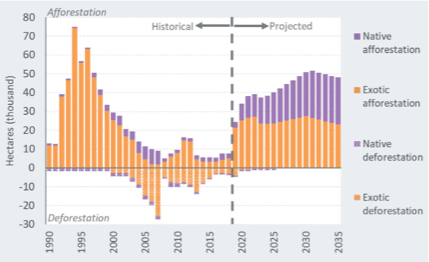
We are now several decades into a national effort to use trees to allow us to keen burning fossil fuels a bit longer (and maybe make money in the process). But we didn’t follow through on that commitment – tree planting seriously tailed off after 2000, while forest clearing picked up.
Tree planting in the past and (under the Climate Change Commision’s ‘Balanced Pathway’) the future.
Somehow the government has to now balance our past mistakes, our immediate needs under the carbon budgets, and the long-term net zero requirement of the Zero Carbon Act. The carbon budgets cover all greenhouse gases and removals, so, other things being equal, more trees means less pressure to cut fossil fuels.
The Climate Change Commission thought that 1.5 million hectares of pine trees would be planted by 2050 if growers were paid $50 per tonne of CO2. But their ‘Balanced Pathway’ calls for 0.67 million ha of pine and the same again of new native forests. Meanwhile, foresters are cleaning up at the current price of $75 a tonne.
The Emissions Reductions Plan will be released next week, which should reveal how this is to be handled.
Carbon stored in trees is not only limited and temporary, it’s also highly uncertain. Each year, the Ministry for the Environment re-calculates the estimates for previous years. In 2021, the estimate for CO2 stored by forests in 2019 was 27.4 million tonnes; in 2022, the estimate for the same year is 23 million tonnes. And despite the improvements, the final uncertainty is still more than 12 million tonnes per year (New Zealand’s Greenhouse Gas Inventory, page 260). This has to make planning and meeting carbon budgets pretty tricky.
Read the 500-page greenhouse gas inventory and you, too, could be reminded of Douglas Adams.
The 2022 Winter Olympic Games presented us with the sickening spectacle of artificial snowfields produced using fossil energy because the use of fossil energy has resulted in global temperature rise that now inhibits the natural accumulation of snow. A crushing display of human indifference and misguided priorities.
The inconvenient lack of snow on skifields has critical biodiversity and ecosystem implications for Earth. A new study reveals that anthropogenic climate change will result in at least a quarter of our alpine species becoming extinct in the next 50 years. Species that are already endangered and others that are currently widespread could lose all their current habitat in Aotearoa New Zealand due to anthropogenic global warming. The future distribution of 12 grasshopper species were inferred by projecting current niche models onto the predicted New Zealand climate with 1oC or 3.7oC warming. The conclusion was that most of these alpine species that occur nowhere else on the planet, would lose at least 30% of suitable habitat.
The earth has already heated 0.66 oC in just 20 years, the 1oC threshold will soon be passed, and the IPCC has now emphasised that chronic failure to meet promises could soon push planetary heating beyond control. In the mountains of New Zealand we can expect the green rock-hopper will be extinct within a matter of years and our other widespread flightless grasshopper species will have reduced and fragmented habitat.
Populations of alpine animals are restricted to high-elevation ‘islands’ and most cannot jump or fly the gap to unconnected mountain habitat. This means that as the Earth warms, alpine species will find their habitat dwindling. In Aotearoa New Zealand most of our alpine plants and animals are found nowhere else in the world, and the list is growing with six new species of alpine wētā just described. [Listen here] When their habitat shrinks, we are set to lose a quarter of all our endemic alpine biodiversity, and that is just the start.
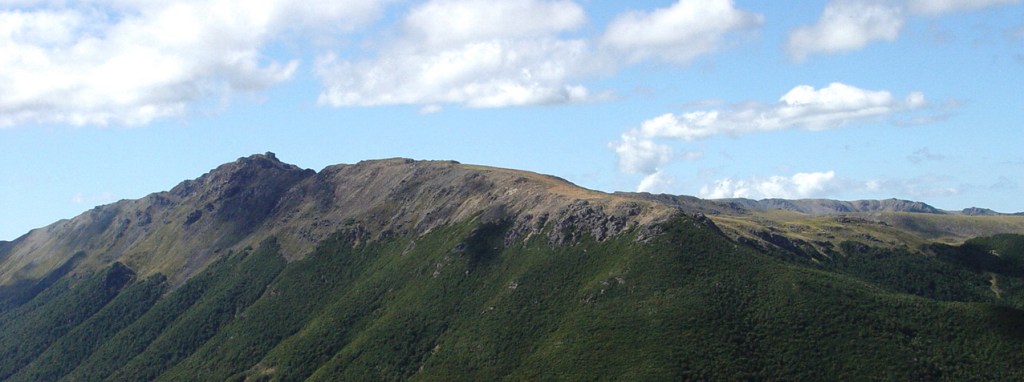
The treeline on a mountainside shows the climatic limit of conditions suitable for tree growth. At higher elevation, day-night and seasonal temperature extremes and aridity prevent trees establishing. That leaves the space open for other types of plants and alpine animals that can survive and reproduce in the short alpine growing season and stay alive through the winter. But with a warmer planet the treeline will move up, squeezing out our alpine ecosystems.
A clear and present danger
The IPCC has released its latest damning report in which they identify systematic and widespread failure to fulfil existing GHG emission reduction pledges. Solutions now require drastic action to curb GHG production AND work to recapture CO2 released into the atmosphere. COVID and recent wildfires and floods will be as nothing if continue with business as usual (BAU). The failure of governments around the world is our failure. Our indifference allows politicians to side-line the solutions in favour of perceived business interests, which we can translate as short-term gain. Politicians must be shown that business as usual is not an option and all aspects of our existence need to be refocused on the climate problem.
Indifference now denies us the right to complain when the problems hits us; and they will hit us as individuals not future generations. The problem and the solution is not somewhere else, or someone else it is here and it is YOU.