It’s high time to rethink low carbon innovation policy in New Zealand

New Zealand’s ability to build domestic clean technology industries and respond effectively to climate change is handicapped by a deep-seated rigid notion that low carbon innovation can come about on the back an ETS alone. This notion disregards the processes by which low carbon innovations have successfully been developed and become competitive to date.

Concepts like ‘level playing fields’, ‘picking winners’ and ‘distortionary effects’ are selectively used to argue for lack of government action beyond emissions pricing. Consider this: since climate change came onto the political agenda in 1980, not a single clean technology has come about solely on the back of a carbon market.

In fact, existing carbon pricing mechanisms that most closely resemble the first-best policies long prescribed by economists have come about following, and as a result of, investment incentives and incremental buy-in from industry and the general public. New Zealand is among the last remaining countries to understand this, and to acknowledge the economic opportunities that you forego when you adopt laissez-faire innovation policy.

Our current government has announced funding for clean energy R&D and testing facilities, which is a great start, but addresses just one part of the innovation puzzle. Addressing the other parts of the puzzle will need to see public entities formalise and broaden stakeholder participation in the policy process, think in terms of 30 year innovation programmes from both producer and consumer perspectives, and put in place demand-side policies to support commercialisation of domestic high-risk low carbon technology. Achieving New Zealand’s decarbonisation goals will stand or fall on whether we tackle the notion of laissez-faire (ne pas faire?!) innovation –  and how entrepreneurial are our current and future parliaments willing to become.

If and when we popularise a more nuanced, wiser and longer-term narrative of environmental innovation and societal change, we will simultaneously address New Zealand’s historically poor track record in terms of productivity and economy-wide capacity to drive and coordinate innovation’’.
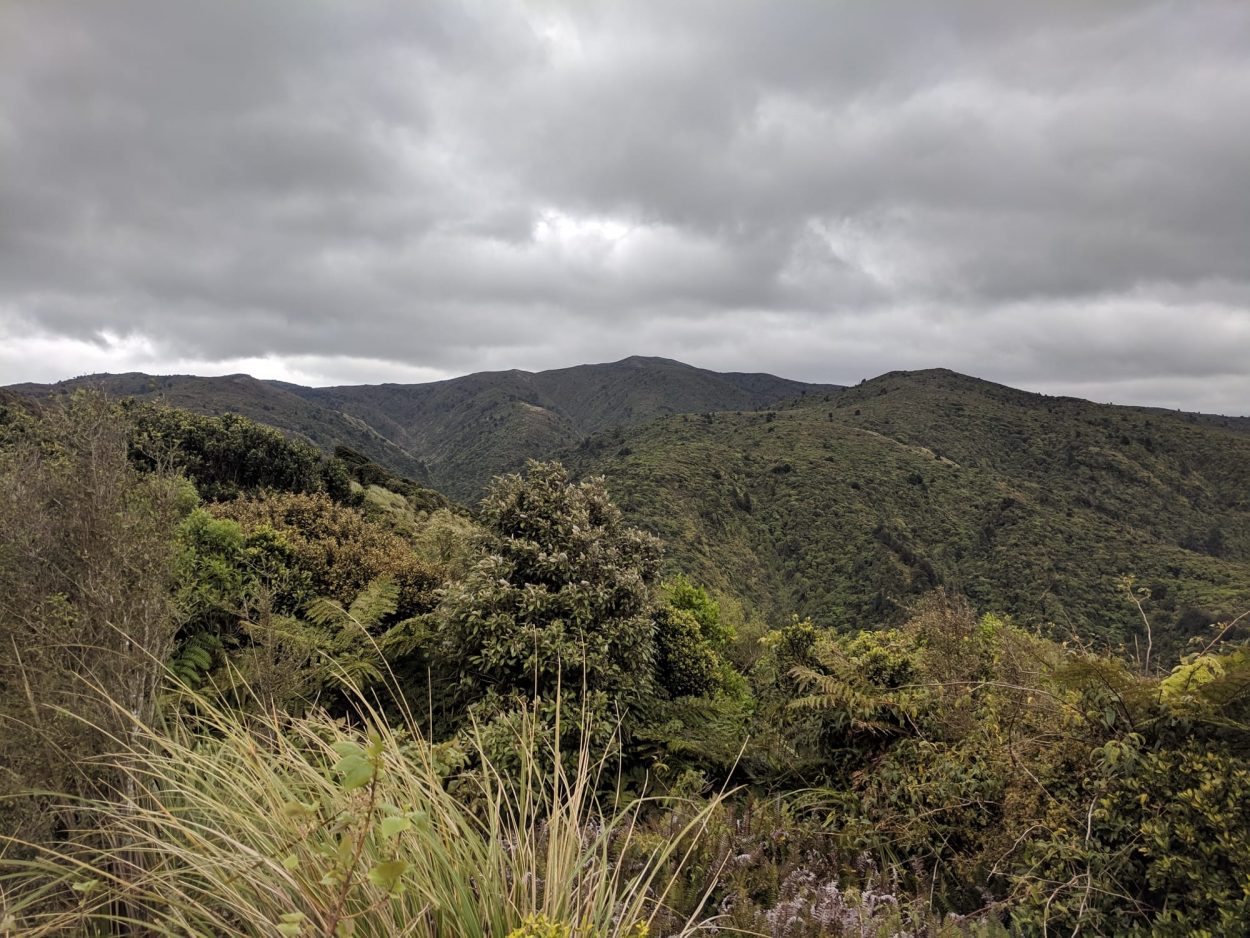
Dr Anna Berka – future site of Turitea wind farm

There was tangible new energy rippling through this year’s New Zealand Wind Energy Association conference, with key industry players showing off some extraordinary new kit being deployed in Manawatu and South Taranaki. The Turitea wind farm will be among the most productive wind farms in the world, in no small part thanks to Vestas’ ‘Extreme Climate’ turbines uniquely designed for markets with the nastiest of winds. This industry has come very far since 1978, when the Danish government mustered political will from left- and right-wing parties for a complete overhaul of its energy system and channelled it into a mad and risky policy experiment that seeded and nursed Denmark’s world-leading wind manufacturing market. Without that bold policy experiment, it is difficult to see how we would have the wind technology we have today.

Has New Zealand taken heed and learnt from successful clean technology innovation processes?

Is our parliament planting and nurturing seeds for low carbon innovation in transport, housing or agriculture that will drive domestic emissions reductions and become a cornerstone of New Zealand’s future export markets?

Here I will share with you why I think the answer is no (or, not yet) and pinpoint the weaknesses of New Zealand’s collective approach to low carbon innovation by showing you how it differs fundamentally from that Danish success story, or in fact any success story on low carbon innovation.

Successful cleantech innovation policy needs to be inclusive, involving small players and unlikely winners.

History is littered with examples where disruptive innovation emerges from situations where small, medium enterprises (SME’s), start-ups and grassroots enterprise are given resources and a safe space to pilot concepts, learn, adjust and scale up. The Danes had two separate wind innovation programmes – a Small and a Large Turbine programme. The Small Wind programme sought to identify, test and improve high potential wind turbine designs built by blacksmiths and folk school teachers during the war and was highly successful. The Large Wind programme worked with R&D departments of existing utility companies to build and test larger turbine models, and failed.

In fact, there is a lot of evidence to suggest that established enterprise often struggles to look outside the box when it comes to disruptive low carbon innovation. This is because they are designed to do what they do at the lowest cost possible, operating in mature markets under strong price competition, with shareholders breathing down their necks for a 12% return on investment. They don’t have the luxury to go back to the drawing board; they need to keep the ship going full speed, even if they know that ship is heading towards an iceberg. Start-ups, social and community enterprise don’t demand 12% returns, very often because they derive social and environmental value from their work – they are often motivated to fundamentally rewire the ship and change the direction it is headed. But – and here is the catch – they can only do that if and where the state steps in to reduce risk exposure.

So if the government wants to decarbonise housing, transport and agricultural sectors, it needs to reach out to small players and unlikely winners with the flexibility to invest in high-potential low-return innovation, and incorporate their needs in the policy design process. In practice, this means working with local and regional handholding organisations (regional economic development, incubators) to identify a representative variety of change makers (incumbents, new entrants, academics, independent research organisations), and involving them in the policy design process in a more structured and transparent way.

@craigdoesdesign

Successful cleantech innovation policy leverages public support for climate change action to ensure that there is domestic demand for precommercial technology.

In New Zealand we tend to think of subsidies as a tool to shoulder the pain of carbon pricing, a sequel or an afterthought to a proper functioning carbon market. In fact, the most successful mitigation programmes to date have put investment incentives central, in tandem with supply-push policies. Without investment incentives, novel technologies tend to stall following the R&D phase, unable to compete in the market in absence of economies of scale, established supply chains and legitimacy. In other words, it is not a level playing field to begin with, and demand-pull policies are put in place to give a wide range of new technologies a chance to acclimatise to the marketplace (and vice-versa).

Image courtesy Dr Anna Berka

The Danes placed market access regulation, investment incentives and supply obligations side-by-side with R&D, testing and independent quality assurance standards, to ensure there was domestic demand for continuously improving wind turbines that were nowhere near competitive on the market. This allowed actors from across society to rally behind the government’s clean technology programme, becoming part of the solution rather than the problem. Yes – it was expensive and yes, it was a gamble. Wind technology now represents 12% of Danish exports. An entrepreneurial government takes calculated risks – and it pays off handsomely.

Successful cleantech innovation policy distributes the social and economic benefits of expensive mitigation programmes widely across society.

Investment incentives allowing the widespread diffusion of novel clean technology by industry and civil society generate public benefits and public support for more stringent climate change and energy policy. In Denmark that popularity ensured support from centre – right wing parties, generating more or less continuous political support and a healthy investment climate for the wind industry over the course of forty years. This is just about how long it has taken for wind to be able to compete with conventional fuels on the market. We need to stop writing off subsidies for pre-commercial low carbon innovation as ‘hand-outs’. To prevent organised opposition of powerful lobby groups and industries, we need to factor in the social and political effects of climate change policies by studying their combined distributional effects on different stakeholder groups.

For those of you who still don’t get the message – let me put it bluntly: laissez-faire innovation policy is out-of-date. Governments worldwide are taking a leading role in bringing low carbon innovation to market, enabling consumers and communities to partake in technology diffusion and meeting local and regional needs, and opening up thorny questions around sustainable consumption at the same time.

To those of you who experience a visceral reaction to these arguments (and/or want to send me hate mail), I’d like to pre-empt some common questions:

Q. How do you know this, what are you basing this on?

A. I have compared adoption and non-adoption of the full range of supply-push and demand-pull policies driving renewable energy innovation in five countries from 1900-2015.

Q. If what you say is true, how come New Zealand has achieved the highest share of renewables without subsidies or direction from policy makers?

A. A large proportion of New Zealand’s power generation capacity (hydro power) was built, owned and operated by the state prior to 1978 when the sector was unbundled and privatised. So no, New Zealand has definitively not achieved its track record in renewables without government support – to the contrary.

Q. Are you seriously saying that our leading firms can’t innovate?

A. Under pressure from government or competition incumbents can pursue disruptive innovation side by side with their mainstay business –  but in small concentrated markets like ours, with low public expenditure on R&D, incumbents can and have sometimes used their market power and their sway over government to resist having to reorient their assets, technical capabilities, and business models, and to proactively keep niche innovations at bay. Inclusive, transparent policy processes and resourcing new market entrants with niche innovations and can help balance out the conversation, step up the pressure on incumbents to reallocate resources, and step up the pace of change.

Q. But isn’t it potentially dangerous to let the government ‘pick winners’?

A. This argument is based on the premise that market price is a good indicator of the relative value of different technologies to society. But even under a perfect emissions trading scheme, where carbon price equates the true marginal abatement cost (we don’t have this), price still doesn’t take into account the systemic factors that constrain and enable the emergence of cost-competitive technology. In the energy sector that might include for example requirements and compatibilities of different technologies in relation to demand profiles, structure of the existing power market supply, risk premiums facing new technologies or externalities that are a function of increased adoption (such as innovation and learning spillovers, imperfect competition, supply chain coordination effects, and legitimacy costs). 

So: you pick winners whether you put in place enabling policies or not; in absence of demand-pull policies, we will simply squeeze out any pre-commercial technologies, and wait on other countries to do the innovating for us. While cost-efficiency and affordability are legitimate concerns, taken alone they are not a sufficient basis on which to evaluate public intervention for pre-commercial technologies. A more constructive policy assessment would focus on the design of the monitoring, feedback and decision-making mechanisms that the government can use to allocate resources to highest potential technologies.

References: Kelsey, J., 2002. Reclaiming the future: New Zealand and the global economy, 2nd ed. Bridget Williams Books. Kelsey, J., 2015. The FIRE Economy: New Zealand’s Reckoning, Bridget Williams Books. Rosenberg, B., 2016. New Zealand’s Low Value Economy, AUT.

By Anna Berka. This article first published at Pure Advantage. See original article. Dr Anna Berka works on innovation policy, civic enterprise and decarbonisation and holds degrees in economics, environmental science and policy. She previously worked for the Energy Centre, University of Auckland and is currently consulting for public entities and community enterprise.
Green electricity: Is it for real?

Stop flying, cut out red meat, switch to an electric car or, better yet, a bike.  Newspapers and websites are full of stories of people who have made the  switch to a low-emission lifestyle. The stories are inspiring, to me anyway, and they are definitely newsworthy. But, at least judging from the online comments (‘Not gonna happen!’), they can be irritating to others. 

Nevertheless, there are other more serious arguments that individuals should not be the main focus of climate change action. 

 The strongest point is that climate change is a global problem that can only be solved by collective action, the main vehicles for which are state regulations and international agreements. A focus on individuals, goes the argument, feeds the neoliberal cover story that people make entirely free choices and hence, if they’re choosing to burn fossil fuels, they are part of the problem. This line of thought leads to cognitive dissonance and a tendency to absolve other actors, such as fossil fuel multinationals, car manufacturers, and town planners, of responsibility. 

 A second argument is that a few committed individuals cutting their emissions merely frees up resources for others – less concerned about climate change and less motivated to act individually – to use instead. Lowering demand for petrol lowers its price, at least in the short term, allowing others to use more. 

However, as time has gone by, I have been less and less convinced by these arguments. 

First, taking action can have a powerful transformative effect.  

Second, you may find that the action was much easier than you anticipated.  Pessimists like to draw attention to the hardest steps – “people will never stop flying, that’s ridiculous!” – an angle which is countered when you find out how easy the easy steps are.

 Some movements really do start small and spread from many small centres, even if many other things have to line up to allow that to happen.

This same phenomenon happens at other levels, too, as we’re seeing now with more and more councils around New Zealand declaring climate emergencies and setting progressive mitigation targets. Same thing for companies, trumpeting their transition plans and banding together, for example in the Climate Leaders Coalition. Same thing, we hope, for nations: this model is an underlying principle of the Paris Agreement, by which actions are voluntary but will be ratcheted up over time. 

This is Elinor Ostrom’s ‘polycentric’ approach to climate change, an approach that is rapidly becoming mainstream. Ostrom won the Nobel Prize for Economics in 2009 for her studies of successful management of the commons.  Her key paper on climate change was apparently never published, but is available as a World Bank report.

With that in mind, here’s an action you can take right now with just a phone call, that won’t cost anything, and that will wipe out a huge chunk of your household emissions:

  ECOTRICITY!

 Yes, that’s actually true. Just by switching electricity providers (0800 845 000, just saying) you can eliminate all your electricity emissions, which even in New Zealand could be 1–2 tonnes of CO2 per year. Ecotricity costs about the same as other retailers. (The exact prices depend on many factors, including where you live – the New Zealand electricity market is complicated.) 

Ecotricity is a New Zealand electricity retailer that is 100% carbon zero. Their whole operation, from the generation of the electricity to the head office, is certified zero carbon by Enviro-Mark Solutions. (Enviro-Mark themselves, a Christchurch-based spinoff from the state-owned research institute Landcare, are an exceptionally well-regarded carbon auditor with clients all over the world.)

 Once you’ve switched, you’ll find that you have an even greater incentive to electrify all your other energy uses.  

It’s hard to believe that this is even possible. After all, we have a national grid, and who knows where your actual electrons came from? And yet, it really is true. Unlike other retailers, Ecotricity does not buy electricity on the spot market. Their entire supply comes through separate contracts with renewable energy suppliers, mainly South Island hydro and biogas. Their majority shareholder is the Central Lakes Trust, a charitable trust that funds community organizations in Central Otago. None of your money is going to Genesis or Nova to run coal and gas-fired power stations. 

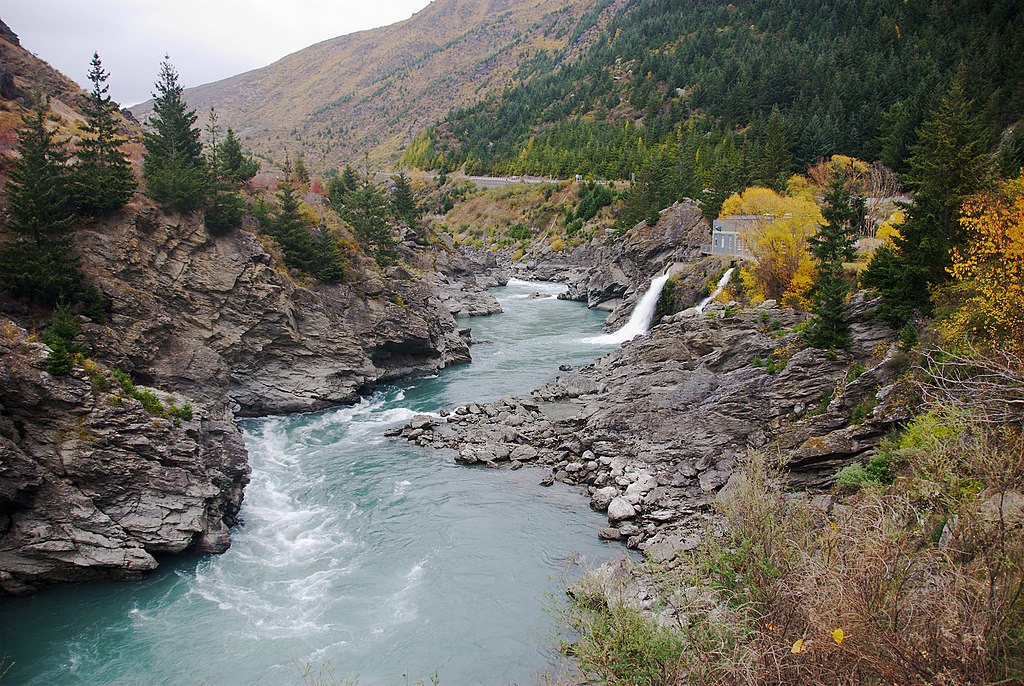
The Roaring Meg hydropower station on the Kawarau River. Built in 1936.
You can buy electricity from this power station!

At the moment, they are tiny, with only 0.3% of the market. But they are growing:

April 201535 customers
April 2016473
April 20171619
April 20183102
April 20195831

In the long run, more demand for renewable energy will lead to more of it being supplied.

The ability to switch to fully carbon zero electricity at no cost is pretty special to New Zealand. Clearly, Ecotricity NZ has been inspired by the (unrelated company) Ecotricity UK, which has 200,000 customers and many imitators. In the US, most consumers can opt for  ‘Green pricing’, which (at a price) ties them in to a complicated and possibly dodgy system of renewable energy credits. In Australia there are companies that offer carbon offsets and others that own only renewable generation and that have no side contracts with fossil fuel generators. But none these look quite as pure as Ecotricity. 

Robert McLachlan

NZ introduces groundbreaking zero carbon bill, including targets for agricultural methane

File 20190508 183083 12mudi2.jpg?ixlib=rb 1.1
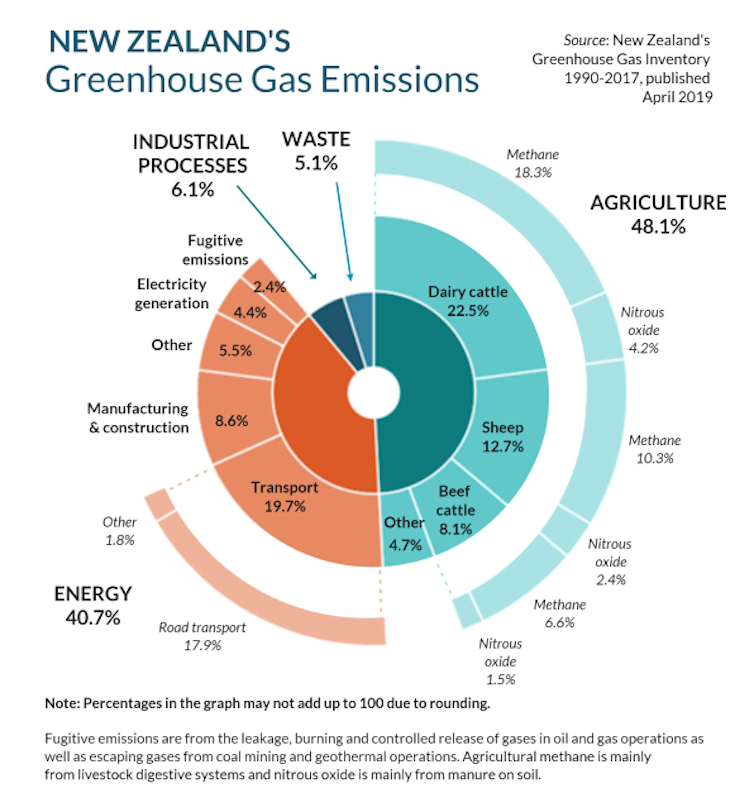
Agriculture – including methane from cows and sheep – currently contributes almost half of New Zealand’s greenhouse emissions. from http://www.shutterstock.com, CC BY-ND

[This article is republished from The Conversation. Plenty more to come on this subject in the future…]

New Zealand’s long-awaited zero carbon bill will create sweeping changes to the management of emissions, setting a global benchmark with ambitious reduction targets for all major greenhouse gases.

The bill includes two separate targets – one for the long-lived greenhouse gases carbon dioxide and nitrous oxide, and another target specifically for biogenic methane, produced by livestock and landfill waste.

Launching the bill, Prime Minister Jacinda Ardern said:

Carbon dioxide is the most important thing we need to tackle – that’s why we’ve taken a net zero carbon approach. Agriculture is incredibly important to New Zealand, but it also needs to be part of the solution. That is why we have listened to the science and also heard the industry and created a specific target for biogenic methane.

The Climate Change Response (Zero Carbon) Amendment Bill will:

  • Create a target of reducing all greenhouse gases, except biogenic methane, to net zero by 2050
  • Create a separate target to reduce emissions of biogenic methane by 10% by 2030, and 24-47% by 2050 (relative to 2017 levels)
  • Establish a new, independent climate commission to provide emissions budgets, expert advice, and monitoring to help keep successive governments on track
  • Require government to implement policies for climate change risk assessment, a national adaptation plan, and progress reporting on implementation of the plan.

Bringing in agriculture

Preparing the bill has been a lengthy process. The government was committed to working with its coalition partners and also with the opposition National Party, to ensure the bill’s long-term viability. A consultation process in 2018 yielded 15,000 submissions, more than 90% of which asked for an advisory, independent climate commission, provision for adapting to the effects of climate change and a target of net zero by 2050 for all gasses.

Throughout this period there has been discussion of the role and responsibility of agriculture, which contributes 48% of New Zealand’s total greenhouse gas emissions. This is an important issue not just for New Zealand and all agricultural nations, but for world food supply.

Ministry for the Environment, CC BY-ND

Another critical question involved forestry. Pathways to net zero involve planting a lot of trees, but this is a short-term solution with only partly understood consequences. Recently, the Parliamentary Commissioner for the Environment suggested an approach in which forestry could offset only agricultural, non-fossil emissions.

Now we know how the government has threaded its way between these difficult choices.

Separate targets for different gases

In signing the Paris Agreement, New Zealand agreed to hold the increase in the global average temperature to well below 2°C and to make efforts to limit it to 1.5°C. The bill is guided by the latest Intergovernmental Panel on Climate Change (IPCC) report, which details three pathways to limit warming to 1.5°C. All of them involve significant reductions in agricultural methane (by 23%-69% by 2050).

Farmers will be pleased with the “two baskets” approach, in which biogenic methane is treated differently from other gasses. But the bill does require total biogenic emissions to fall. They cannot be offset by planting trees. The climate commission, once established, and the minister will have to come up with policies that actually reduce emissions.

In the short term, that will likely involve decisions about livestock stocking rates: retiring the least profitable sheep and beef farms, and improving efficiency in the dairy industry with fewer animals but increased productivity on the remaining land. Longer term options include methane inhibitors, selective breeding, and a possible methane vaccine.

Ambitious net zero target

Net zero by 2050 on all other gasses, including offsetting by forestry, is still an ambitious target. New Zealand’s emissions rose sharply in 2017 and effective mechanisms to phase out fossil fuels are not yet in place. It is likely that with protests in Auckland over a local 10 cents a litre fuel tax – albeit brought in to fund public transport and not as a carbon tax per se – the government may be feeling they have to tread delicately here.

But the bill requires real action. The first carbon budget will cover 2022-2025. Work to strengthen New Zealand’s Emissions Trading Scheme is already underway and will likely involve a falling cap on emissions that will raise the carbon price, currently capped at NZ$25.

In initial reaction to the bill, the National Party welcomed all aspects of it except the 24-47% reduction target for methane, which they believe should have been left to the climate commission. Coalition partner New Zealand First is talking up their contribution and how they had the agriculture sector’s interests at heart.

While climate activist groups welcomed the bill, Greenpeace criticised the bill for not being legally enforceable and described the 10% cut in methane as “miserly”. The youth action group Generation Zero, one of the first to call for zero carbon legislation, is understandably delighted. Even so, they say the law does not match the urgency of the crisis. And it’s true that since the bill was first mooted, we have seen a stronger sense of urgency, from the Extinction Rebellion to Greta Thunberg to the UK parliament’s declaration of a climate emergency.

New Zealand’s bill is a pioneering effort to respond in detail to the 1.5ºC target and to base a national plan around the science reported by the IPCC.

Many other countries are in the process of setting and strengthening targets. Ireland’s Parliamentary Joint Committee on Climate recently recommended adopting a target of net zero for all gasses by 2050. Scotland will strengthen its target to net zero carbon dioxide and methane by 2040 and net zero all gasses by 2045. Less than a week after this announcement, the Scottish government dropped plans to cut air departure fees (currently £13 for short and £78 for long flights, and double for business class).

One country that has set a specific goals for agricultural methane is Uruguay, with a target of reducing emissions per kilogram of beef by 33%-46% by 2030. In the countries mentioned above, not so different from New Zealand, agriculture produces 35%, 23%, and 55% of emissions, respectively.

New Zealand has learned from processes that have worked elsewhere, notably the UK’s Climate Change Commission, which attempts to balance science, public involvement and the sovereignty of parliament. Perhaps our present experience in balancing the demands of different interest groups and economic sectors, with diverse mitigation opportunities and costs, can now help others.

Robert McLachlan

A long time between drinks: Mercury will build the Turitea wind farm

We know what we have to do to beat climate change: electrify everything, and stop investing in things that burn fossil fuels. In New Zealand, that has been hard to do. Thirty years of climate policy have left us with only two main tools: the Emissions Trading Scheme, and an ‘aspirational’ target of 90% renewable electricity by 2025.

The ETS has failed to reduce emissions. Although the carbon price has now risen to $25/tonne, and a 50% discount for large emitters gradually unwound, the price is not high enough to have an effect. It’s adding 5c/l to petrol, and in theory it’s adding 2.5c/kWh to coal-powered electricity and (and 1.25c/kWh to gas). Gas peakers, which can be turned on every evening when the spot price is high, are still being used and even built.

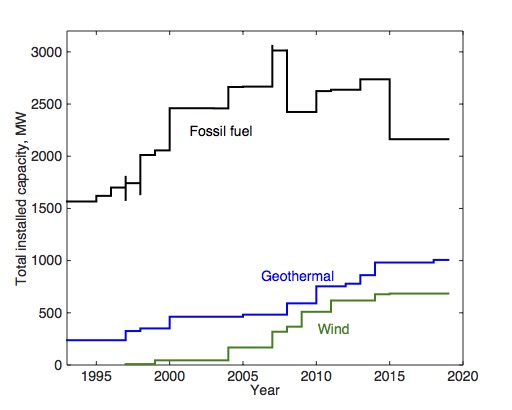
The short story of new electricity generation in New Zealand is that we massively invested in fossil  fuel power stations in the 90s and early 2000s, and then began to unwind that with a move into wind and an expansion of geothermal power in the decade to 2014. But  in the past 5 years, that effort has come crashing to a halt. 

Generation capacity in New Zealand. There is also 5200MW of hydropower, which has not changed for decades. Note that the capacity factor of geothermal is 85% while wind is 37%. Thus geothermal can produce 18% of New Zealand’s electricity while wind only produces 5%. However, geothermal is only moderately low carbon. In New Zealand it averages 0.11kg CO2/kWh, and the geothermal stations emit almost 1 million tonnes of CO2 annually. Lest we feel too smug, note that Norway (same population as NZ) has 31000MW of hydro and 800MW of wind, and Iceland (pop. 300,000) has 1930MW of hydro and 800MW of geothermal.

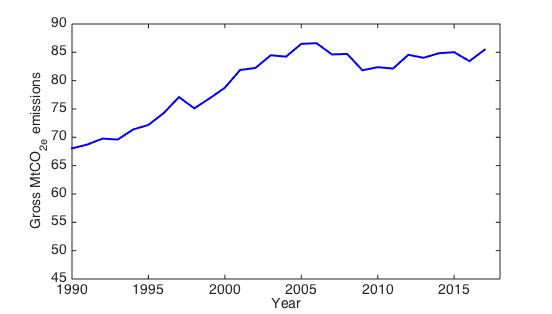
The result is that emissions have remained stubbornly high, jumping another 2% in 2017:

For a period of intense international focus on climate change, and an urgent need to start reducing emissions, that’s pretty frustrating. We kept hearing about the 3000MW of consented wind power just waiting to be built – when the demand was there. We also heard about consents for new fossil-fueled power stations (1240MW planned), an old 377MW plant at Stratford that was up for closure that instead got a $45m makeover in 2017, a new 100MW gas peaker to open in New Plymouth in 2020, and the closure of the 500MW of coal-fired capacity at Huntly, originally set for 2018, extended first to 2022 and then to 2030.

Indeed, why would anyone build wind today? Wind power takes any price it can get. In a flat market, adding more wind will depress the spot price and hurt existing operators. Hydro owners would not suffer particularly – when the wind is blowing they can save their water for later – but fossil owners would be worst off, as they would face both lower prices and lower demand.

In this context the decision by Mercury to start building the Turitea wind farm is a welcome surprise and is striking in a number of ways.

1. It’s big. The first stage, committed now, has 33 3.6MW turbines, totalling 119MW. It adds 20% to New Zealand’s wind power. The turbines will be the biggest yet installed in New Zealand. (They are Vestas V112s, which are normally 3.45MW, but are available in a 3.6MW ‘power optimized’ option, presumably for very windy sites.)

2. It’s bigger than expected. The original consent was for 3MW turbines; Vestas has been able to deliver 20% more power in the same site with the same tower height.

3. It has big potential. Mercury is building the transmission lines for the full Turitea project, and for the additional Puketoi farm further east, now. The whole package totals 500MW. Although they’re not committing to the full thing now, surely this makes it likely to go ahead.

4.  It’s highly efficient. Mercury and Vestas are claiming a 45% capacity factor, even higher than the New Zealand average of 37% which is already among the world’s highest. Presumably this is due to a combination of the site and engineering improvements.

5. It has global significance. Vestas will service the wind turbines for 25 years – longer than the usual certification of 20 years. In return they will also get access to data on the operation of the farm in this extremely windy area.

6. It’s cheap. The capital cost is $256m and Mercury have said their total operational costs are 1.3c/kWh. If finance is 7%, then the overall cost of generation is 5.1c/kWh, well below the typical spot price of 7-8c. That’s cheap for new build generation in New Zealand.

Why, then, are they going ahead, when I argued above that no more wind was going to be built? Part of the reason must be the change in government and the strong signals that a Zero Carbon Bill is coming, that the price of carbon will rise, and that more renewable generation will definitely be needed. But the (partly private, partly arms-length state-owned) electricity industry is not compelled to respond to any of this.

A conference call on the day of the announcement contains this important detail from Mercury CEO Fraser Whineray: “We’re also interested in where this will go for co-optimisation with our same island hydro scheme, that being the Waikato hydro scheme, which is the biggest peaker in the North Island.”

So that’s the clue. Mercury owns a lot of hydro. 1078MW on the Waikato, which is 58% of allNorth Island hydro. When the wind is blowing they can save their own water for later without bleeding income to other companies. (They do risk spilling water when they run out of storage, but they will have modelled that thoroughly.) 

A lot of things had to line up correctly for this to go ahead. The larger future of New Zealand’s electricity sector will have to await details of the Zero Carbon Bill.

Will the Turitea wind farm reduce emissions? It’s possible that it will. If demand for electricity continues to be flat, then when the wind is blowing the gas peakers will be running less. If the 470GWh of wind power from Turitea entirely displaced gas, that would cut emissions by 235,000 tonnes of CO2 per year – to be sure, a small amount when we need to be cutting by millions of tonnes per year, for many years in a row – but well worth having, in an environment when cuts of any sort are hard to find.

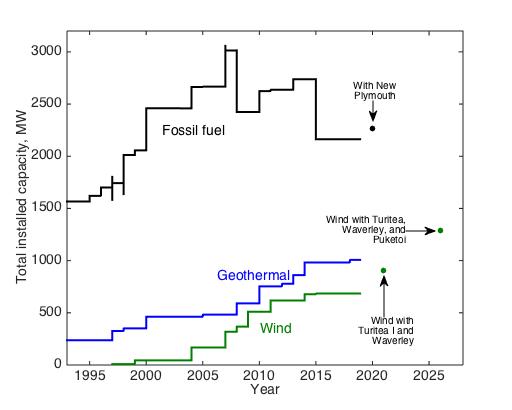
In a few years, then, our electricity capacity might look more like this:

(‘Waverley’ is a proposed wind farm in South Taranaki. No final decision to build it has been made yet, but in October 2018 Tilt Renewables and Genesis Energy formed a partnership to develop the site. Interestingly, it’s quoted as costing $325m for 100MW.)

Robert McLachlan

Climate change: a reply to the five most common comments from readers

The following article was first published by Stuff on 22 April 2019. Read the original article.

The Stuff series “Quick! Save the Planet” has been running for four months now, providing a wide canvassing of issues around climate change. The articles have attracted many recurring comments from readers, especially arguments about whether we should be cutting emissions at all. These arguments do all sound appealing and are well worth a closer look. Taken together, they illustrate why anthropogenic climate change is such a difficult, indeed unprecedented, issue for society to tackle.

“New Zealand is too small to make a difference.” 

This one is so widely believed that proponents of business as usual will often open with it: “New Zealand is responsible for just 0.2% of global emissions.” Some take it to the next level with, “My personal emissions are too small to make a difference.” This last variant is so extreme that it makes the fallacy very obvious. The emissions of any city, state, or nation of 4.8 million people are too small to make a difference to the global situation, but this is a global issue that can only be solved by collective action. In other collective issues that our society has addressed, including vaccination, democracy, taxation, and human rights, the relationship between the part and the whole is generally understood. Similarly, many things we do daily require us to abide by a social contract. For example, rules for road users are set for the safety of all, but only work properly if everyone abides by them. An individual doing their own thing, like driving in the opposite direction to the traffic flow, has an immediate and obvious impact (literally).  

There are other replies to this point as well. As James Shaw points out, countries with less than 1% of global emissions together add up to 30% of emissions.  A lot of littles add up to a lot.

In international negotiations, New Zealand definitely carries more weight than our 0.06% of world population would suggest. By banding together with other countries with similar goals, our influence can be huge. It already has been – some of the breakthroughs at Paris were directly thanks to the New Zealand team.

And where would you draw the line? Should Australia or the UK, with 1% of global emissions, count? Should Russia, with 5%? Some argue that even the US, with 15% of emissions, is irrelevant, and only China matters. Which brings us to the next point.

“It’s all about China.” 

(or India, or the US, or…) A variant of this one is, “Why should we do anything when no one else is?” China and India are undeniably important, and it’s good to know what is happening there. What is happening is that both countries are investing in renewable energy at staggering rates. In India, solar power is doubling every year, reaching 25GW by the end of 2018; 100GW is targeted for 2020. Wholesale prices for solar have plummeted to less than 5c/kWh. While coal plants are still being built, 25GW of planned plants were cancelled in 2018 and 40GW are mothballed. 

The truth is, most countries are working and investing frantically in this area. The Climate Change Performance Index is an annual assessment of 60 countries emissions trends and commitments. In 2019 New Zealand ranked 44th, India 11th. We are very far from being a leader, or even a fast follower. We have a long way to go, and learning from what is working in other countries is not a bad option.

It also needs to be remembered that India and China only recently became major industrial powers. Europe and the United States led the industrial revolution and began the extensive exploitation of fossil fuel reserves. Indeed empires were built on the wealth generated and are linked directly with European colonialism, exploitation and trade manipulation in countries including India and China. 

“Cutting emissions would wreck the economy.” 

It certainly hasn’t done that in countries where emissions are falling, like the US, Australia, and the UK. In fact, many of the steps we need to take will earn money. Energy efficiency and electrification are net wins, and also represent a switch to  clean, renewable, domestic energy sources (wind and water) over imported fossil fuels. We spend about $5b a year on the fossil fuels, a lot of which is wasted. Countries that are taking action in these areas are gaining a competitive advantage. 

There are some areas where it’s difficult to cut emissions at present, like international aviation. No one is suggesting stopping these overnight. All the more reason to look at them closely and form a plan.

“Hypocrite!” 

Politicians, climate change scientists, and climate advocates, are often called hypocrites for calling for reductions while continuing to emit themselves. It’s the Al Gore argument. Planeloads of civil servants flying to international climate change conferences come in for particular scorn. For a physical scientist, this argument is hard to even understand, because a person’s personal emissions appear to have no bearing whatsoever on whether or not their proposals are sound. (Besides, rock stars and CEOs have way higher emissions!) But emotionally, it packs a punch. No one likes to be called a hypocrite, and anyone who wants to criticise the government will want to draw attention to any apparent hypocrisy. Even though perpetual cries of hypocrisy can undermine trust in society, the charge should be considered seriously. In the long run, we all need to trust each other, to want to do the right thing, and to see others doing it too. 

Calling out others for hypocrisy might feel like justification for us doing nothing ourselves, but in fact it is more effective as a battle cry if you make lifestyle changes yourself. 

“No one talks about the elephant in the room, population growth.”

Global population growth is 1% a year and is slowly declining. So, we need to cut per capita emissions by 1% a year just to stand still, and then a few percent a year on top. Population growth makes the challenge a bit more difficult, but it’s not the main source of the problem. Most growth is taking place in countries with extremely low emissions, so (at least for now) they’re not contributing to the problem. Educating and empowering women, and building stable societies, tends to lower population growth. 

In New Zealand the situation is a bit different as much of our population growth comes from immigration. Our population growth is running at 2% a year – an extra 450,000 people in the past five years. This is a choice we’ve made as a society that creates all kinds of impacts throughout the environment, both human and natural. We do need to talk about it.

Robert McLachlan and Steve Trewick

Climate change is hitting hard across New Zealand

File 20190418 139088 13sw1xb.jpg?ixlib=rb 1.1
Finance minister Grant Robertson (left) and climate minister James Shaw address school children during a climate protest, promising that New Zealand will introduce zero carbon legislation this year. AAP/Boris Jancic, CC BY-ND

The major focus on climate change in Environment Aotearoa 2019, a stocktake on New Zealand’s environment released today, is a welcome change.

The report describes an environment that faces serious pressures, including species at risk of extinction, polluted rivers and streams, the loss of productive land as cities expand, and climate change.

On climate change, the report is more detailed and hard-hitting than past reports have been.


Read more: New Zealand’s urban freshwater is improving, but a major report reveals huge gaps in our knowledge


New Zealand’s global share of emissions

New Zealand’s greenhouse gas emissions are high internationally. In 2015, New Zealanders produced 17.5 tonnes of greenhouse gases (measured as carbon dioxide equivalent) per person, 33% higher than the average of 13.2 tonnes from industrialised countries.

In the latest figures from 2017, gross emissions rose 2.2% from 2016 and remain 23% above 1990 levels. The immediate causes are clearly stated: high emissions of methane and nitrous oxide from agriculture and sharply rising emissions of carbon dioxide from transport.

The report is silent on the root causes of rising emissions, including ineffective government action and community attitudes that rank climate change as a relatively low priority. Instead it states:

Our high per-person emissions are reversible if we adopt policies, technologies, or other means that reduce our production of greenhouse gases.

But this obscures the story of 30 years of policy work on climate change and 11 years trying to make New Zealand’s Emissions Trading Scheme work.


An earlier report on climate change did not foresee the flood of vehicles entering the country. This has now given New Zealand the highest rate of vehicle ownership in the OECD. New Zealand has 4.36 million vehicles, up half a million since 2015, but lacks the regulations found in many other countries, such as CO₂-linked registration fees and fuel efficiency standards. With a flood of cheap, high-emission used imports, it is no surprise that New Zealand’s transport emissions continue to rise.

Known unknowns

A key function of this latest report is to identify knowledge gaps. An important one for New Zealand is the relative strengths of different carbon sources and sinks, for example by different types of vegetation, soils and agricultural practices.

As emphasised recently by the Parliamentary Commissioner for the Environment, New Zealand is still focusing too much on plantation forestry as a short-term fix for our emissions problem. It is a risk because it creates a carbon liability for the future, as well as exposure to diseases and fires. Its true environmental impact is not well understood.


Read more: The scandal of calling plantations ‘forest restoration’ is putting climate targets at risk


The section on current climate impacts could not be more clear.

Climate change is already affecting Aotearoa New Zealand. Changes include alteration to temperature, precipitation patterns, sea-level rise, ocean acidity, wind, and sunshine.

New Zealand’s temperature has increased by 1ºC since 1909. While this is close to the global average, it is less than the global land average which has increased by 1.4ºC. New Zealand is protected to some degree by the Southern Ocean.

Warm days have increased and frosts decreased. Soils have dried, glaciers have melted, sea levels have been rising, the oceans have warmed and acidified, and sunshine hours have increased. No surprises so far. Climate science predicts an increase in extreme rainfall events, but this has not yet been detected statistically. At one-third of the measured sites, extreme wind has decreased, whereas an overall increase in wind is expected.

New Zealand not immune to climate change

If anything, the section on current impacts is too conservative. The data stops in 2016 before the epic years of 2017 and 2018, which saw many extreme weather events of all types. These were linked in part to El Niño, which raises global temperatures, and in part to an extreme Southern Annular Mode, an indicator whose strengthening is itself linked to climate change.


Read more: Farmed fish dying, grape harvest weeks early – just some of the effects of last summer’s heatwave in NZ


Few New Zealanders will forget the sequence of ex-tropical cyclones, 1-in-100-year floods, the sight of the Southern Alps without snow or the Port Hills on fire.

The report’s final section covers future impacts in the most forceful official statement seen yet. It lays out a blizzard of impacts in all areas of the environment, country, economy and infrastructure, including coastal flooding, erosion, tsunami risk, liquefaction risk and saltwater intrusion.

All aspects of life in New Zealand will be impacted.

The way forward

The uncertainties are clear. We don’t have a clear idea of the rate of future emissions, or the impacts under different emission scenarios. Some of the most important impacts, such as sea-level rise, are also the most uncertain. The report notes that information on cumulative and cascading impacts is limited. Climate change has the capacity to undermine environmental efforts elsewhere.

Polls show a rising awareness of climate change and a hunger for stronger action. The Zero Carbon bill is expected to go to select committee before June, but even when passed, emissions will not start falling until the mid-2020s, with the heavy lifting left to the 2040s and future emission reductions technologies.

A recent report on New Zealand’s transition to a low-emission economy outlines many more immediate actions. Let’s hope that this report, along with the public pressure from the School Strike 4 Climate and Extinction Rebellion movements, give the government the courage to act decisively.

Robert McLachlan. This article is republished from The Conversation under a Creative Commons license. Read the original article.

New Zealand’s greenhouse gas update 2017

Each year around this time, New Zealand, along with most other countries, reports its annual greenhouse gas emissions to the UN. The 2017 figures have just been released. (It takes a while to prepare and check the figures – if you delve into the spreadsheets and reports, you will see why.)

In countries with established and functioning emission reduction plans, these reports are a useful way to check, sector by sector, whether the plans are working, or whether they need to be adapted in some way to meet emissions targets. For example, in the UK, in 2017 emissions fell 3%, leaving net emissions 43% below 1990 levels.

We’re not at that point in New Zealand, as the Emissions Trading Scheme is widely regarded as having had little effect on emissions, there is no cap on emissions, the existing targets are very weak, and we are still waiting for the Zero Carbon Bill. Gross emissions have been fairly flat for a decade.

Even so, it was a bit of a surprise to see a sharp uptick in emissions in 2017. They jumped 5%:

Of course, this is a far cry from what is needed: limiting warming to 1.5ºC requires cuts in emissions of around 6% per year, with burning of fossil fuels halving by 2030.

Breaking it down into sectors, the big issue remains transport:

So many things wrong with this picture. Don’t do this.

Alas, the forces that contribute to rising emissions are still in place, and although consumers and businesses are starting to look at plans to lower emissions, they will take time to have an impact. As James Shaw commented recently, emissions are not likely to start falling significantly until the mid-2020s.

Don’t do this either. The stone age is over.

The vehicle fleet grew by 180,000 in 2017, and the total distance travelled, after being flat for several years, was up sharply too:

Fuel efficiency of the fleet is hardly improving. Altogether, transport emissions rose by 930,000 tonnes of CO2 – a 6% jump in a single year. This trend continues – although final emissions figures are not yet in, the fleet grew by another 140,000 vehicles in 2018. The measures that would cut emissions, and that are well underway in most developed nations – a feebate scheme, fuel efficiency standards, and rapid electrification of the national bus fleet – are still missing in New Zealand.

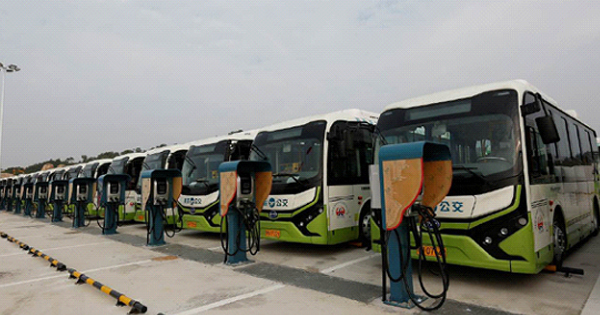
This is the kind of thing that will reduce transport emissions. Diesel buses are a major source of particulate emissions which are known to kill people.

Electricity emissions were up 580,000 tonnes, although they are still less than half what they were at their peak in 2005. Emissions likely fell in 2018, which was a better year for renewables, and should continue to trend down as more wind power is built. Mercury’s recent decision to build the Turitea wind farm should cut emissions by several hundred thousand tonnes a year and must have raised questions about the viability of gas power plants that are consented but not yet built.

Forestry sinks were down 870,000 tonnes: more trees were cut down than were planted. This situation is likely still in place, although it will be reversed when the billion tree programme kicks in.

Perhaps the most staggering sector is international aviation. These figures are reported, but are not part of our national targets. Emissions rose 362,000 tonnes, or 11%, in a single year, and are now up 178% on 1990 levels. 

Hmm…

Robert McLachlan

Robbing the bank: land use change.

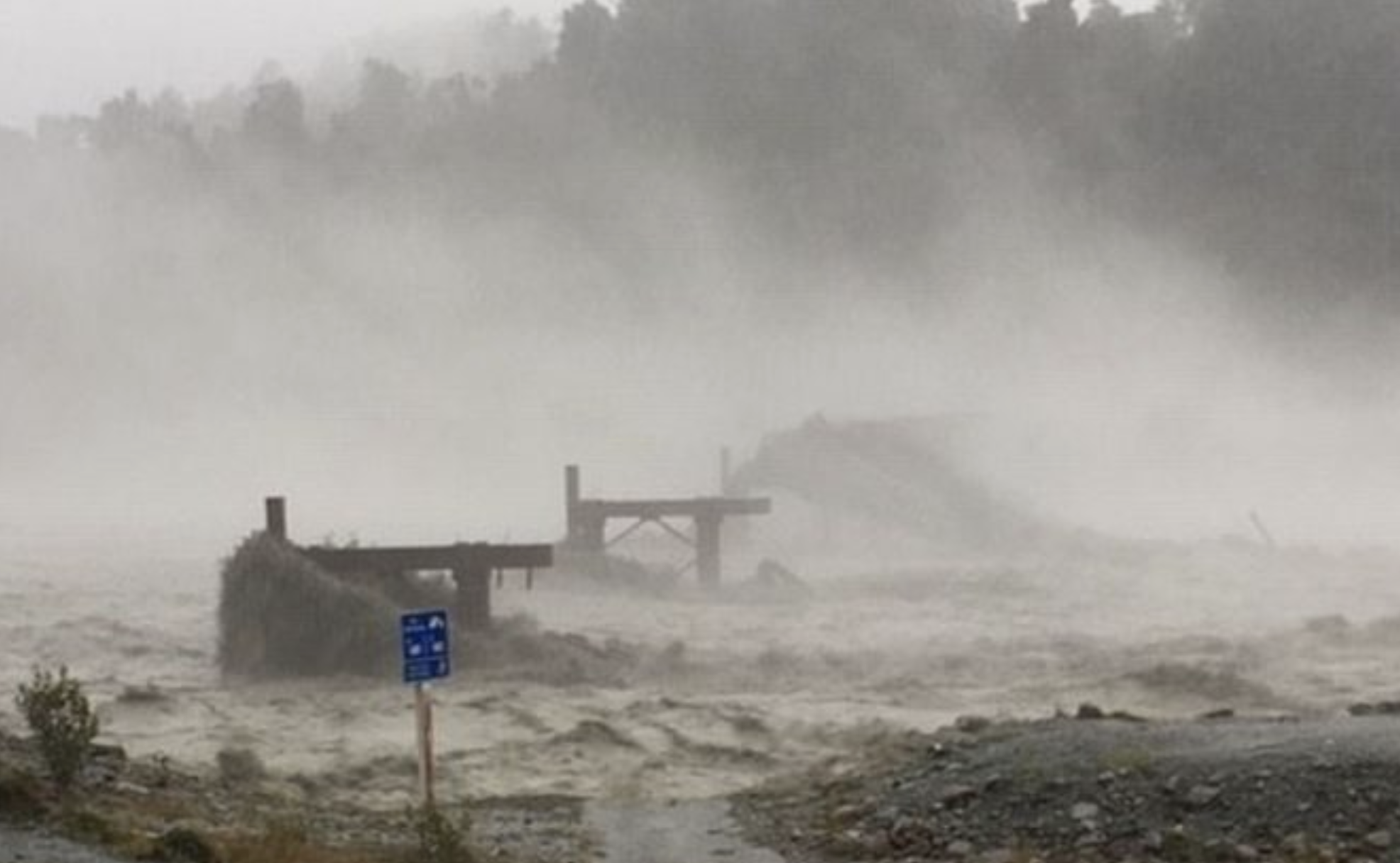
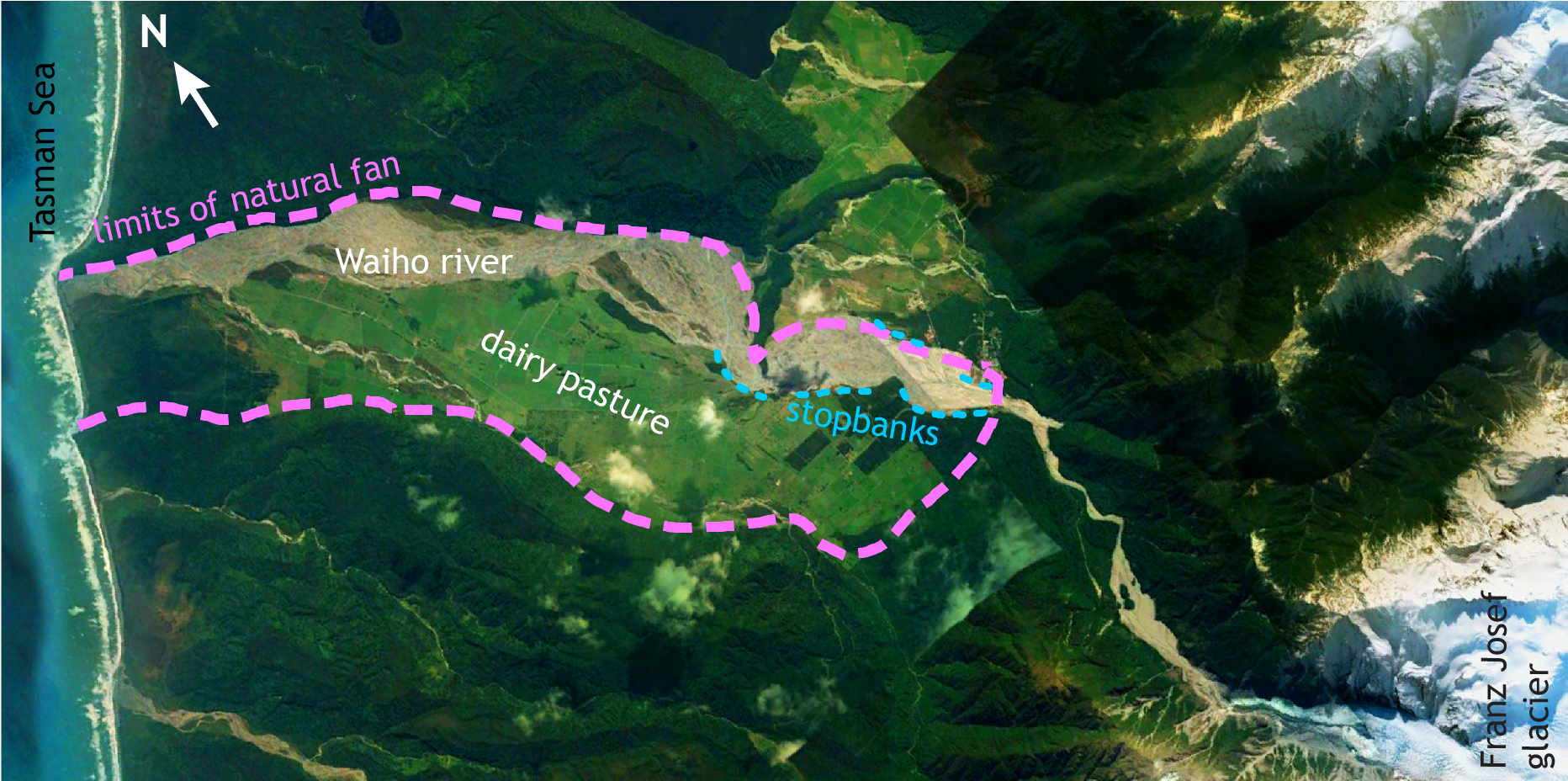
In an epic weather event affecting most of the West Coast on 26 March 2019, attention was focussed on the dramatic washout of the Waiho Bridge near Franz Josef, cutting the West Coast highway. In response, the West Coast Regional Council has suggested that a long-term strategy to safeguard the area is to remove stopbanks constructed in the 1980s.

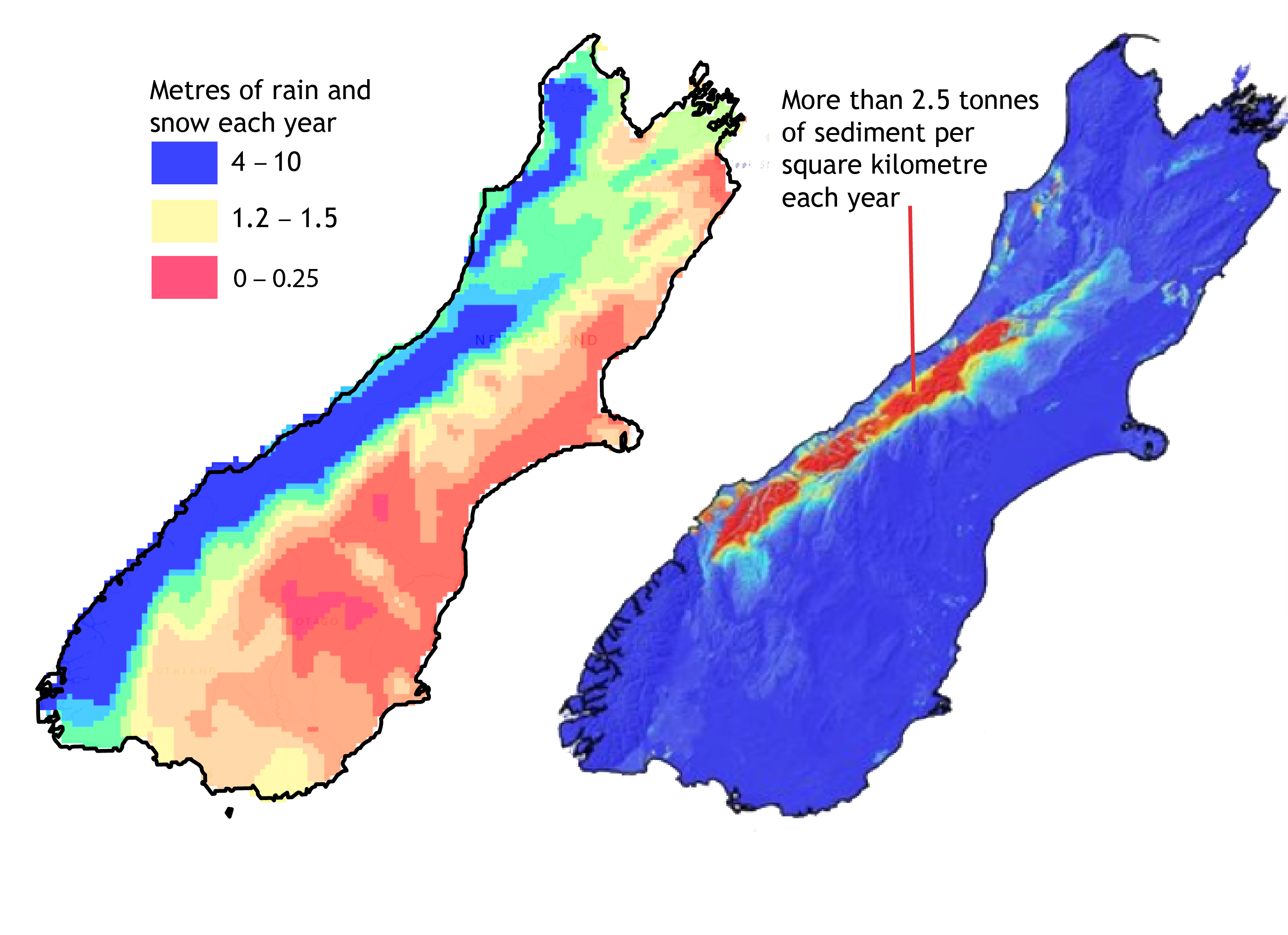
Knocking down stop-banks seems a perverse response to flooding, especially when it could result in the loss of farmland, but here’s the rub: before it was farmland it was floodplain. Recent heavy rain resulted in the collapse of the bridge crossing the Waiho river, not for the first time. The rain event was extreme even for the area – about 300mm in 24 hours, close to the monthly average for the area. The Waiho flows from the snout of the Franz Josef glacier, a major draw for tourists visiting the West Coast which is renowned for spectacular scenery and rain. The abundant precipitation in the west of South Island New Zealand is an integral part of its ecology and intimately linked to its landscape. Briefly, air laden with water vapour from the ocean is pushed from the west in response to Earth’s rotation.

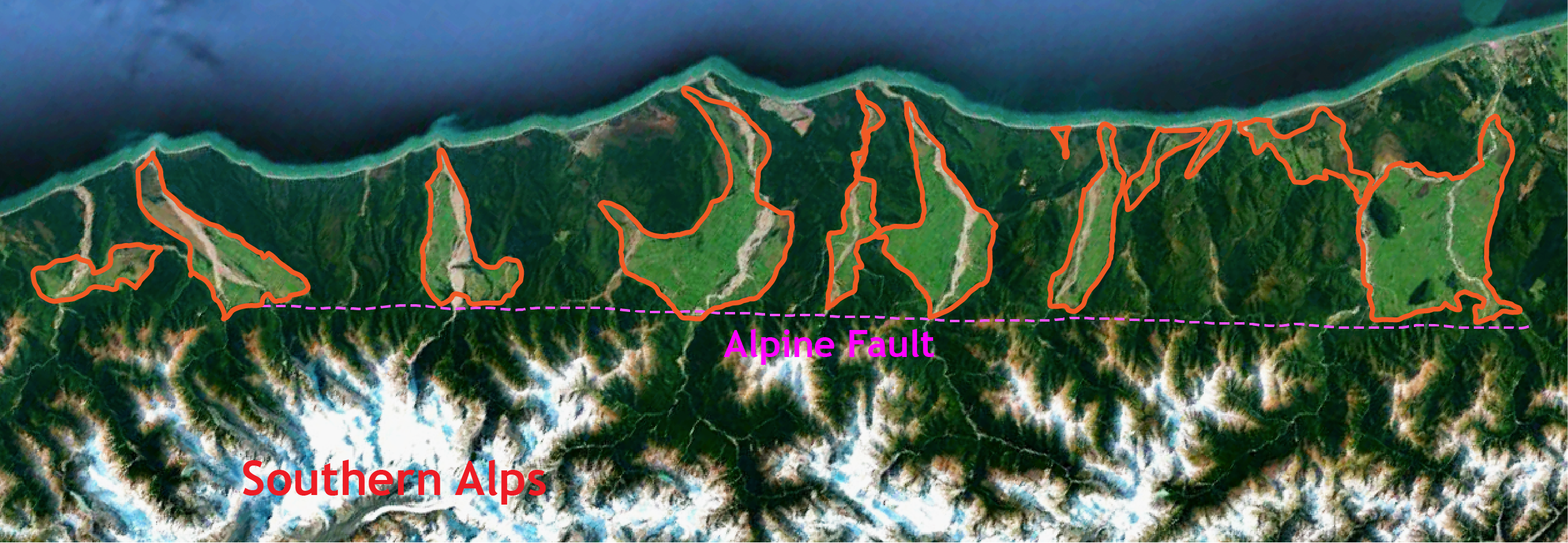
This weather circulates the southern seas largely unimpeded by land for at least 30 million years, since Australia and Antarctica were separated by tectonic forces. However, in South Island New Zealand, the Alpine Fault represents the collision of two tectonic plates that resulted in up-thrust of rock strata and eventual formation of the Southern Alps about 5 million years ago. The Southern Alps get in the way of some of the humid westerly wind forcing it up to cooler altitude where water condenses and falls as snow or rain. This orographic rain explains the huge difference in conditions between the wet west and dry east of the island. It also explains why glaciers flow down some west coast valleys, why the Southern Alps were so heavily glaciated during the Last Glacial Maximum 20,000 years ago, and why erosion rates are so high. The immense amount of water and sediment coming down from the mountains makes a powerful porridge that is a feature of braided rivers and alluvial plains in the region.

Downstream from the ill-fated Waiho bridge, the river weaves its way across flat land formed from sediment previously brought down to the area by water.  The land here is therefore a product of the alpine erosion (just as the Canterbury plains are), and as such has supported  for millenia an indigenous wet forest and wetland vegetation spanning sphagnum mosses to giant rimu, kahikatea  and southern rātā. Here lives a highly diverse fauna and flora with many species particular to the region (e.g. Okarito kiwi, several lizards, carnivorous snails, the world’s only green cave wētā) and many newly discovered species awaiting formal recognition. This low-lying flatland environment includes some of the most extensive areas of New Zealand wetland habitat, of which less than 10% remains. But this environment is also highly valued for conversion to agriculture and in particular dairy pasture. Pasture conversion means replacement of the indigenous habitat and its fauna and flora with a handful of European plants and cattle with their associated ejecta.

To achieve this transformation the natural floodplain of the Waiho River has been engineered (as have many New Zealand rivers) to restrict water flow using stopbanks bulldozed from the river bed. This approach seeks to reduce the meandering habitat of rivers with low slope so that land can be cleared and managed. At Franz Josef it became apparent more than 10 years ago that once created the stopbanks increased the accumulation of sediments upstream by confining the fanhead near where the road (SH6) crosses the river. This aggradation (raising of land) that is linked to failure of the bridge results when the rate of sediment supply is greater than the rate of removal, and did not happened prior to human intervention when the river occupied the wider flood plain.

The ghosts of natural drainage channels are impressed on the converted land. See GoogleEarth

So, despite the phenomenal disruption to the families involved, perhaps knocking down stopbanks is the right thing to do? Naturally, the experiences and circumstances of the people involved can never be ignored, but a planned national strategy for withdrawal from parts of our landscape is needed. As climate change, driven primarily by the use of fossil fuels bites deeper, coastal and waterway environments are certainly going to change, and so are weather patterns, the availability of water and the intensity of sunshine. These things affect people’s lives not just directly but indirectly through the changes in our biosphere. An inclusive approach to future-proof our economy, lifestyles and biosphere will have to come as the alternative of fighting against the inevitable changes cannot succeed. We cannot stop it raining on the West Coast. The building of more and higher stopbanks is a useful metaphor for all manner of human activities that are simply not sustainable. Building “stopbanks” sometimes provides short term solutions but tends to relocate, accumulate and exacerbate underlying problems. The already highly stressed natural landscape of Aotearoa, of which more than half is in agricultural use, needs us to take proper, unselfish and collective responsibility.

Most of the river flats on the West Coast are now pastures

Steve Trewick

We need a legally binding treaty to make plastic pollution history

File 20190314 28496 1l9vu3m.jpg?ixlib=rb 1.1
The world urgently needs to move past plastic. Veronika Meduna

A powerful marriage between the fossil fuel and plastic industries threatens to exacerbate the global plastic pollution crisis. The Center for International Environmental Law (CIEL) estimates the next five years will see a 33-36% surge in global plastics production.

This will undermine all current efforts to manage plastic waste. It is time to stop trying (and failing) to bail out the bathtub. Instead, we need to turn off the tap.

The United Nations Environment Assembly (UNEA) has recognised plastic pollution as a “rapidly increasing serious issue of global concern that needs an urgent global response”. An expert group formed last year proposed an international treaty on plastic pollution as the most effective response.

Together with Giulia Carlini, at CIEL, I was part of a 30-strong group of non-governmental organisations within this expert group attending the UNEA summit this week to discuss how we can start making plastic pollution history.

Unfortunately, despite strong statements from developing countries, including the Pacific Island states, a small group of countries stalled negotiations. This effectively turns back the clock on ambitious global action, and leaves us more desperate than ever for a real solution to our plastic problem.

Why we need a treaty

The first step is to reject the many false solutions that pop up in our news feeds.

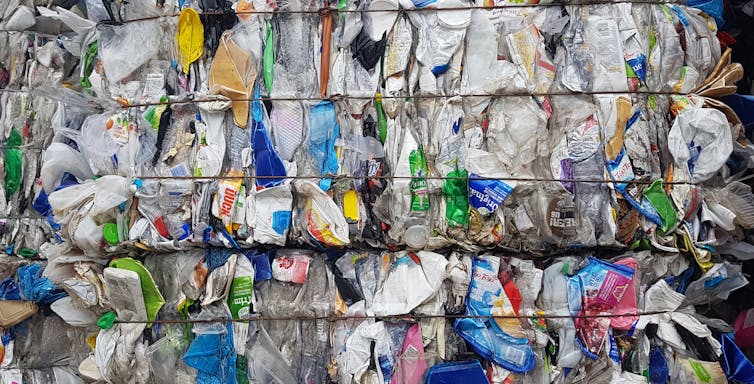
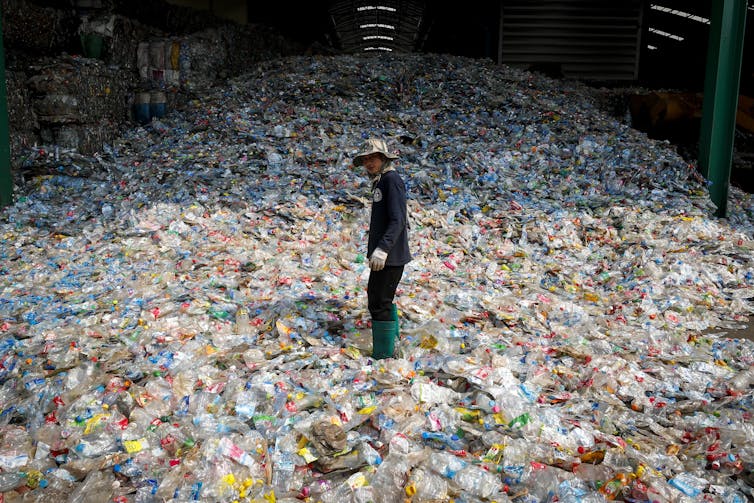
Recycling is one of those false solutions. The scale of plastic production is too big for recycling alone. Of all the plastics produced between 1950 and 2015, only 9% have been recycled. This figure is set to plummet as China and a growing number of developing countries are rejecting plastic waste from Australia, New Zealand and the rest of the world.

China had been a major destination for Australia and New Zealand’s recyclable waste. China’s shutdown meant Australia lost the market for a third of its plastic waste. It also left New Zealand with 400 tonnes of stockpiled plastic waste last year.

With limited domestic recycling facilities, Australia and New Zealand are seeking new markets. Last year, New Zealand sent about 250,000 tonnes of plastic to landfill, and a further 6,300 tonnes to Malaysia for recycling. But now Malaysia is also rejecting other countries’ hazardous plastic waste.

Sending our platic to Asia is not a solution. EPA/Diego Azubel, CC BY-SA

Even if we manage to find new plastic recycling markets, there is another problem. Recycling is not as safe as you might think. Flame retardants and other toxins are added to many plastics, and these compounds find a second life when plastics are recycled into new products, including children’s toys.

Plastic-to-energy is a false solution

What about burning plastic waste to generate energy? Think again. Incineration is expensive, can take decades for investors to break even. It is the opposite of a “zero waste” approach and locks countries into a perpetual cycle of producing and importing waste to “feed the beast”. And incineration leaves a legacy of contaminated air, soil, and water.

Producing lower-grade materials from plastic waste (such as roads, fenceposts and park benches) is not the solution either. No matter where we put it, plastic doesn’t go away. It just breaks into ever smaller pieces with a greater potential for harm in air, water, soil and marine and freshwater ecosystems.

This is why researchers are paying more attention to the less visible hazards posed when micro (less than 5mm long) and nano (less than 100 nanometres long) sized plastics carry pathogens, invasive species and persistent organic pollutants. They have found that plastics can emit methane contributing to greenhouse gas emissions.

Tyres wear down into microplastics which find their way into the ocean. When plastics break down to nanoparticles, they are small enough to pass through cell walls. Our clothes release plastic microfibres into water from washing machines.

Plastic is truly global

Plastic pollution moves readily around the globe. It travels through trade, on winds, river and tidal flows, and in the guts of migrating birds and mammals. We don’t always know which toxic chemicals are in them, nor their recycled content. Plastic pollution can end up thousands of kilometres from the source.

This makes plastic pollution a matter of international concern. It cannot be solved solely within national borders or regions. A global, legally binding treaty with clear targets and standards is the real game-changer we urgently need.

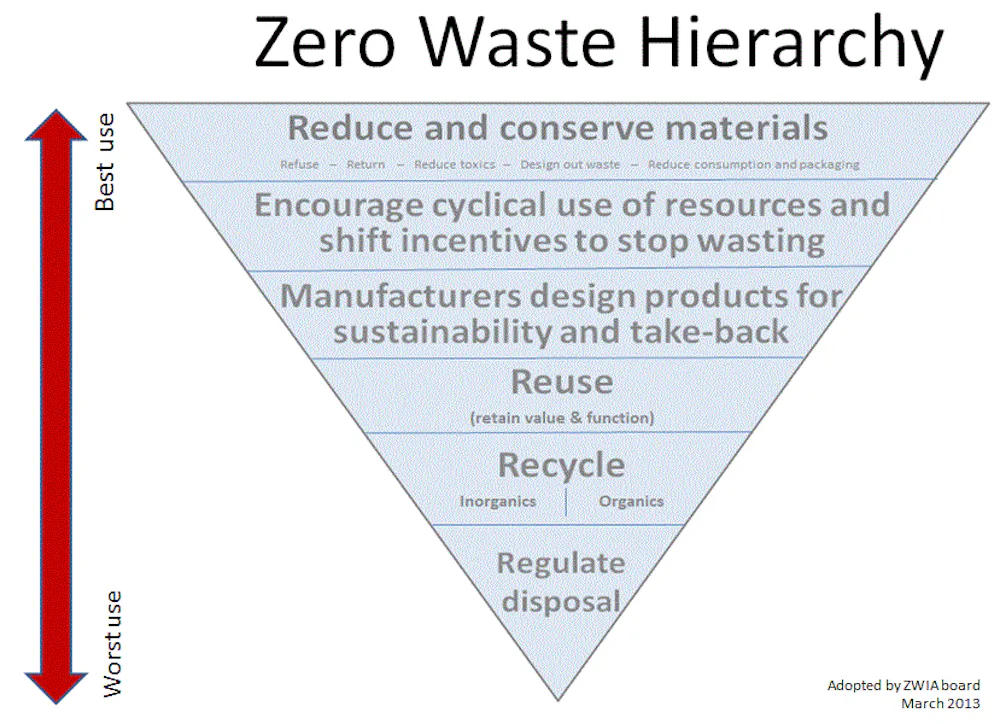
The NGO component of UNEA’s expert group recognised an international treaty as the most effective response. The proposed treaty has the potential to capture the full life cycle of plastics by focusing on prevention, right at the top of the waste hierarchy.

The Zero Waste hierarchy. Zero Waste Europe

These solutions could include restricting the volume of new or “virgin” plastics in products, banning avoidable plastics (such as single-use plastic bags and straws), and curbing the use of toxic additives.

More than 90 civil society organisations around the world and a growing number of countries have indicated early support for a treaty. Australia and New Zealand have not.

By Trisia Farrelly. This article is republished from The Conversation under a Creative Commons license. Read the original article.

Both sides now

Some years ago — never mind how long precisely — oh all right, it was January 15, 2003 — I was walking down the street in Oslo. In fact, this street:

I was keeping my head down because, as you can see in the picture, the streets in Oslo can be icy. I had lived in a cold place before — Boulder, Colorado, — but in Boulder, after any snowfall everyone rushes outside and sweeps their sidewalk. It made for quite a festive air. But in Oslo, I never saw any sweeping of sidewalks, and the snow turned to ice. It was a bit before 9am and the sun was not yet up. Oslo lies at 60º north, and 15 January only provides 6 hours 45 minutes of day. However, the sky was clear and it looked liked it was going to be a fine day. 

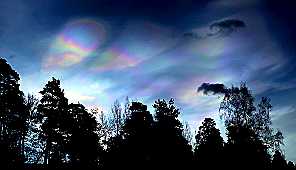
Fortunately, however, I did at some point look up, and what I saw made me stop in my tracks. It was something enormous, spectacular, brilliant, and other-worldly. It was this:

This photo comes from that same day’s paper, which identified the phenomenon as mother-of-pearl clouds. Today, these are a bit better known, but at that point I knew for certain that I had no idea what I was seeing. But I knew it was something remarkable.

Les Cowley at “Atmospheric Optics” writes

Nacreous clouds, sometimes called mother-of-pearl clouds, are rare but once seen are never forgotten. They are mostly visible within two hours after sunset or before dawn when they blaze unbelievably bright with vivid and slowly shifting iridescent colours. They are filmy sheets slowly curling and uncurling, stretching and contracting in the semi-dark sky. Compared with dark scudding low altitude clouds that might be present, nacreous clouds stand majestically in almost the same place – an indicator of their great height. 

Now, not only are mother-of-pearl clouds a stunning phenomenon, that indeed I have seen only once but have never forgotten, they are a highly visible sign of climate change. The first known sightings were in Sweden in 1870. Sightings spread to Norway – where they may have inspired The Scream –, and then to Britain in 1884. No more were seen anywhere in the world until 1923. In 1971 they were so unknown in Britain that a scientific article was written about the appearance of a single cloud. There were widespread sightings in Britain in 1999, 2000, 2012, 2016, and 2017; stunning pictures of these clouds are easily found.

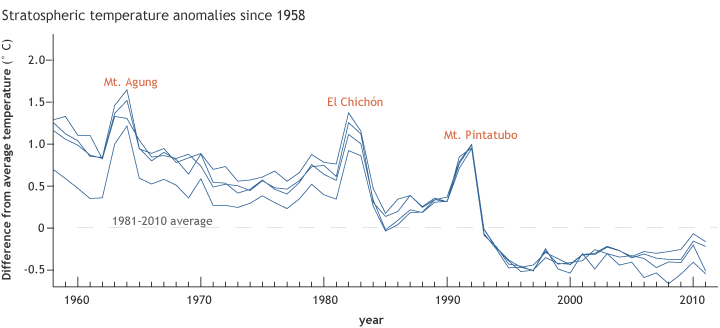
Mother-of-pearl clouds form high up, in the stratosphere, from 15-25km in height. They require extremely cold temperatures to form, below the freezing point of water, which at that height is around –85ºC. The greenhouse effect, which traps infrared radiation in the lower atmosphere and heats it, also leads to cooling of the stratosphere. It’s cooled by about 2 degrees since 1958, periodically interrupted by volcanoes whose high-altitude dust particles absorb heat:

Source: Bulletin of the American Meteorological Society, State of the Climate

It would make a nice story if I could say that was a road-to-Damascus moment for me, a moment that switched me from knowing about climate change, to caring. Alas, that didn’t happen. Looking back, the change was a surprisingly lengthy process. What did the trick in the end was a whole cascade of large-scale changes happening all over the place: the disastrous collapse of the north pole sea ice in 2007; the slowing of the Gulf Stream reported in 2015 causing high-tide flooding; the successive collapses of ice sheets in the Antarctic peninsula, which started in the 1990s but seemed to form a clear pattern by 2010; and the change in the behaviour of the northern jet stream, leading to the now well-known “Omega block” linked to extreme weather of all sorts in the United States.

But perhaps it started with the clouds.

Robert McLachlan

References

1. Stanford, John L., and John S. Davis. “A century of stratospheric cloud reports: 1870–1972.” Bulletin of the American Meteorological Society 55.3 (1974): 213-219. Backhouse, T.W., 1885. Iridescent clouds. Nature31(792), p.192.; Piazzi-Smyth, C., 1884. Indescent Clouds. Nature31(790), p.148.

2. McIntosh, D. H. “Mother-of-pearl cloud over Scotland” Weather 27.1 (1972): 14-26.

3. Les Cowley, Atmospheric Optics, https://www.atoptics.co.uk/highsky/nacr1.htm

4. The discovery of the ozone hole in 1985 led to a renewed interest in these clouds. In 1988 a distinction was drawn between two types. Type I contain water, nitric and/or sulphuric acid and are a source of ozone depletion, and form at temperatures below –78ºC. Type II, shown above, contain water only and form at temperatures below –85ºC. See Hamill, Patrick, R. P. Turco, and O. B. Toon. “On the growth of nitric and sulfuric acid aerosol particles under stratospheric conditions.” Journal of atmospheric chemistry 7.3 (1988): 287-315.

5. Poole, Lamont R., and M. Patrick McCormick. “Polar stratospheric clouds and the Antarctic ozone hole.” Journal of Geophysical Research: Atmospheres 93.D7 (1988): 8423-8430.

6. Paul Vitello, “Joseph Farman, 82, Is Dead; Discovered Ozone Hole”, New York Times, May 18, 2013. 

7. A related type of high-altitude cloud – also first observed in the late 19th century – is the noctilucent, or night-shining, cloud. These are even higher, at 80km, and may also be linked to climate change, as higher methane levels break down to water vapour. Every record of what we’ve seen in the sky has been the same. As far back in human existence as we know, among the Egyptians, the Native Americans and the Chinese, there is no record that clouds glow in the dark. – Scott Bailey, University of Alaska. Their initial observation in 1885 (from several sites in Europe including the UK, just a few months after the first appearance there of mother-of-pearl clouds) may have been related to the eruption of Krakatoa in 1883, which pumped large amounts of water into the upper atmosphere. See Thomas, Gary E., et al. “Relation between increasing methane and the presence of ice clouds at the mesopause.” Nature 338.6215 (1989): 490.

8. For the changes in the northern jet stream, see Francis, J. and Skific, N., 2015. Evidence linking rapid Arctic warming to mid-latitude weather patterns. Philosophical Transactions of the Royal Society A: Mathematical, Physical and Engineering Sciences373(2045), p.20140170.